Browsing Category

Art & Culture

Art & Culture Travel

Enjoy Paris’ Best Shopping from The Hôtel Mansart

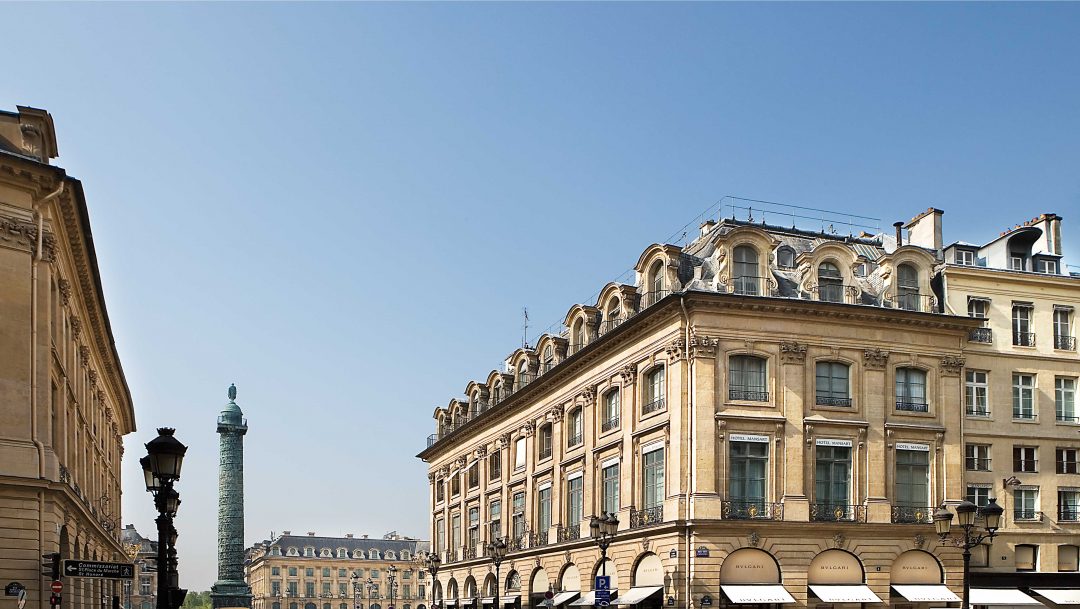
Hotel Mansart - View of Place Vendome - by @gillestrillard

Situated just around the corner from Place Vendôme, the Hôtel Mansart is where one can truly begin an all-out shopping spree. Located nearby some of the most prestigious boutiques in Paris, the hotel is within walking distance from Charvet, Bulgari, Cartier, Chanel and Gucci, to name just a few. Art is another prominent aspect of the area around Hôtel Mansart as the Musée des Arts Décoratifs, the Musée des Arts et Métiers, the Musée d’Orsay, the Louvre Museum and the…
Continue Reading

Art & Culture People

Meet Molly McCall

AMERICAN ARTIST MOLLY MCCALL

Meet American Artist Molly McCall whose talent for creating works revolving around the passage of time delivers photographic and mixed media compositions that are not only entirely unique, but also nostalgic for many. McCall’s work, which is memory based, is focused on the beauty of California’s central coast, where McCall was born, raised, and where she continues to live today with her husband Gordon and their two German Shorthaired Pointers. Although deeply immersed in the art world today, McCall began…

Continue Reading

Art & Culture People

The World of Visual Art with Angelique de Limburg Stirum

The World of Visual Art with Angelique de Limburg Stirum

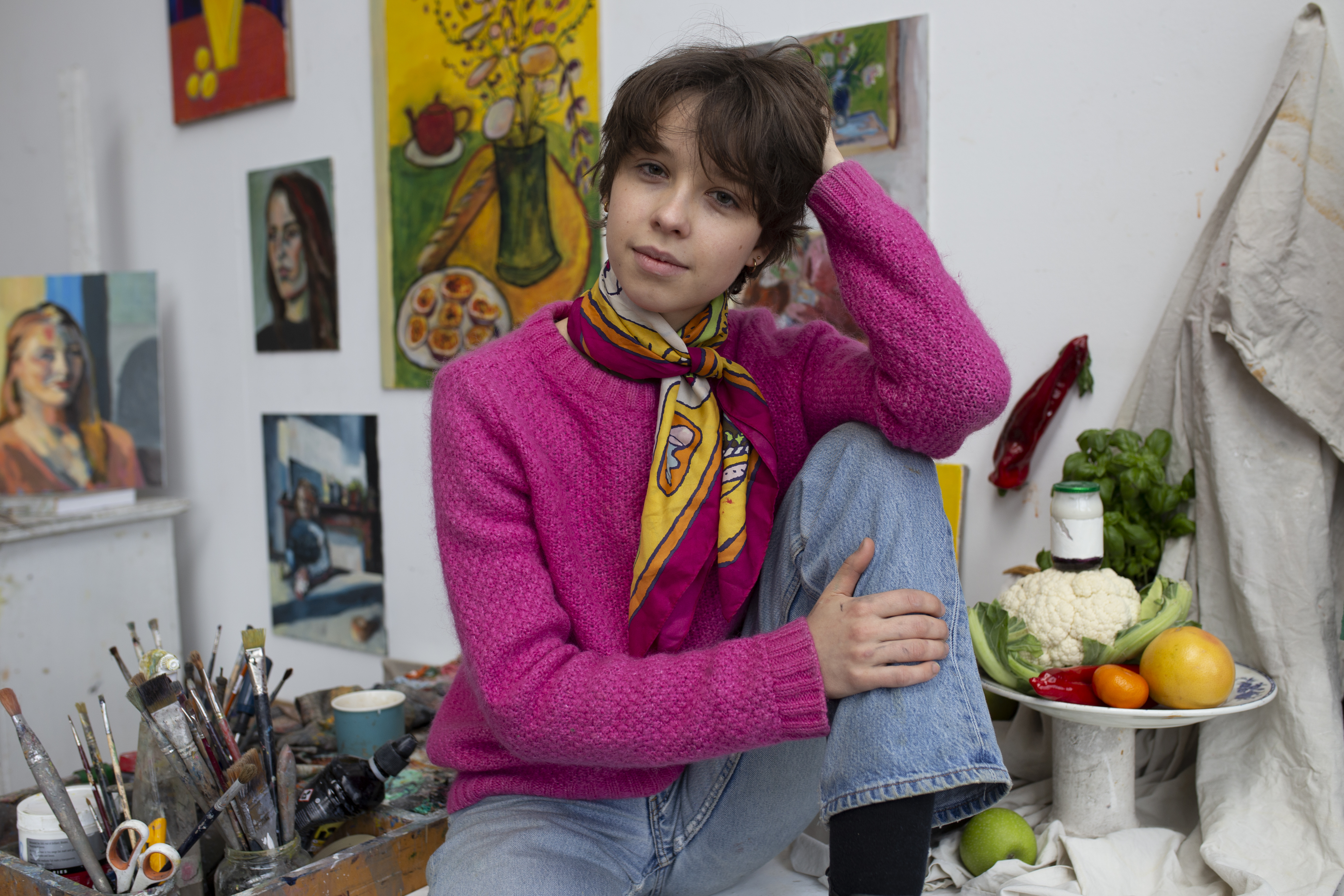
Recently, The Extravagant was given the exclusive privilege of interviewing Angelique de Limburg Stirum on her passion for artistic expression through portraiture. The young Belgian artist and former model is currently developing a unique take on modern portraiture. The daughter of the Count and Countess of Limburg Stirum is proving to be an innovator in a world where capturing human likeness on canvas is becoming increasingly underrated. Read on to see how Angelique’s own artistic ability has been shaped by…

Continue Reading

Art & Culture People

The Art of Portraiture with Fanny Rush

The art of portraiture with Fanny Rush

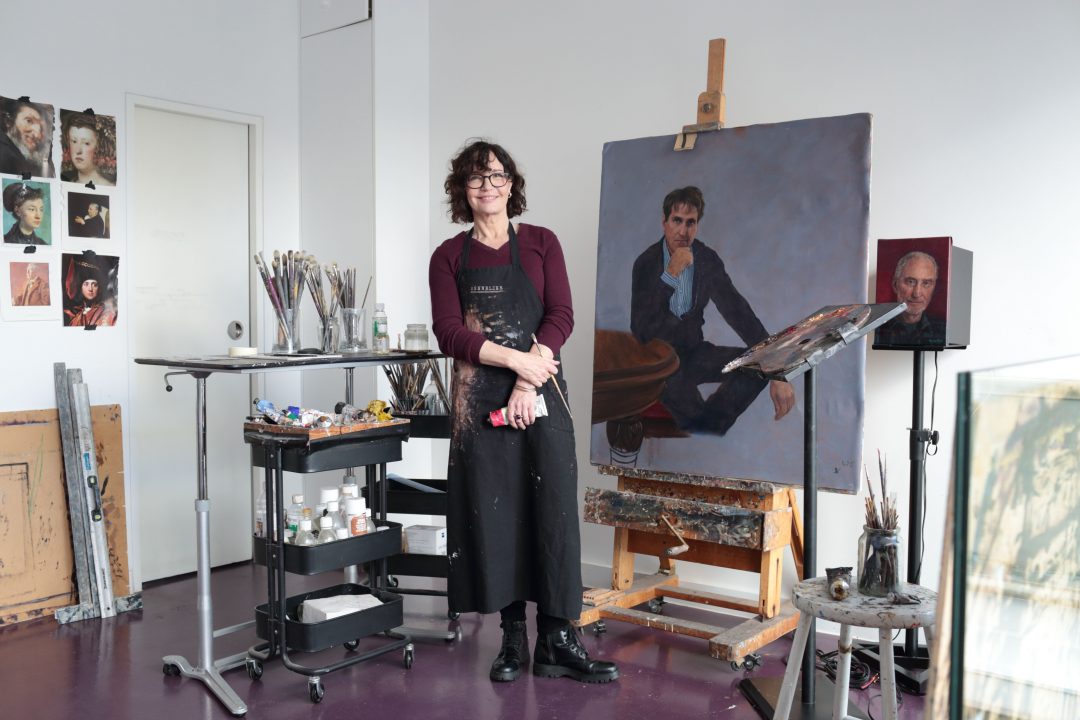
Portraits created by Fanny Rush are stylistically characteristic of a bygone era. The London based artist, who just built a new home and studio in Battersea after relocating from Chelsea, employs seldom used Old Master techniques in her portraits that immortalize both her subjects and their personalities. Rush’s prestigious commissions are numerous and include American Ambassador Robert Holmes Tuttle, famed actor Charles Dance OBE, as well as Sir William Castell, Chairman of the Wellcome Institute, to name just a few.…

Continue Reading

Art & Culture

Sotheby’s NOW! Online Auction To Feature African Art, Photographs, and Contemporary Design

Sotheby's NOW! Online Auction To Feature African Art, Photographs, and Contemporary Design

From the 18th to the 26th of February, 2020 Sotheby’s will offer a wide range of stunning lots online as part of their sixth NOW! sale. Made up of 20th century Design Pieces, Contemporary Works, Photographs, as well as African and Oceanic Art Works, the auction is held exclusively online. Estimates for the lots in the sale range from €500 to €50,000. Curated by Lolita Cros, the NOW! sale includes pieces by artists and designers, such as Hans Hartung, Robert…

Continue Reading

Art & Culture

Exhibition “ame nochi hana” at Le Bon Marché Rive Gauche in Paris: Wows in Spectacular Fashion

Exhibition “ame nochi hana” at Le Bon Marché Rive Gauche in Paris: Wows in Spectacular Fashion

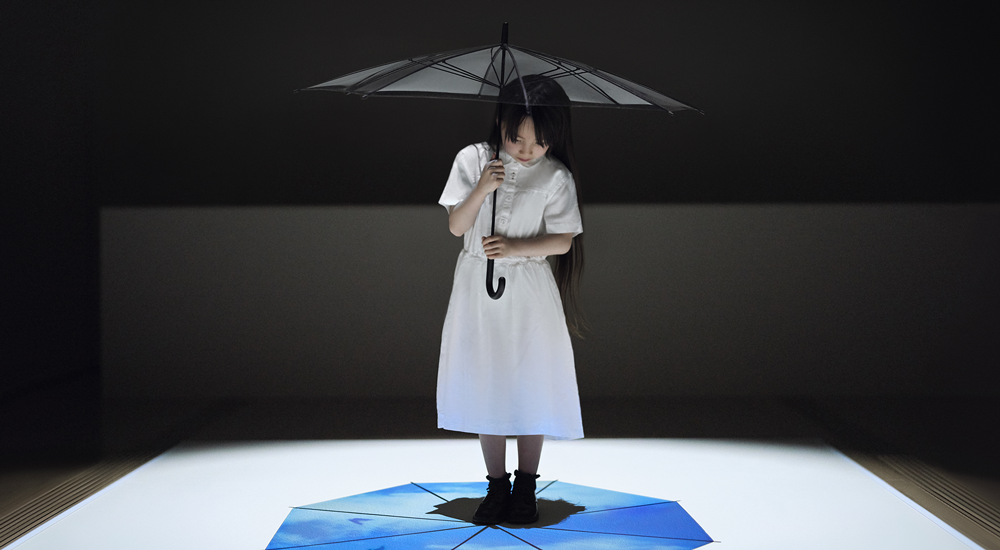
Le Bon Marché Rive Gauche continues over 160 years of engagement to the arts with the debut of its latest art instillation, the exhibition by designer Oki Sato’s nendo titled “ame nochi hana”, which translates from the artist’s native Japanese meaning rain flowers. Aristide Boucicaut, who founded Le Bon Marché was well regarded for his love of the arts now continued by the department store’s owner LVMH. Over the past five years, Le Bon Marché has hosted five creative exhibitions…

Continue Reading

Art & Culture

Gianna Dispenza’s Double Like Tata Stimulates the Imagination

Gianna Dispenza's Double Like Tata Stimulates the Imagination

In Gianna Dispenza’s most recent solo exhibition, symbolism takes center stage. Her works delight the viewer’s subconscious with manifestations of abstract portraits, hovering still lifes, and scenes of nature all delivered on the most obscure of canvases. From public transport tickets to newspapers and wrappers, recycled pieces of the artist’s life proudly takes a spotlight in the exhibition which just concluded on January 18th. The show that took place at Galleria Ramo in Como, Italy was an intimate yet spectacular…

Continue Reading

Art & Culture Fashion

Frank Gehry and Peter Marino’s Louis Vuitton Maison in Seoul, South Korea is a masterpiece of modern architecture

Frank Gehry and Peter Marino's Louis Vuitton Maison in Seoul, South Korea is a masterpiece of modern architecture

A modern masterpiece designed through a collaboration between Peter Marino and Frank Gehry for Louis Vuitton has now opened in Seoul, South Korea. The new boutique located in the Gangnam district and situated on Cheongdam-dong avenue opened its doors on October 30th. The result of Frank Gehry and Peter Marino’s collaboration is a unique structure that pays respect to Korean architectural heritage while sharing elements with Louis Vuitton’s Paris flagship boutique. Although Peter Marino is no stranger to South Korean…

Continue Reading

Art & Culture Real Estate

California’s Greatest Estates | Filoli

California's Greatest Estates | Filoli

Situated just between San Francisco and Silicon Valley in Woodside, California, Filoli, the Country Estate of William B. Bourn was constructed from 1915 to 1917 during the Gilded Age in the United States. The main house, which consists of 54,000 square feet of living space is nestled within 16 acres of formal gardens surrounded by an estate of over 500 acres. The architectural elements of the property are characterized of a tasteful mix of a stately English manor with a…

Continue Reading

Art & Culture

Christie’s Online Banksy Auctions Totals Over €1.2 Million

Banksy: Girl with Balloon - Colour AP (Gold)

Banksy’s sarcastically titled “Banksy: I can’t believe you morons actually buy this sh*t” online auction with Christies grossed €1,256,357. The auction was named after one of Banksy’s 2007 works, which depicted an auction house filled with individuals fighting to pay hundreds of thousands for a framed image with the words “I can’t believe you morons actually buy this sh*t.” The most surprising aspect of the auction is that no works were automatically shredded as had occurred during a Sotheby’s auction nearly…

Continue Reading

Enjoy Paris’ Best Shopping from The Hôtel Mansart

Situated just around the corner from Place Vendôme, the Hôtel Mansart is where one can truly begin an all-out shopping spree. Located nearby some of the most prestigious boutiques in Paris, the hotel is within walking distance from Charvet, Bulgari, Cartier, Chanel and Gucci, to name just a few. Art is another prominent aspect of the area around Hôtel Mansart as the Musée des Arts Décoratifs, the Musée des Arts et Métiers, the Musée d’Orsay, the Louvre Museum and the Rodin Museum can be found in the vicinity. Sitting in the middle of the arts and business district, the Hôtel Mansart is a wonderful choice to stay for those looking to explore the wonders of the City of Paris.

The building which the Hôtel Mansart now occupies was originally built in 1720 by John Law, who was known for inventing the Assignats currency. Famed French Architect Jules-Hardouin Mansart, who was the chief architect of Louis XIV, designed the building. Many of Mr. Mansart’s works are still appreciated today, including his work at the Château de Versailles and the admirable Dôme des Invalides. Furthermore, the Jeweller to the Crown, Alexandre-Gabriel Lemonnier moved in during the Second Empire where he he had a hand in turning Place Vendôme into a district for jewellers. One of the most notable works of Alexandre-Gabriel Lemonnier is Empress Eugénie’s crown, a beautiful piece that is currently on display at the Louvre Museum.

In the later half of the 19th Century, the building transitioned into the hotel it is today. The Hôtel Mansart, now in the possession of Esprit De France, upholds the history of the building by not only naming it after its creator, but also by adding touches throughout that are reminiscent of its former brilliance. The Hôtel Mansart has influences ranging from the 17th century to the 19th century. People say that the jewels in the building during Alexandre-Gabriel Lemonnier’s stay there were secretly stored at the back of the indoor shutters, which remain safeguarded to this day in the hotel suites.

Hotel Mansart -Lounge - by @gillestrillard

The interior design language of the hotel honours the historical time periods the building has gone through. In conjunction with the stunning interior of the hotel, the vicinity around the building is a haven for shopping, eating and browsing art museums. However, the hotel itself is also has an extensive art collection of approximately 120 pieces. Displayed throughout rooms and various open areas, the art spans many different periods and in the form of paintings, engravings, sculptures and furniture. Even while in the comfort of your own room, guests can revel in the artistry of breathtaking period pieces.

Significant works of art include the Portrait of Eugénie de Montijo and the Portrait of Napoleon III, which are oil paintings done on identical canvases and hold historic meaning to the hotel. Both of these beautiful paintings are exhibited in the same room where the jeweler who made their jewels at the culmination of the 18th century was received.

Additional standout pieces include “Alpheus Pursuing Arethusa“, “Narcissus Reflected in a Fountain” and “The Chariot of Bacchus” that make up mythological scenes which are placed near everyday scenes like “Softly Sleeping“, “The Good Mother“, “The Kiss”  and “Trying on a Corset” in a harmonious setting.

Hotel Mansart - Lounge - by @gillestrillard

The hotel’s large collection of art spans ceaselessly throughout, as beautiful pieces of art greet you at even the simplest of times. Located amidst a flight of stairs in the hall is a piece named “Spirit of France” that was sculptured by Georges Jeanclos. The artist, who is highly regarded as one of the best sculptors at the end of the 20th century, had created this sculpture expressly for Hôtel Mansart. Within the breakfast room is a unique work, a ‘discrete portrait of Mansart’ (pictured above) that signifies the deep connection between the building of the past to the hotel of today.

When staying at the Hôtel Mansart the morning must always begin with an ambrosial breakfast to inspirit yourself for an exciting day of wandering the city’s beloved attractions. After entering the breakfast room, you are welcomed by period stained-glass windows, which only provides to highlight the hot and cold buffet tables in the centre of the room.

Hotel Mansart - The Breakfast Room - by @gillestrillard

High quality French produce and other ingredients grown in organic farms make up the menu. This list includes freshly squeezed fruit juice, Alain Milliat jam, pastries from the Pâtisserie des RêvesEchiré butter and a plate of mature cheeses. The scrumptious breakfast is served along Bernardaud porcelaine in the Esprit de France colours.

When it comes time to return from a fun time of shopping or taking in the local colour, the Hôtel Mansart’s open access bar is an ideal place to stop by. Situated on the first floor, the bar offers guests an enticing list of both alcoholic and non-alcoholic drinks. Guests can enjoy a drink while relaxing at a quiet lounge; a great relief for guests who spent their day shopping or visiting some of the prominent art museums.

Hotel Mansart - Room Vendome - by @gillestrillard

All the rooms at the hotel reflect the same elegant design elements as seen through the rest of the building; however, the Mansart Room – La Junior Suite as well as the Vendôme Room – Deluxe stand out in particular as they both boast remarkable views of Rue de la Paix. While room Mansart offers approximately 50 square metres of space (accommodating 3 guests) with high ceilings and additional views of Place Vendôme, the 28 to 38 square metre room Vendôme (accommodating 2 guests) takes you back in time with 17th century French furnishings.

Hotel Mansart - Deluxe Room - by @gillestrillard

Traveling while trying to ensure your wifi connection is working and getting past the roaming charges when abroad can be difficult at times, but for guests staying at the Hôtel Mansart these worries are unnecessary. Small portable wifi hotspots that weigh as little as 130 g are provided to hotel guests, allowing smooth wifi connection while anywhere within the city.

Esprit de France’s cultural newsletter, which is handed over to guests on arrival, is also a nice a touch to art enthusiasts. Updated every two weeks, it focuses on art and culture news in Paris that ranges from helpful tips and useful advice to enriching art and cultural events.

From the historical significance of the building to the hotel’s fantastic location, Hôtel Mansart is no doubt a great place to rest your head when in Paris.

For more information on the hotel please visit: Hôtel Mansart

Meet Molly McCall

Meet American Artist Molly McCall whose talent for creating works revolving around the passage of time delivers photographic and mixed media compositions that are not only entirely unique, but also nostalgic for many. McCall’s work, which is memory based, is focused on the beauty of California’s central coast, where McCall was born, raised, and where she continues to live today with her husband Gordon and their two German Shorthaired Pointers.

Although deeply immersed in the art world today, McCall began her career in the world of fashion with her own private label which featured in stores like Nordstrom and Henry Bendel. Having exhibited at venues such as the Barcelona Foto Biennale and Griffin Museum of Photography, McCall’s coveted work has become a part of some of the world’s most prestigious art collections where it has even been featured in taste-making magazines such as Architectural Digest.

Recently, we were given the exclusive privilege to chat with Molly between her busy schedule which includes running her family’s business, McCall Events. Read on to learn more about McCall’s current body of work, up and coming projects, and how her family influenced her passion for art.


What are you currently inspired by?

I have been working with an art mentor, Lon Clark, for several years through the San Francisco Studio School. He is the first teacher I have had who works with both photography and painting—my two subjects—and who was willing to take me in and work with my desire to join the two. Lon first directed me toward abstract expressionism, and I was inspired by the exuberance and energy it conveyed. I immediately was drawn to the concept of “sensate” as well as creating a sensory feeling within my work, which opened up my visual world immensely and made me look at color in a totally new way.”

How did you first become interested in art? Was it an experience in your childhood or did your passion develop later in life?

I am a fourth-generation artist. My immediate family of seven siblings are all accomplished artists: painters, writers, musicians [and] sculptors. Our early home environment was austere, but we had our creativity to keep us engaged with one another and our surroundings. Without television, we were left on our own to create entertainment and activities as well. Making art was just what my family did as well as play acting and performing for one another.

I was introduced to classical art at a very young age. Frequent trips to Los Angeles and San Francisco always included a museum exhibition or a theatrical performance. I can distinctly remember the French Impressionism show at the De Young Museum when I was about 10 years old. I was in awe of the scale of the work and the visual boldness of the colors, the brushstrokes, and the way the subjects were captured in such a loose form. It made a permanent imprint on me and I was inspired by the way it left a lot up to the imagination.”  

Have you always been drawn to mixed media?

Yes. Because I was exposed to so many different types of art mediums, I have always tried to create my own artistic language using multiple layers and materials. My creative career began in textile and clothing design, so I have an affection for the surface of things as well. All of my work is based in photography, but I like to push the boundaries of the medium. I’ve used a variety of materials on my images from spray paint to house paint to collage, ink, pencil, tar, glue, etc. I’ve sanded, torn, and even burned my photographs. Photography to me is still a magical process in which I feel I will never find the end of it. It’s the process and exploration that brings me back again and again.

Can you walk us through your process for choosing the subjects depicted in your work?

I have been interested in memory for a very long time. I’ve explored this subject from many perspectives: collective memory, historical memory, personal memory. I continue to be intrigued by its illusive nature and impact on our sense of identity and humanity. I’m very keen on change, the passage of time, loss, and the ephemeral nature of living.

My new work is in response to the environmental changes of our time, the parallels of flux between memory and nature, and explores the transitory state in which we live. The title of the series is The More Things Change, and is comprised of large scale color photographs created by layers of multiple images taken over a lengthy period of time.” 

Is there a particular piece that you believe defines your work best? If so, what piece and why?

My art took a noticeable turn when I started working with Lon Clark at the San Francisco Studio School. The support of a mentor gave me both an anchor and a sail. I started to take chances and not judge my work so harshly, and I began a dedicated studio practice that shifted my work into a new place.

When I look back at this early work, I see a thread that brought me forward. The work from this time taught me how to listen to my instinct and not question it, and to just keep going. I am not sure I will ever arrive at a definition for my work, because I don’t think I will ever arrive at a definitive point. It just keeps evolving and building on itself.”  

What do you aim to express through your work?

I am optimistic by nature, so that is always an underlying current in my work. I am also keen on the idea of expressing something visually in a way that makes people think, and leaving just enough unsaid so that they can add their own interpretation. I have always been intrigued by contrast and duality. I like the energy it conducts and the way it can transform an idea with the tension between the two.

My new work explores a sense of change by creating a simultaneous impression of one lengthy moment in time. The lack of detail plays a unique role in my composition and is achieved by various digital techniques with layered images of the same subject taken over a lengthy period of time. This technique conveys not only the passage of time, but the history that I have with these locations in a metaphorical way. Color is captured in a dynamic way to create empathy. Scale speaks to the power of nature and the way it can make one feel small. Also, I hope to convey the state flux that is shared between memory and nature and a sense of calm that can occur within chaos.

How do you believe that your locality of choice has influenced you as an artist?

As a native Californian, I am predisposed to the landscape. I spent the majority of my childhood outside and have been inspired by nature my entire life. Growing up with open space, the ocean and a river close by profoundly shaped my sense of being. I also grew up surrounded by some of the most notable artists and art in the world whose work was also influenced by nature and the power of its beauty. Western artist Jack Swanson was a frequent guest in our home and close personal friend of my parents. Photographers like Ansel Adams and Edward Weston were people living in my town, and they moved around the community just like any other citizen. The artwork of California landscape painters like Maurice Braun, E. Charlton Fortune, August Gay, and contemporary artists like Wayne Thiebaud, Richard Diebenkorn. and Russell Chatham, was and still is frequently on exhibit in our community. And of equal importance were movies, the Western film genre in particular. The cinematic expanse of the landscape still captivates me to this day. My favorite Western of all time is The Big Country, filmed in Northern California. It is still studied today as one of the all-time best films for cinematic artistry and capturing the freedom of the West.

Are there any artists in particular that you believe have influenced your work?

“I love photography and collect it as well, but I am influenced by other forms of art, mostly painting. Abstract painters like Swiss artist Uwe Wittwer, Scottish artist Pete Doig, and British artist Laura Landcaster, all of whom work from photography, and abstract expressionists like Joan Mitchell, and Helen Frankenthaler, whose work I often look to for color inspiration.”

Take us through a day in the life of Molly McCall.

“I divide my day into part work in my office with my family business and the rest of the day either in my studio or in the field. The early morning and late afternoon are optimal hours for my creativity, but I have also been known to duck into my darkroom and not return for eight or nine hours.

On a perfect day, I get an early start on a hike with my dogs at a nearby regional park, a former cattle ranch, which involves hours of soaking in the landscape and patiently waiting for a feeling to take over, the clouds to gather, the grass to blow, or the water to stand still: something that visually creates a mood. Sometimes I don’t even take a camera but bring a sketchbook. The process of drawing helps me record a different kind of response that inevitably shows up in my photography.”  

You’re currently working on a large body of work for the Quail Lodge Resort. How did this project challenge your creative process?

I did a lot of traveling last year and decided at the end of the year that I would focus my next project on my own backyard. As memory is my main topic of interest, I thought I would explore the landscape within my own memory. Having lived in the same town almost my entire life, I am constantly confronted by the past and the passage of time, and I am keenly aware of how it has formed my artistic sensibility. This new work explores locations that I frequented as a child and attempts to capture the transitory state of the present.

The challenges to this new work were mostly internal, with movement playing a key role in conveying a sense of change and the passage of time. Part of my creative process involves the act of motion, and I wanted to embed that in the work as well. Hiking, swimming, and riding a motorcycle are all activities that unlock creative thoughts for me. There’s something about physically changing the speed at which one moves through space and time that disengages hesitation and self-judgment, somehow unlocking that first thought, that uninhibited moment before you start piling on all of the debris that pollutes it.”

Where to next?

I have three solo shows coming up this year.

The first was to be at Quail Lodge Resort in Carmel, California, and was postponed due to the coronavirus pandemic. I will be rescheduling this show hopefully this summer. This exhibition will be of my recent landscape work titled ‘The More Things Change’ as well as a new group of cameraless lumen prints made with only photographic paper, the sun, plants from my garden, and darkroom chemistry.

The second solo show will be on exhibition this summer at the Griffin Museum of Photography in Winchester, Massachusetts, a small town about 20 minutes north of Boston. I won the honor of this exhibition last year and have been awarded a room in the museum to display my work. I will be displaying darkroom images inspired by a poem written by Irish poet WB Yeats called Into the Twilight. My exhibition is titled ‘Remembering the Twilight’.

My year will close with an October exhibition in Barcelona, Spain at the FotoNostrum Gallery. My work is included in part of the Foto Biennale, a group show of photographic artists from all over the world, as well as a solo show of my landscape work ‘The More Things Change’.

Where can we follow you?

I post new work, artistic inspiration, and studio projects along with images of my beloved dogs on Instagram and Facebook.

Images courtesy of Molly McCall

The World of Visual Art with Angelique de Limburg Stirum

Recently, The Extravagant was given the exclusive privilege of interviewing Angelique de Limburg Stirum on her passion for artistic expression through portraiture. The young Belgian artist and former model is currently developing a unique take on modern portraiture.

The daughter of the Count and Countess of Limburg Stirum is proving to be an innovator in a world where capturing human likeness on canvas is becoming increasingly underrated. Read on to see how Angelique’s own artistic ability has been shaped by her family’s many generations of talented collectors and artists.


Tell us about how you first became interested in art, and what initially attracted you to the human form and visual art in particular? 

I come from a lineage of artists, so in a way I inherited an interest and an affinity for artistic expression. These interests were further magnified by being surrounded by art. My grandmother, Princesse Hélène d’Orleans, is an amazing painter and also composes classical music. Since I was nine, I roamed around her atelier, which was a sort of magical safe haven, where she taught me how to paint and draw. 

When I was little and first started making art, all I wanted to do was paint portraits. My grandmother refused to teach me portraiture and insisted that I first learn the basics of painting through inanimate objects. Although at the time I remember feeling extremely frustrated, I am now grateful to her because she understood the complexity and skills necessary for capturing the human form in a worthwhile way.

Besides, I realise now that being dyslexic has played a big role in being attracted to [create] visual art. It has always been easier for me to express myself with images than it has been with words. I also have synesthesia which means that I perceive sounds, smells and tastes as inherently coloured.

In a few words how would you personally describe your work?

My work is very varied right now. I am trying out many different styles and ways of working. But you can usually recognize my big brushstrokes in all of my paintings. 

My art is mostly figurative and the human form is one of my main interests.

The common thread in my paintings is my unquenched thirst for beauty and harmony.

My creativity is my vital energy. I embody this energy in vibrant colours in order to exist.

My paintings and drawings follow a certain cycle. You can read my energy frequency through my art: It goes from periods of big sobriety and very limited pallets of colours, to periods of explosion and a very vibrant colour palette.

You’re currently studying at the Royal Academy Antwerp; with that said, what in particular attracted you to the Royal Academy?

Before going completely [into] the arts I thought it would be useful  to have  a degree in business in order to be able to manage my own career. 

After getting my bachelor in business management, I wanted to know more about the history of art. So I continued studying. But this time, I did it in evening school for two years combining it with my work as an artist in my own atelier during daytime. How I loved to be completely free artistically!

Although, after a while, I felt like I needed some guidance to take my art to the next level. I required some extra technical abilities and knowledge. Going back to school felt like the right thing to do. Finally I was going to study [what] I was born to do: painting.

The academy of Antwerp, is one of the only schools that still offers a kind of academic way of teaching, all the while giving us the freedom to explore. Huge spaces, [massive] windows, inspiring teachers, small groups, [as well as] space and time to discover oneself. The right place for me.

Describe a day in the life of Angelique de Limburg Stirum.

I wake up quite early and have a little ritual to start of my day: short meditation, cold shower, healthy breakfast and … off to school.  Most of my days are spent at the academy right now.

At night I work in a bar near the school. It is very pleasant as many students and teachers come and have a drink there. I find it to be a nice way to disconnect from painting. Plus I get to meet and talk to many different people, which is always a source of inspiration and inner richness.

Do you believe that being based in Antwerp has affected your work? If so, how? 

Actually it’s not the city but the the academy which has affected my work. It has helped me [to] broaden my horizons and see all the different directions my art is able to go. This is such an exciting time for me. I am constantly being challenged and encouraged to question my own creations. Being surrounded by so many creative people is so stimulating and inspiring!

Although your career is just beginning, which of your pieces do you believe defines your work best?

As I said before I work in cycles and different periods, so I can only answer this question to what defines what I make right now. 

And currently I am creating portraits, interior scenes and still lives. The common feature between these different works is the colourful intimacy of everyday life or the soul of the characters I portray.

Take the portrait of my friend Guilia for example. It’s not exact copy, but rather an interpretation of her ‘being’. I capture the moment we shared. It is a glance in the intimacy of a privileged moment of daily life.

Where to next?

There are so many different mediums that I would like to explore! Sculpture, ceramics, photography….  Give me more hours in one day, more days in a year ; – )

Where can we follow you?

You can follow me on Instagram: angeliquedelimburg

Image credit: Sarah Kirchner

The Art of Portraiture with Fanny Rush

Portraits created by Fanny Rush are stylistically characteristic of a bygone era. The London based artist, who just built a new home and studio in Battersea after relocating from Chelsea, employs seldom used Old Master techniques in her portraits that immortalize both her subjects and their personalities.

Rush’s prestigious commissions are numerous and include American Ambassador Robert Holmes Tuttle, famed actor Charles Dance OBE, as well as Sir William Castell, Chairman of the Wellcome Institute, to name just a few. Regardless of the fact that Rush has never trained professionally as an artist, it’s an underestimate to call her working anything but fantastic. The artist spent years analyzing the works of old masters, such as Rembrandt, Titian and Velasquez to develop her own style which blends old master discipline with a sensible contemporary touch.

Read on to learn more about the process behind Rush’s portraits as well as her inspirations and the reasoning behind her recent move to Battersea.


What are you currently inspired by?

Amongst many others I am inspired by the techniques of the old masters namely Rembrandt, Goya, Titian, and Velasquez.  I am also inspired by the use of light in the work of painters such as Vilhelm Hammershøi, William Nicolson and Andrew Wyeth, and the design sense of Edward Hopper, Matisse and Degas.

Great photographers inspire me too, such as Cartier Bresson, Cecil Beaton and Irving Penn.

In my work, an amalgamation of these influences comes together with my own painting style. I love strong colours and shapes and I am captivated by the way light behaves.

The art of portraiture with Fanny Rush
Ambassador Robert Holmes Tuttle

Is there a certain place that you trace your love of portraiture to?

I think I have always been fascinated by faces. My father took me to the big national galleries in London as a child, so at that age I saw some of the best portraits that have ever been painted – I fell in love with portraiture then.

In a successful portrait the whole of the facial muscular structure has to be understood. For example, how the slight lifting of the corners mouth will gently and almost imperceivably push up the muscles under the corners of the eye, making a genuine soft smile. 

As human beings we read true emotion in other faces better than we do anything else, our lives have depended on us interpreting them correctly. Mistaking a smile for a sneer where the eyes are not involved could be fatal.

I keep a constant subliminal communication going with the face as I paint, and this will tell me that it rings true and that the likeness is there – ‘this is this man’s smile’.”

The art of portraiture with Fanny Rush
Charles Dance

Have you always possessed an affinity for old master techniques?

It was very natural for me to seek out their methods and strive to emulate them because I love the way they painted.  When I started painting, I read everything they wrote and I visit the same great paintings often, understanding more every time I see them. 

In the old masters I find the richness and luminosity of the colour in the glazing, the variety of skin tones and the portrayal of texture fascinating.  In these works you can often feel that you almost know the person portrayed.

I also love the way these portraits are designed to sit so comfortably in the eye of the beholder. What looks easy and natural is actually very skilled design.

The art of portraiture with Fanny Rush
Elizabeth Philion

Currently, what are some exciting projects that are keeping you busy?

I am just finishing a portrait for New York at the moment, and there are some exciting British and international portraits in the pipeline. I’m really looking forward getting to know my new clients.” 

The art of portraiture with Fanny Rush
Rush’s New Studio in Battersea

Why the move from Chelsea to Battersea?

I rented a beautiful Victorian laboratory which was my studio for many years, it was just a few streets from my home in Chelsea.  I was heartbroken when the land the studio was on was sold to developers.  Studio space in the area just doesn’t exist anymore and there was nothing else for it, I had to leave Chelsea.

 I followed the American Embassy to just over the river Thames to Nine Elms, Battersea and I’m so glad I did.  I bought two adjacent properties, knocked them together and built the perfect home and studio for me. I’m very happy here.

Where can we follow you?

“My website fannyrush.com is updated regularly and you can follow me on Instagram @fanny_rush

The art of portraiture with Fanny Rush

Images courtesy of Fanny Rush via Damson PR

Sotheby’s NOW! Online Auction To Feature African Art, Photographs, and Contemporary Design

From the 18th to the 26th of February, 2020 Sotheby’s will offer a wide range of stunning lots online as part of their sixth NOW! sale. Made up of 20th century Design Pieces, Contemporary Works, Photographs, as well as African and Oceanic Art Works, the auction is held exclusively online. Estimates for the lots in the sale range from €500 to €50,000.


Curated by Lolita Cros, the NOW! sale includes pieces by artists and designers, such as Hans Hartung, Robert Indiana, Jean-Pierre Pincemin and César. Other interesting highlights include a Senufo figure from the Ivory Coast, design pieces by Philippe Hiquily and photographs by Peter Lindberg, Richard Prince and Liu Bolin.

Image of Lolita Cros Credit: ©PAMELA HANSON courttesy of Sotheby’s

Although the New York based, Paris born, Lolita Cros is an independent curator, she was specifically selected for this sale due to her talent for creating unique scenography. Particular highlights of her career include curating all of the spaces at The Wing since 2017, which encompass at The Salon by Marilyn Minter, Jenny Holzer and Senga Nengudi, among others.

Select lots will be on exhibition in Paris on the 21st, 22nd and 24th of February.

Images courtesy of Sotheby’s

Exhibition “ame nochi hana” at Le Bon Marché Rive Gauche in Paris: Wows in Spectacular Fashion

Le Bon Marché Rive Gauche continues over 160 years of engagement to the arts with the debut of its latest art instillation, the exhibition by designer Oki Sato’s nendo titled “ame nochi hana”, which translates from the artist’s native Japanese meaning rain flowers.

Aristide Boucicaut, who founded Le Bon Marché was well regarded for his love of the arts now continued by the department store’s owner LVMH. Over the past five years, Le Bon Marché has hosted five creative exhibitions by artists, such as Ai Weiwei, Chiharu Shiota, Leandro Erlich and Joana Vasconcelos. Artists are given carte blanche aside from the one request that the exhibition should sit well in the beginning of the year’s “White Sale” color pattern.

“I thought it was a wonderful story how people would buy white things for their everyday lives – sheets, towels, plates – in order to refresh their spirit, their feelings and their emotions at the start of the new year. That became the starting point for our project,” said Oki Sato, founder of the nendo Design Studio.

Oki Sato’s nendo studio employed a wide range of techniques to develop the “ame nochi hana” exhibition, including 3D Printing. Oki Sato’s minimal style and poetically stunning pieces allow for visitors to explore her instillation of miniature buildings, sculpture, and drawings with a mindset of bliss and complete imagination.

Available to view until February 16th of this year, “ame nochi hana” is laid out across two floors with a highlight being the glass roof above the exhibition. With a focus on water, nearly two dozen sculptures are present each in the shape of a water bottle and a rain shower that “morphs into raining daisies.”

Image credit: © Le Bon Marché Rive Gauche. courtesy of LVMH

Gianna Dispenza’s Double Like Tata Stimulates the Imagination

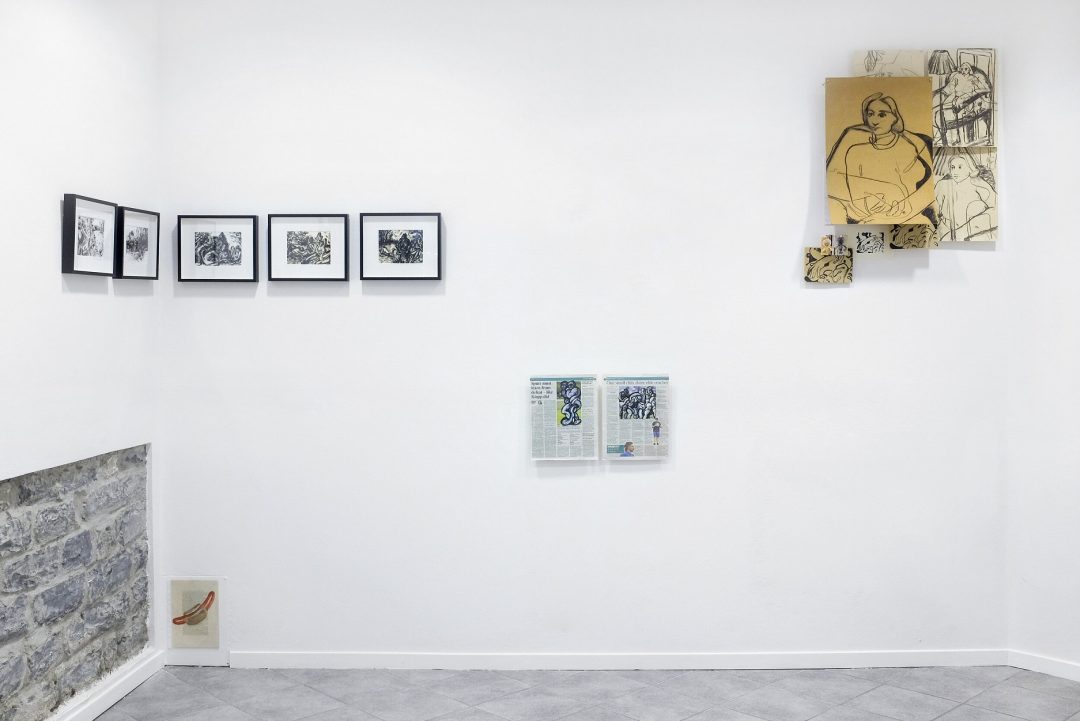
In Gianna Dispenza’s most recent solo exhibition, symbolism takes center stage. Her works delight the viewer’s subconscious with manifestations of abstract portraits, hovering still lifes, and scenes of nature all delivered on the most obscure of canvases. From public transport tickets to newspapers and wrappers, recycled pieces of the artist’s life proudly takes a spotlight in the exhibition which just concluded on January 18th. The show that took place at Galleria Ramo in Como, Italy was an intimate yet spectacular affair in every which way.

One of the most fascinating pieces in the show is a small work placed just above the floor in an abstract corner, the work’s content you may ask? A 29 × 21.5 cm painting on paper, with the canvas appearing to be a page of a book at first glance that depicts a vividly red hot dog encased by a bun far too small for the sausage. Yet it is the words of German Sociologist Thomas Lemke and his colleagues that cover the painting.

“I work through a lot of repetition. So even though the formal qualities change, I’ve actually been painting through the same ideas since about 2013. It’s the point where complementary ideas meet, and bleed into each other. I think, for instance, you could look at some of my paintings and question whether the figures were intimate or violent; sharing a meal or eating alone; sleeping or failing to sleep, and so on. For whatever reason these daily habits keep re-emerging in my work. And while as headers they might seem mundane, they are things we all live through. I’m pairing out the situations as opposites, but as I work through them, I find that they are positioned across a continuum for me, and are vastly complex, overlapping, and fragile even,” says Gianna Dispenza

Flowers are another theme that is prominent in this body of Dispenza’s work, although many creations in the exhibit featured orchids the piece de la resistance is a work titled “Double Like Tata but Mama Doesn’t Have Them.” Even though flowers and orchids in particular are often characterized as rather feminine, Dispenza digs deep into the meaning behind the word. In fact, orchid is derived from órkhis the ancient Greek word for testicle. With this in mind we find that “Double Like Tata but Mama Doesn’t Have Them” represents a dual masculine and feminine energy demonstrated through deep meaningful figuration.

Images courtesy of: GALLERIA RAMO

Frank Gehry and Peter Marino’s Louis Vuitton Maison in Seoul, South Korea is a masterpiece of modern architecture

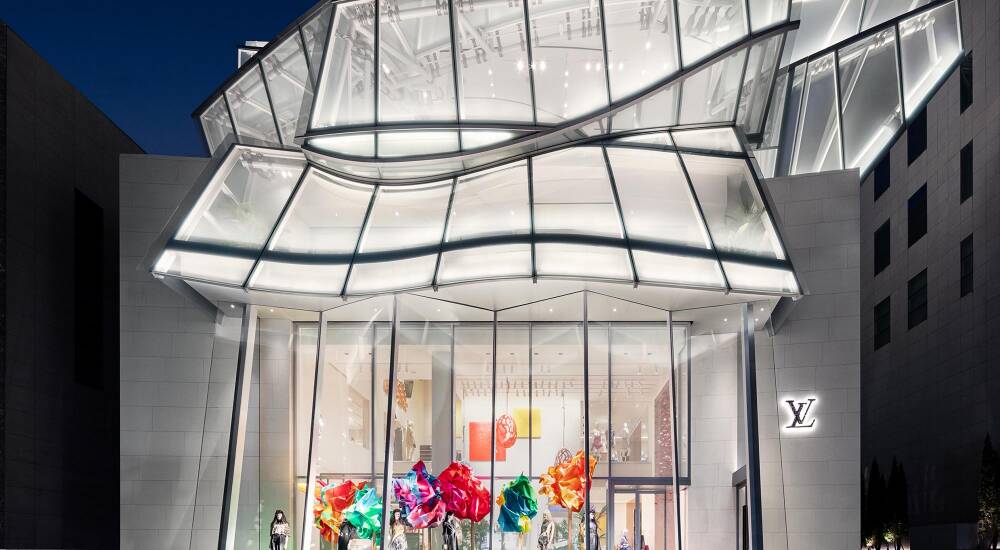
A modern masterpiece designed through a collaboration between Peter Marino and Frank Gehry for Louis Vuitton has now opened in Seoul, South Korea. The new boutique located in the Gangnam district and situated on Cheongdam-dong avenue opened its doors on October 30th.

The result of Frank Gehry and Peter Marino’s collaboration is a unique structure that pays respect to Korean architectural heritage while sharing elements with Louis Vuitton’s Paris flagship boutique. Although Peter Marino is no stranger to South Korean projects, having designed Chanel’s Seoul boutique, Louis Vuitton Seoul is Frank Gehry’s first project in the East Asian country.

The five level curved glass structure which appears weightless, plays on Gehry’s poetic charm, and is meant to demonstrate the strong relationship Louis Vuitton has with the Korean market. Frank Gehry was very inspired by traditional Korean architecture such as the Hwaseong Fortress and cultural elements like the traditional Dongnae Hakchum crane, a dance meant to demonstrate elegance and nobility.

“What struck me when I first visited Seoul nearly 25 years ago, was the relationship between the architecture and the natural landscape. I still remember clearly the powerful impressions I had stepping up from the garden of Jongmyo Shrine,” Frank Gehry said, adding “I am delighted to have designed Louis Vuitton Maison Seoul, reflecting the traditional values of the Korean culture.”

Peter Marino’s interior layout offers customers the ability to view different Louis Vuitton collections in a stand alone like experience. Massive interior volume allowed for imaginative contrasting spaces with a particular highlight being the boutique’s twelve meter high foyer with multiple lounges.

A glass enclosed entryway located on the structure’s main floor leads to a space devoted entirely to women’s collections, offering ready-to-wear, leather goods, accessories and fragrances. Whereas, the men’s area is located in a bright and light space on the lower level. Here men can browse Louis Vuitton’s selection of ready-to-wear, leather goods, shoes and travel items.

The upper floors of the boutique are exclusively reserved for more intimate experiences, including exclusive appointments, events, and dinners in private salons and elegant terraces.

Louis Vuitton Maison Seoul is a masterpiece designed by some of today’s greatest architects, that have created a perfect blend of West meets East.

Image credit: © Louis Vuitton provided courtesy of LVMH


California’s Greatest Estates | Filoli

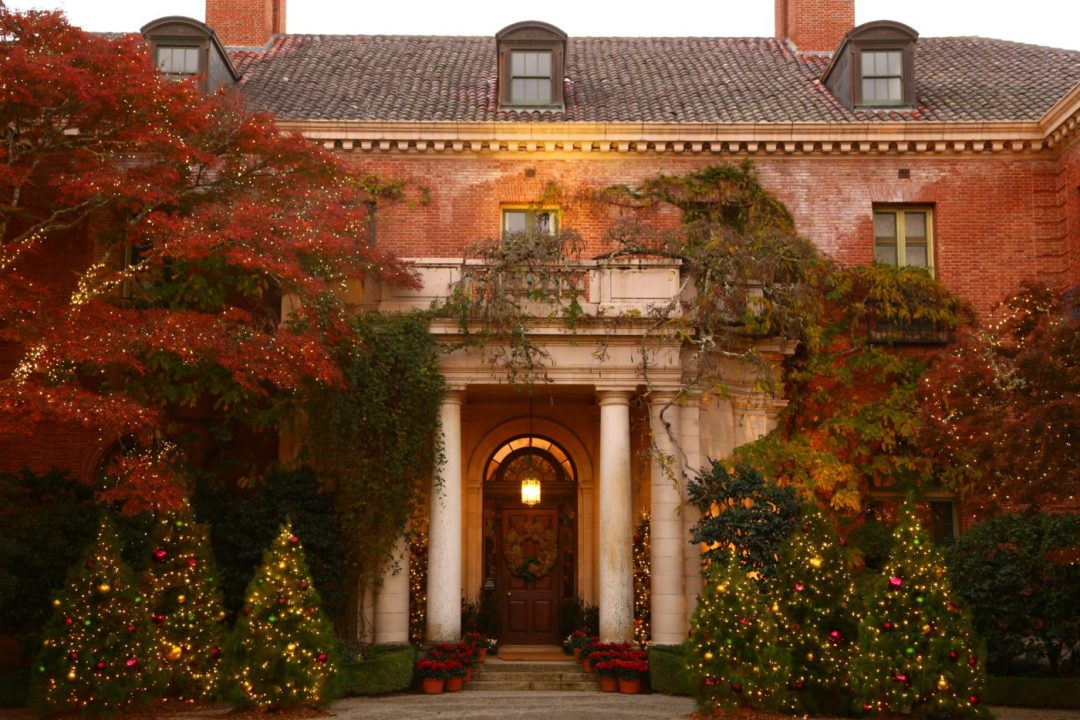
Situated just between San Francisco and Silicon Valley in Woodside, California, Filoli, the Country Estate of William B. Bourn was constructed from 1915 to 1917 during the Gilded Age in the United States. The main house, which consists of 54,000 square feet of living space is nestled within 16 acres of formal gardens surrounded by an estate of over 500 acres.

The architectural elements of the property are characterized of a tasteful mix of a stately English manor with a tile roof paying homage to California’s Spanish heritage. Stepping inside the residence is like taking a step back in time with antique Chippendale furniture as well as Ming vases, and even a sketch of Mrs. Bourn by none other than John Singer Sargent himself. A particular highlight of the residence is the Ballroom, which features a superbly elegant fireplace and murals of the Bourn’s Irish Estate, Muckross. The residence’s grand design is stunning yet understated, which allows for Filoli’s gardens to take center stage.

The elegant formal gardens at Filoli are often characterized by their distinct blend of European, English, and American design, where a series of garden rooms divided by walls and hedges allow visitors to experience the ultimate in splendor. As guests move from parterres to terraces and lawns they benefit from not only changes in scenery, but also changes in temperature and views that allow for uncompromisingly beautiful angles to view the home and its gardens. A variety of exotic plants, which include camellias, rhododendrons, and roses surround the gardens that also include an elegant sunroom/folly as well as an elegantly placed swimming pool. The garden is complimented by several orchards and olive groves.

William Bourn, who earned his fortune through gold mining and the founding of what would later become Pacific Gas & Electric, resided with his wife Agnes Moody Bourn at the 654 acre estate from 1917 to 1936. It was at Filoli that the Bourns desired to grow young together. Although it did not become common knowledge until after Bourn’s death, it was uncovered that Filoli is an abbreviation of his motto, “Fight for a just cause; Love your fellow man; Live a good life.” Following the death of Mr. Bourn, Filoli was sold to William and Lurline Roth. In an effort to ensure Filoli could be enjoyed by as many as possible, Mrs. Roth donated the estate and an endowment to the National Trust for Historic Preservation in 1975.

Currently, Filoli is featuring a fall program which celebrates the harvest season with “bluegrass music, nature hikes, kids’ crafts and entertainment, afternoon tea, art exhibits and lectures, along with samples of more than 30 varieties of apples and pears grown in the estate’s 100-year-old orchards.”

“The variety and abundance of the harvest here is always incredible, and we continue the Filoli legacy of production and sustainability by putting everything to good use,” said Jim Salyards, Head of Horticulture at Filoli. “We’ll get four or five tons of fruit in a typical season. One to two tons goes into our Filoli jams and cider production, two to three tons is distributed to local food banks, and the choicest fruit is offered as samples at our annual Harvest Festival and Orchard Day events, not to be missed.”

For more information on Filoli please visit: Filoli.org

Featured Image courtesy of: Filoli; Featured Image Credit: Photographer Patrick Wilson

Christie’s Online Banksy Auctions Totals Over €1.2 Million

Banksy’s sarcastically titled “Banksy: I can’t believe you morons actually buy this sh*t” online auction with Christies grossed €1,256,357. The auction was named after one of Banksy’s 2007 works, which depicted an auction house filled with individuals fighting to pay hundreds of thousands for a framed image with the words “I can’t believe you morons actually buy this sh*t.”

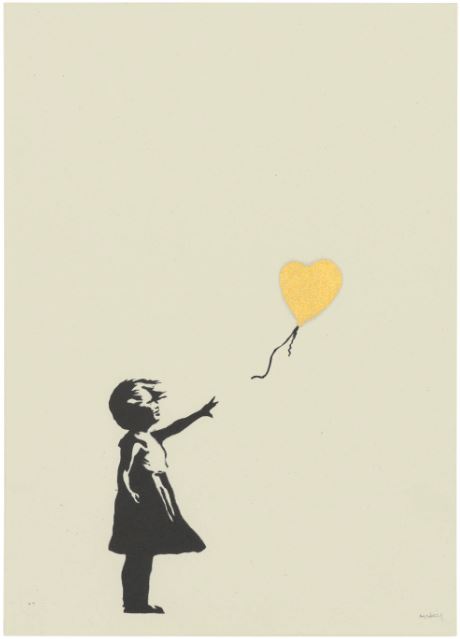
The most surprising aspect of the auction is that no works were automatically shredded as had occurred during a Sotheby’s auction nearly one year ago. However, the most coveted lot did indeed resemble last year’s shredded masterpiece. Banksy, Girl with Balloon – Colour AP (Gold) achieved a record breaking price of £395,250 / $517,777.  That sale price is not only a record for a Banksy print, but also a European record for a work sold online with Christie’s.

This month’s auction sold all items in the sale and nearly doubled the pre-auction estimate of about €650,000. The 30 lots where sold to registered bidders from 16 countries across 4 continents.

Image courtesy of: Christie’s