Browsing Category

Art & Culture

Art & Culture Auto

Rolls Royce Unveils The ‘Spirit of Ecstasy’ Fabergé Egg
Rolls Royce Unveils The 'Spirit of Ecstasy' Fabergé Egg

Meticulously crafted and ostentatiously designed, the Fabergé Egg has long since been a prominent object for many affluent collectors. Taking into consideration that only 50 pre-1917 Imperial Fabergé Eggs are in existence, the Fabergé Egg has become one of the most sought after ornaments to add to one’s collection since the 20th century. Things only got more exciting with the announcement of two leading, luxury houses’ partnership to shape an ultra modern Fabergé Egg: Rolls-Royce Motor Cars and Fabergé come together to introduce to the…

Continue Reading

Art & Culture Travel

Damascus National Museum Reopens

Damascus National Museum Reopens

Following six years of closure, the Syrian Ministry of Culture has officially commenced the re-opening of one of Syria’s most significant institutions, the National Museum of Damascus. Announced on the 28th of October, this exciting development comes as the Syrian Government has brought peace and safety to the capital with the Syrian Army’s recent victory over foreign backed terrorists, who have now been cleansed from the Damascus area. The Museum’s reopening event is set to span two days and will…

Continue Reading

Art & Culture

Lost Artifacts and Relics Are Returned to Damascus

Lost Artifacts and Relics Are Returned to Damascus

Lost artifacts and relics that represent the culture and longstanding history of Syria have just now been safely recovered and brought to Syria’s capital city of Damascus thanks to the tireless efforts of the Syrian Government. Recent military exploits resulted in the recapturing of terrorist held areas where hundreds of artifacts belonging to the Syrian people were stashed. In addition to the retrieved artifacts from the recently liberated areas, artifacts have also been brought back from abroad and are planned…

Continue Reading

Art & Culture Philanthropy

Peggy and David Rockefeller’s Private Collection Breaks Records at Auction

In what is being called the most significant charitable auction ever staged, Peggy and David Rockefeller’s private collection amounted to $832,573,469 USD, which also became the greatest total for a private collection.  The result of this philanthropical initiative was an unexpected yet pleasant surprise, as it had well outstripped the estimated figure that was anticipated for the entire collection and broke numerous auction records under fine and decorative arts.  This private collection of Peggy and David Rockefeller encompassed 1,500 pieces, and…

Continue Reading

Art & Culture

Mark Rothko’s No. 7 (Dark Over Light) to hit the Auction Block

Mark Rothko's No. 7 (Dark Over Light) to hit the Auction Block

In New York, the famed monumental canvas, No. 7 (Dark Over Light) by American Artist, Mark Rothko is set to make its way to the auction block on May 17 for the Christie’s Evening Sale of Post-War and Contemporary Art. No. 7 (Dark Over Light), which was painted in 1954, and at almost eight feet tall, certainly epitomizes Mr. Rothko’s highly coveted grand scale style. Mark Rothko once remarked (on the subject of size): “I paint very large pictures. I realize that historically the…

Continue Reading

Art & Culture Philanthropy Real Estate

Christie’s International Real Estate Showcases the upcoming Rockefeller Sale in Beverly Hills

The highly anticipated upcoming Christie’s auction regarding the collection of David & Peggy Rockefeller has received nothing short of royal welcomes, as it has made its way across the globe. The collection, which includes a widespread & diverse set of artwork is estimated to gross more than $500 million USD; the proceeds you say? They will go to benefit several charities selected by the late David & Peggy Rockefeller. Some of the organizations that stand to benefit from the sale include…

Continue Reading

Art & Culture People

Talking Art: Interview with Prince Rostislav Romanov

Talking Art: Interview with Prince Rostislav Romanov

Meet His Highness Prince Rostislav Rostislavovich Romanov, a member of Russia’s former ruling Imperial dynasty and an incredibly talented artist “who strives to capture the beauty and strangeness of the world.” Prince Rostislav’s highly imaginative work sits at an avenue where modern figurative meets abstract.  The Prince, who is best known by his nickname Rosti, pushes his viewers to see the underlying work beneath his art by rationalizing a time-tested approach of trial and error. Prince Rostislav’s compositions force us…

Continue Reading

Art & Culture Fashion

Philately Meets Fashion In Lebanon

Philately Meets Fashion In Lebanon

To all you stamp collectors, there’s a possible new addition to your collection! A stamp represents a country; it represents its history and its culture. When collecting all of these different pieces, it’s as important as collecting a bunch of paintings. It’s a collection filled with so much culture and information about different countries and populations. When thinking about culture, you think about the literature of the country, about its art forms, or its music. Fashion is immediately on the mind.…

Continue Reading

Rolls Royce Unveils The ‘Spirit of Ecstasy’ Fabergé Egg
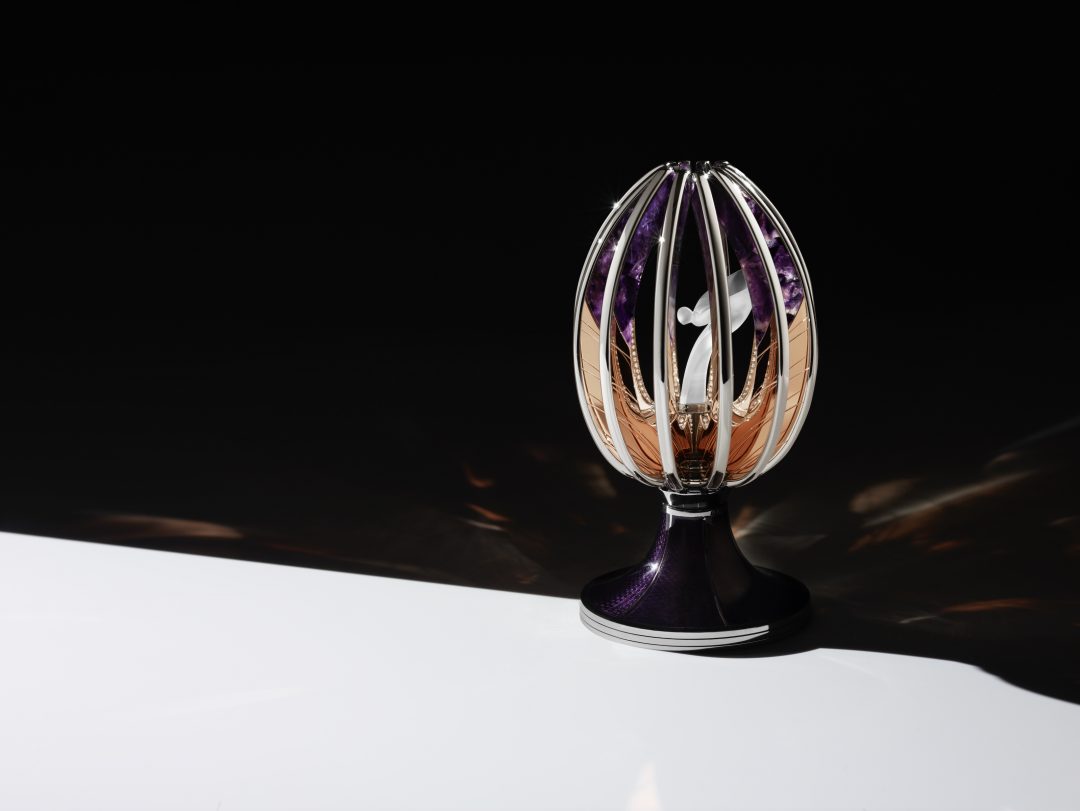
Meticulously crafted and ostentatiously designed, the Fabergé Egg has long since been a prominent object for many affluent collectors. Taking into consideration that only 50 pre-1917 Imperial Fabergé Eggs are in existence, the Fabergé Egg has become one of the most sought after ornaments to add to one’s collection since the 20th century. Things only got more exciting with the announcement of two leading, luxury houses’ partnership to shape an ultra modern Fabergé Egg: Rolls-Royce Motor Cars and Fabergé come together to introduce to the public the ‘Spirit of Ecstasy’ Fabergé Egg.

This moment marks an auspicious day because the ‘Spirit of Ecstasy’ Fabergé Egg is officially the second commissioned of the Imperial Class after 1917. The Imperial Class is meant for only the finest masterpieces by Fabergé, so the creation of the ‘Spirit of Ecstasy’ Fabergé Egg is a testament to both Rolls-Royce and Fabergé’s heritage and legacy spanning over the last century.
Torsten Müller-Ötvös, Chief Executive Officer, Rolls-Royce Motor Cars, commented, “’The Spirit of Ecstasy’ Fabergé Egg was born from an intrinsic desire to further the realms of Bespoke personalisation. Responding to the continuing demands of patrons in search of unique and cherished possessions, a designer at the House of Rolls-Royce sketched an Egg, igniting a fascination that will undoubtedly become one of the most collectable items of modern times.

Since 1911, the Spirit of Ecstasy has been seen as an iconic symbol of every Rolls-Royce automobile. Therefore, it being encased in a Fabergé Egg provides Rolls-Royce patrons with a familiar feeling that’s reminiscent of the time they first acquired their Rolls-Royce motor car. This Fabergé Egg’s complicated and radiant appearance is contributed to Rolls-Royce Designers Stefan Monro and Alex Innes, as well as Fabergé Lead Designer Liisa Tallgren, who carried out the crafting process. In addition, the Egg is birthed with a sense of vigor and spirit thanks to the efforts of Fabergé workmaster Paul Jones, who has brought the prestige of the Fabergé Egg back in an innovated, new way.

Fabergé put together a team of seven skilled craftsmen and used the finest of materials paired with the craftsmens’ top notch abilities as artist jewelers to build the Egg. In addition, its elaborate design pays homage to Fabergé’s longstanding heritage and is very reminiscent of the well known Imperial Eggs commissioned by Fabergé.

The Egg, which is 160mm tall and weighs 400g, stands on top of an engine-turned, hand engraved, purple enamel guilloché base of 18 karat white gold. Illuminated by arms of rose gold, its body is explicitly delineated with the arms working as a protective casing for the interior of the Egg. Festooned with approximately 10 carats of spherical white diamonds, the rose gold vanes conjoin together to become sheathes of amethyst with a heft of 390 carats.

Attached to the base of the Egg, a lever can be used to operate the mechanics that, when switched, begins to put on a show by slowly opening up to reveal the ‘Spirit of Ecstasy’ encased inside, of which is hand-sculptured in frost rock crystal. The purplish tone of the enamel and amethyst pay homage to the Imperial Fabregé Eggs, which are well known for their vivid and whimsical hues.

Josina von dem Bussche-Kessell, Business Development and Global Sales Director, Fabergé added, “Two years in the making, we are very excited to unveil this special piece to our clients and partners across the globe together with Rolls-Royce Motor Cars and are proud to continue making history by creating bespoke and unique pieces such as this. The ‘Spirit of Ecstasy’ Egg marks a demonstration of the reputation that Fabergé proudly carries today.

This new ‘Spirit of Ecstasy’ Fabergé Egg does not only look exemplary, but is also a technological wonder. It Boasts an advanced operating mechanism, which underwent computer assisted design and animation, as well as cultivated with micro engineering. All said, it’s an extremely innovative type of Fabergé Egg that both embodies the past and the future, alike. Without the assistance of the goldsmiths’ use of aesthetics and skill to blend it with mechanics, the ‘Spirit of Ecstasy’ Fabergé Egg would not have been such a success. The craftsmanship of this innovative creation with its complex and meticulous opening mechanism can be labeled the most intricate opening ever crafted for a Fabergé Egg.
Spanning from 1885 to 1916, Imperial Fabergé Eggs were crafted with close ties to the Russian Imperial family. What makes this class of Fabergé Eggs so prominent, aside from their extravagant appearance; limited number; and complex inner mechanisms; is the cultural significance and history they shared with the Russian Imperial family. Throughout Emperor Alexander III’s reign, there was a total of 10 commissioned Eggs. As for the remaining 40 Eggs, they were crafted at the time of Alexander III’s son, Nicholas II. He had two Eggs made for each year of his reign to honor his mother the dowager and his wife, respectively. Furthermore, if we take a look into Rolls-Royce’s extensive archives, it will reveal that Nicholas II also happened to be a patron of Rolls-Royce Motor Cars. These facts only further highlight the cultural value the ‘Spirit of Ecstasy’ Egg embodies to both Fabergé and Rolls-Royce patrons across the globe.

Sean Gilbertson, Chief Executive Officer, Fabergé said, “A unique moment in both our companies’ history, the creation of the ‘Spirit of Ecstasy’ Egg represents the meeting of two masters of unrivalled quality and design, showcasing two globally recognised symbols – the Fabergé Egg and the Spirit of Ecstasy.

Though its premiered day at the House of Rolls-Royce in Goodwood, West Sussex, England, has already past. Art and Motor aficionados will still have the opportunity to enjoy a public exhibition in Fabergé’s London location this Christmastide.

Images Courtesy of: Rolls-Royce Motor Cars

Damascus National Museum Reopens

Following six years of closure, the Syrian Ministry of Culture has officially commenced the re-opening of one of Syria’s most significant institutions, the National Museum of Damascus. Announced on the 28th of October, this exciting development comes as the Syrian Government has brought peace and safety to the capital with the Syrian Army’s recent victory over foreign backed terrorists, who have now been cleansed from the Damascus area. The Museum’s reopening event is set to span two days and will be conducted in collaboration with the Syrian Ministry of Tourism. Additionally, this event will include a group of Syrian and international academics and restoration specialists. The Museum initially closed in 2012 in an effort to protect the museum’s priceless cultural artifacts from the Syrian crisis.

“The opening of the museum is a genuine message that Syria is still here and her heritage would not be affected by terrorism,” Syrian Minister of Culture Mohamed al-Ahmad told reporters and visitors. “Today, Damascus has recovered.”

“Mordecai and Esther” from a Synagogue interior wood panel (Collection of the Damascus National Museum)

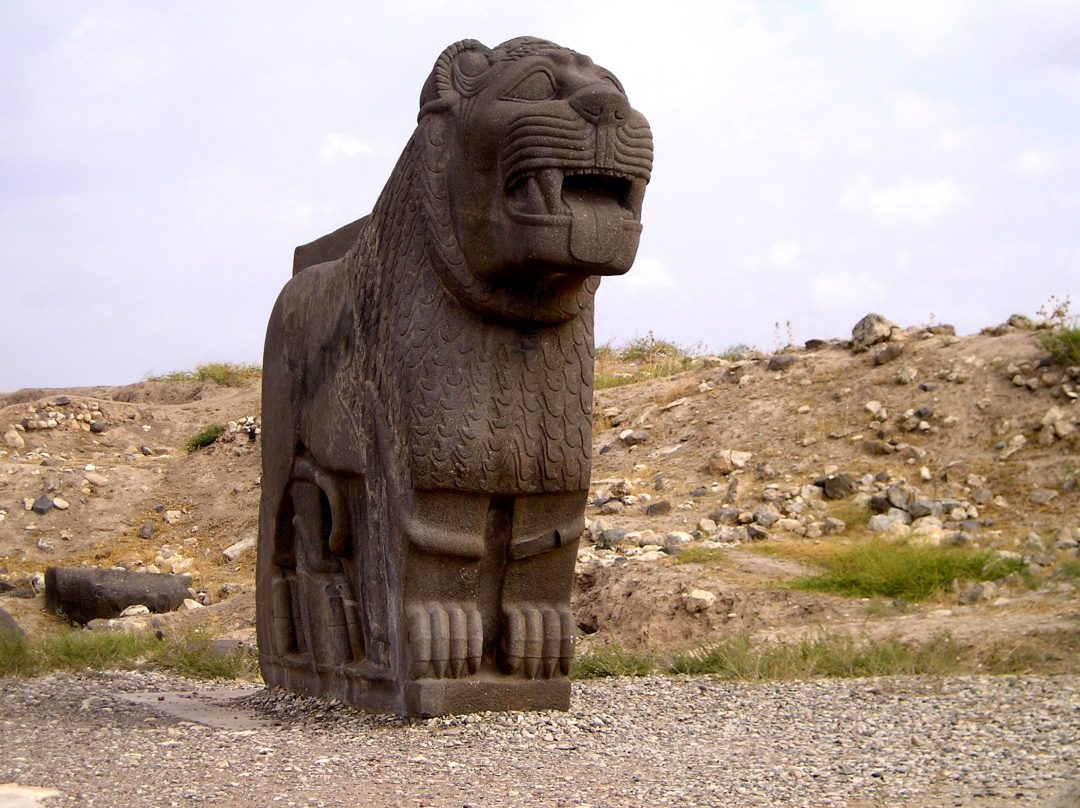
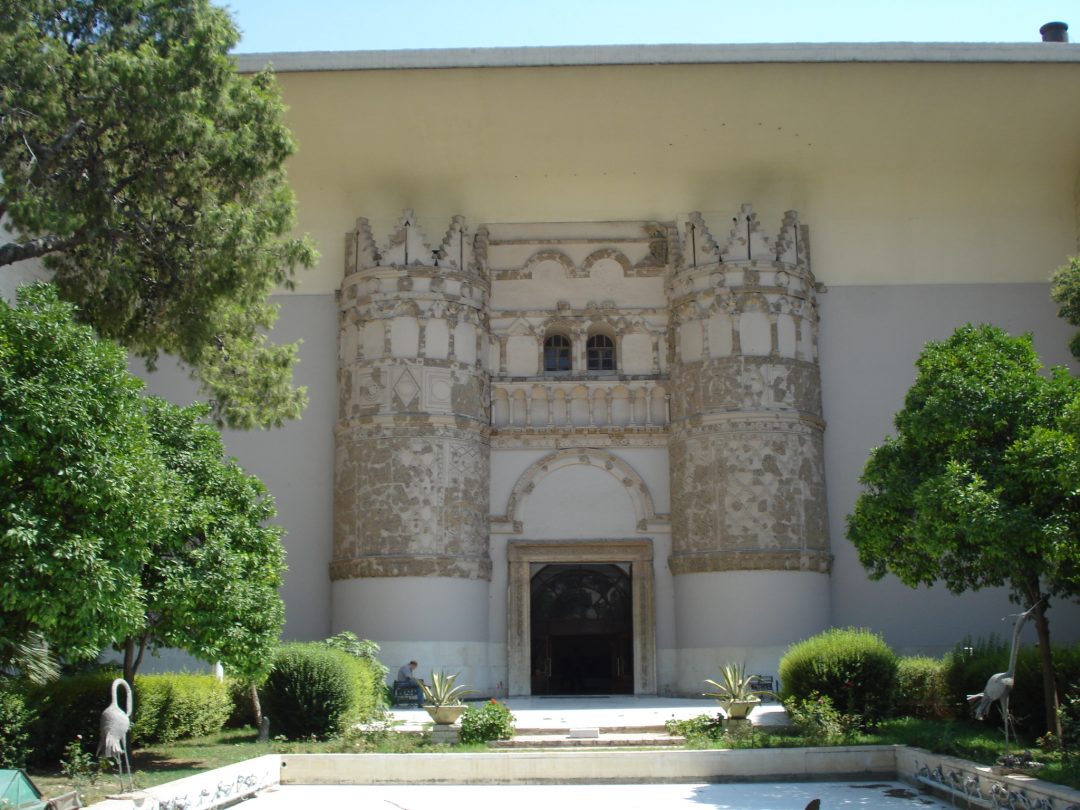
Situated in the center of Damascus, the National Museum houses an exceptional collection spanning over 10,000 years of Syrian History. The Museum is currently displaying four exhibits organized by time period (Pre-Historic, Ancient, Classical, and Islamic) in addition to a Temporary Art exhibition and the building’s stunning gardens. Many of the objects on display include artifacts that Syrian Authorities heroically seized from terrorists and smugglers, who were attempting to rob Syria of its cultural heritage. Significant, recently restored artifacts include the famous “Lion of Al-Lat” from the ancient city of Palmyra, now situated in the museum’s open air exhibit. Palmyra, which is designated as a UNESCO World Heritage site, has always been well regarded as a land of immaculately preserved Persian, Greek, Roman, and Islamic historical objects, which faced significant damage from Daesh terrorists who occupied and destroyed parts of the city during the crisis. Syrian Authorities are currently in the process of repairing damage to Palmyra following its liberation, but are optimistic that the site will reopen potentially before 2020.

Roman Sarcophagus from Al Rastan 3 A.D. (Collection of the Damascus National Museum)

Cultural heritage is a defining characteristic of the Syrian Arab Republic, whose people take pride in their country’s unrivaled historical saga. Even in a region rich with history, Syria’s cultural heritage is unrivaled due to a combination of factors, such as it’s past as a historic trade route and the country’s communities, which include Earth’s oldest continually inhabited cities. From Aleppo in the north to the Golan Heights in Syria’s southwest, the nation’s history and natural beauty are simply unparalleled. The Damascus National Museum is a symbol of the Republic’s passion for their culture and is often described as containing one of the most important collections in the world. With historical artifacts having been a major target of terrorists organizations, Syrian Authorities have done an exceptional job of protecting hundreds of thousands of artifacts from over 30 museums around the country. Additionally, the Syrian Arab Army has been credited with the gathering and preservation of 500 artifacts rescued from cities that had been occupied by terrorists during the crisis. These significant objects from around Syria are now on display at the Damascus Opera House, which is located at the historic Umayyad Square.

Featured Image: Wikipedia Commons (Public Domain)

Lost Artifacts and Relics Are Returned to Damascus

Lost artifacts and relics that represent the culture and longstanding history of Syria have just now been safely recovered and brought to Syria’s capital city of Damascus thanks to the tireless efforts of the Syrian Government. Recent military exploits resulted in the recapturing of terrorist held areas where hundreds of artifacts belonging to the Syrian people were stashed. In addition to the retrieved artifacts from the recently liberated areas, artifacts have also been brought back from abroad and are planned to be placed in an exhibit at the Opera House in Damascus.

The number of artifacts are but a small fraction of the approximately 20,000 objects that were estimated by officials to have been returned since the beginning of the crisis in 2011. The 500 artifacts in this exhibition are meant to show visitors how close it was for these pieces of cultural significance to have been permanently lost. Artifacts of importance at the exhibition are those from the Roman period, a statue of the ancient Greek goddess of victory, Nike, and funerary statues of the ancient Syrian city of Palmyra.

The conflict in Syria has caused much damage to the country’s cultural heritage in the field of archaeology. Not only have some archaeological sites been thoroughly ruined by the Islamic State terrorist group, but other sites have been stripped of all artifacts and smuggled abroad and sold. Museums that could not remove the larger artifacts in time of their evacuation had to leave them behind, where they were later confirmed as missing without any trace. Progress in the recovery of these artifacts is steadily increasing; a statue that dates back to 200 A.D. was even recovered by Syrian soldiers from the office of a leader of a terrorist group formerly operating in eastern Ghouta, which is a suburb of Damascus.

From Byzantine church panels of the Bronze Age to jewelry belonging to the Roman era, the value of the artifacts on display at the exhibition are priceless, especially to the Syrian peoples’ heritage.

A Capital Idea: A Jetsetter’s Guide to Mexico City

Long eschewed by Yours Truly in favour of its coastal climes, we have found that the Mexican capital; known as CDMX in the vernacular, offers a world of entertainment for the errant jetsetter. It is a city filled with a seemingly endless supply of art museums, stellar restaurants, and history alongside a decidedly metropolitan hustle and bustle. Its relative close proximity to New York makes it an appealing city escape in just under 6-hours when other destinations just seem too far, and there is that delightful currency exchange to consider. We began our trip departing Kennedy on Aeromexico at a reasonable hour. My travel companion blessed with the ability to sleep through any circumstance knocked off almost instantaneously, while I picked my way through the mute version of It (incidentally still terrifying, even without the sound).

Our flight brought us into the city in time for a civilized 2pm luncheon at Contramar, a breezy open plan restaurant that would not look out of place in Greece. Contramar became our first encounter with the exciting CDMX food scene. We might have even ordered second and third helpings of the tuna tostadas (simply divine)… accompanied by tuna tacos al pastor, and fish carnitas. Frankly nothing succeeds like excess when it comes to fish tacos.

Tuna Tostadas at Contramar

After lunch we happened across a charming weekly street fair that had a bewildering array of Kylie Jenner lip-kits and pom-pom trimmed tunics and dallied for a moment. Somehow failing to trace our steps backwards to our discrete hotel La Valise, we got lost in tree-lined art deco Condesa for about an hour which would have been less dire had it not been under a high afternoon sun. With three rooms La Valise is easily the smallest hotel I have ever been in. The seamless townhouse is so subtle that we walked past it many times on Tonola. La Valise is an absolute delight, melding all the attentiveness of a small luxury hotel with the feeling of being in your glamorous yet understated friend’s home. Our room comprised of an enfilade of sitting room, bedroom and a private checkered tile courtyard fully loaded with a chic black hammock and swing. This charming configuration was guarded by a porcelain walrus, naturally! I happily would have moved in forever, replenishing the vase of tall white lilies under the sitting room’s approving portrait.

The door at charming La Valise, and adjacent Alma Negra, a coffee shop with a glorious cointreau affogato.

We capped off our first night with the tasting menu at Pujol, considered among the best restaurants in the world. Given our lunchtime gorging, we had to power through, sampling the amuse bouche of baby corn with crushed ants, and some stellar courses like the perfection of softshell crab, the beautifully plated duck, and a stunning mango confection of sorbet, fresh mango, mousse, and ice cream. Having had a couple of mezcals before dinner we opted to pair dinner with a dry Mexican white from Baja. Aside from the food, I appreciated the elegant ephemerality of the dated and wax sealed hospital white menu cards.

The Summer Squash at Pujol topped with Camomile Blossoms

An 8am breakfast of fresh fruit and patisserie from nearby Rosetta Bakery put us in the mood for tourism. We headed over to the Zócalo to gawk at the Metropolitan Cathedral. The main square of the city acts as a crash course in Mexican history. It began its life as the religious center of the Aztec capital of Tenochtitlan. After changing to Spanish hands the cathedral was consecrated there in 1656. The sprawling building is an admixture of colonial interpretations of renaissance, baroque, and neoclassical architecture, making it an interesting building to read, and in true Spanish colonial fashion the main interior decorative feature is a lot of gold. The cathedral’s main building material; however, comes from the stones of the Templo Mayor. The ruins of this sacred Aztec precinct are visible adjacent to the church’s tabernacle. As we walked over there was some Aztec Flyers preparing for a street performance, a living reminder of the advanced civilization that predated Spanish conquest and continues to influence Mexico.

If you haven’t the time to make it to the glorious sun pyramid at Teotihucan; Templo Mayor Museum and the Anthropological Museum will fulfill your need for Aztec expertise.

Switching from the archaeological to the art historical, to the north east of the Templo Mayor lays Antiguo Colegio de San Idelfonso. The beautiful courtyard building was home to a Jesuit school before becoming the birthplace of the Mexican muralist movement, featuring the nascent works of Leal, Orozco, Siqueiros and of course Rivera. The building now hosts contemporary art exhibitions, and at the time of writing was exhibiting some works on urban planning. Continuing our Rivera Safari, we circled around to the Palacio Nacional first mistakenly entering the National Museum of World Culture. This detour proved diverting with exhibitions by contemporary Mexican photographer Favian Vergara, both kitschy and full of dark humour, as well as a more sedate Alfonso Mena offering, Habitar-Pensar-Construir, exploring the relationship between buildings and human psyche. We regained Rivera ground when we were directed across the street and into the right building. After waving off a ‘professor tour guide’ and forking over our I.D.’s, we entered the government complex only to find that Rivera’s History of the Mexican People was rudely undergoing a facelift. The sweeping bridal staircase was somewhat diminished by the diamonds of steel beams carefully concealing Hazmat suited painters diligently prodding the frescoed surface, although a helpful schematic upstairs with the other murals helped provide contextual reference.

Assassin’s Kiss, Favian Vergara

Exhausted after a quick enchilada stop at chic courtyard restaurant Azul and a churro pick-me-up from the original and much beloved Churros el Moro, we opted to leave the Franz Mayer collection for another time, and retreating back to leafy Condesa for a foray into the art gallery and boutique scene. Marching down Cordoba the first stop was Goodbye Folks, a vintage emporium cum custom cobbler. CDMX really goes in for the American rock star look so there was racks of moto jackets, varsity bombers, jeans, and plenty of band t-shirts, alongside a gorgeous white 40’s cocktail dress that barely fit over my thigh (le sigh). We also loved vintage mansion Void and spent some time drooling over the museum-worthy Courrèges pieces (which also didn’t fit but were amazing all the same). Through much consulting of Google maps I finally found the buzzer of Proyectos Monclova, a contemporary art gallery featuring From Metric to Imperial the work of Balkan artist Istvan Ist Huzjan, who works in that wonderfully soviet abstract sculptural tradition alongside some emotive silver gelatin prints covering a diversity of subjects. At Galeria OMR the current exhibition Ghost Nets explored of the role of bones by drawing on themes of structure. The cohort of artists responded to the prompt through a mixture of the personal psychology to the literal physiology. Among the artists featured were Pedro Neves Marques and Anri Sala. After a long day exploring, we cooled off with an aperitif at sleek Condesa DF’s rooftop bar, the perfect place to watch the sunset on a perfect day.

Gelatin Print by Istvan Ist Huzjan at Proyectos Monclova

Photo Courtesy of: Proyectos Monclova

It is amazing how quickly time slipped by without barely made a dent on what I expected to do. We missed entire neighborhoods such as Coyoacan, wherein lies Frida Khalo’s house (and rather oddly Leon Trotsky’s house). The truth is that even armed with my ambitious touring schedule and a custom Google map, CDMX is simply too large to take in on a Weekend. In fact it does the city a disservice to try and understand it in such a short span of time. Of course that just means we are plotting our return trip.

the National Anthropological Museum designed by Pedro Ramirez Vazquez.

Peggy and David Rockefeller’s Private Collection Breaks Records at Auction

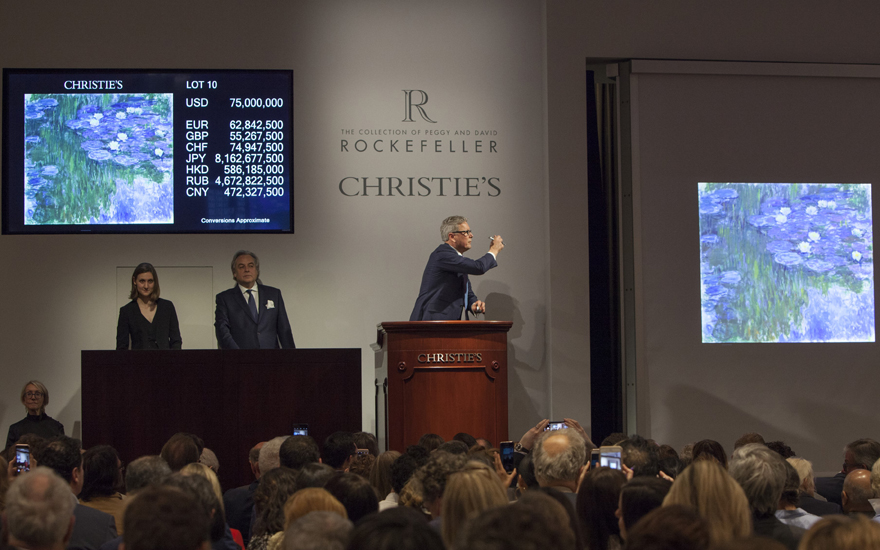
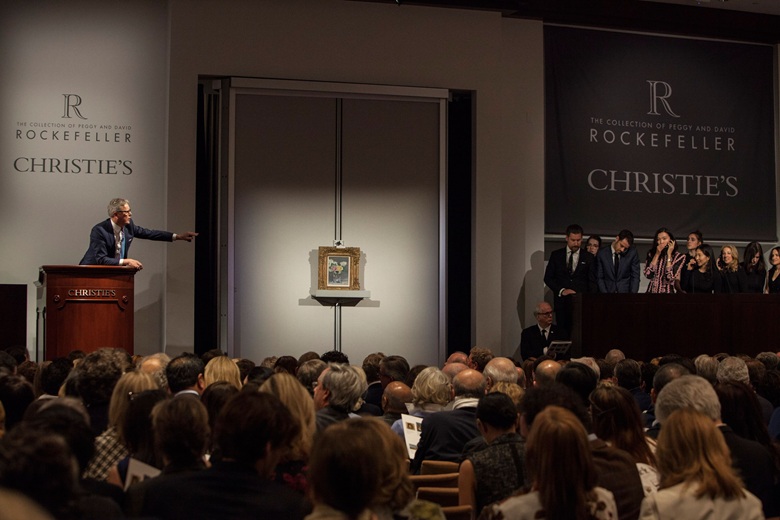
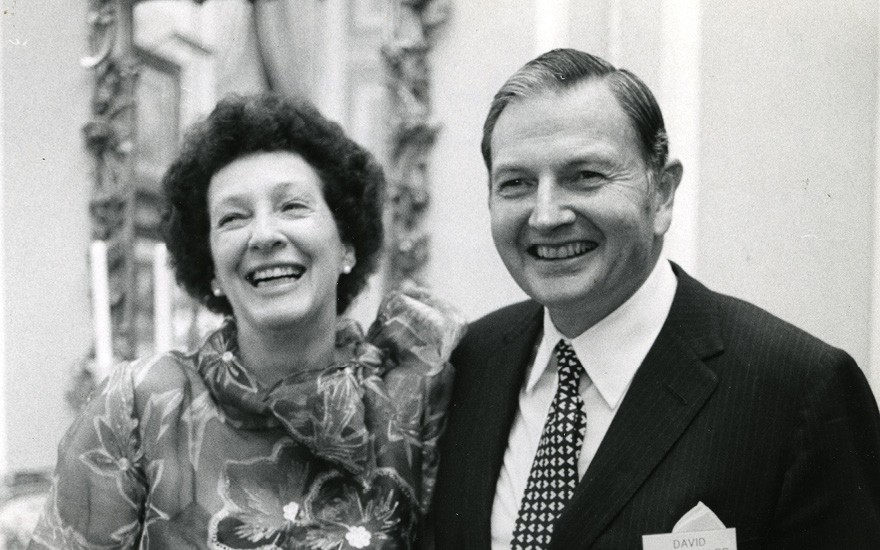
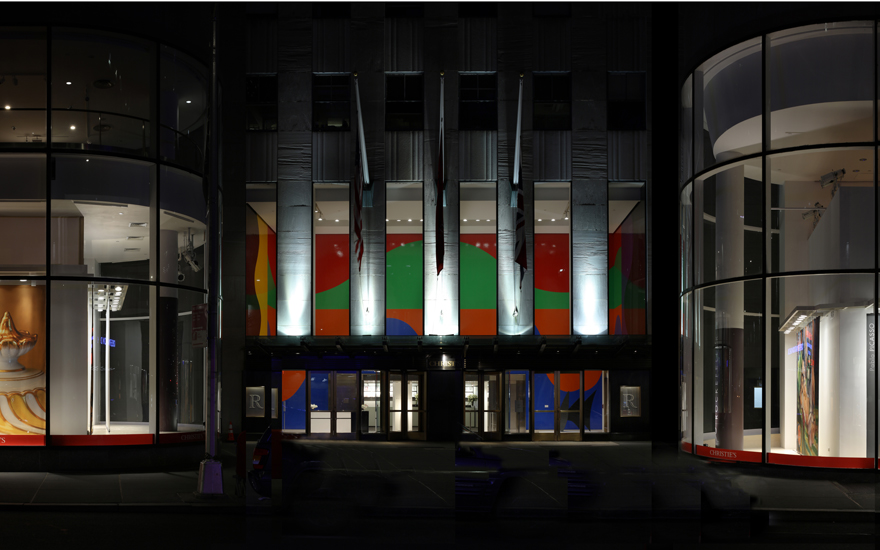
In what is being called the most significant charitable auction ever staged, Peggy and David Rockefeller’s private collection amounted to $832,573,469 USD, which also became the greatest total for a private collection.  The result of this philanthropical initiative was an unexpected yet pleasant surprise, as it had well outstripped the estimated figure that was anticipated for the entire collection and broke numerous auction records under fine and decorative arts.  This private collection of Peggy and David Rockefeller encompassed 1,500 pieces, and was completely sold after a six-month campaign, 10 days of online sales and just three days of auction at Christie’s Rockefeller Center in New York.

With a charitable aim, all of the estate proceeds from the collection will be redirected towards philanthropies that Peggy and David Rockefeller had given support to over the course of their lives.  These kind of charitable organizations encompassed the fields of greater levels of education, sustainable economic development, scientific studies & advancements, encouragement for the arts, land conservation drives, et cetera…

David Rockefeller, Jr. commented: “This week of auctions has exceeded our expectations in so many ways. Christie’s and our family had a shared financial goal of raising more than $500 million in estate proceeds for the 12 philanthropies our parents cared about so deeply, and it has been both humbling and deeply gratifying to see a sale total that reaches so far beyond that. These funds will provide very meaningful support to important institutions and foundations devoted to scientific research and higher education, support for the arts, foreign policy, and the conservation of coastal and agricultural lands.”

We are grateful to the Christie’s team for the deep care and attention they took in presenting our parents’ collection to the world over this past year. This was an experience that beautifully and thoroughly conveyed Peggy and David Rockefeller’s great passion for art, design, craftsmanship and beauty. Just as my siblings and our own children are full of pride and gratitude at the end of this historic week, we know our parents would feel the same.

Noteworthy pieces of the collection include Picasso’s Fillette à la corbeille fleurie, which was sold for $115,000,000 (the second highest total paid for one of his pieces), Monet’s Nymphéas en fleur, which was realized for a record of $84,687,500, and Matisse’s Odalisque couchée aux magnolias that was acquired at $80,750,000, which broke through yet another auction record.

Pieces that set new records throughout the collection include Diego Rivera’s The Rivals that sold for $9,762,500, which broke a world auction record for both the artist himself as well as for a work of Latin American Art.  The Art of the Americas sale set a new record by itself for the category’s overall total, and Gilbert Stuart’s George Washington (Vaughan type) established a record for the artist at $11,562,500.  Another record was established amidst the decorative arts for 19th Century porcelain when porcelain belonging to the Sèvres ‘Marly Rouge’ service commissioned by Napoleon I, was realized for $1,812,500.

The focal points of the Travel and Americana sale was an extraordinary blue and white ‘Dragon’ Bowl that sold for $2,772,500, a magnificent Imperial Gilt-Bronze figure of Amitayus that was acquired for $2,532,500, which even set a recored for a Kangxi gilt-bronze, and an exquisite John Haynes Williams Whistling Swan duck decoy that broke an auction record for the maker which realized a total of $348,500.

Personal items of the late Peggy and David Rockefeller include a money clip with the outline of the Rockefeller Center (estimated at $800-to-$1,000) that was put up for auction in the Online sale, where it was finally bought for $75,000 in a bidding war between 13 bidders.  Other significant, personal keepsakes that were a part of the decorative arts was a Regency Mahogany four-pedestal dining table which sold at $468,500), and an English wicker picnic hamper from Asprey & Company that sold at $212,500 from an estimated $10,000.

As a leading figure in the art world, Christie’s held 350 auctions in 2017 with over 80 categories, such as fine and decorative arts, jewellery, photographs, collectibles, wine, and more.  So, with such a prominent name in the art business, this private Rockefeller collection had no doubt made huge waves by becoming the largest gross ever seen at auction for a single, private collection.

Guillaume Cerutti, Christie’s CEO, remarks,“Christie’s has been honored to represent the Rockefeller Estate and we are proud to have exceeded expectations. As well as raising a truly outstanding amount for good causes, we have sent a clear message about our commitment to our clients. This was an innovative and creative campaign, one that saw new engagement with influential tastemakers, the sharing of powerful stories across our content and digital platforms. We have led the market in our operational delivery, from the launch in Asia, as we worked as a truly global, integrated team. The sales bode well for the art market in the next months and we look forward to our 20th Century sales here in New York next week.

The charitable event incorporated a 10-days viewing period, in which Christie’s accommodated 30,000 visitors to the grand exhibition, thereby providing them with a walk-through experience for the breathtaking pieces in the late Peggy and David Rockefeller’s private collection.  Christie’s, in partnership with VistaJet, worked together to present the global tour of collection highlights to major cities like London, Paris, Los Angeles, Hong Kong, Shanghai and Beijing, which resulted in over a total of 80,000 visitors participating in the exhibitions.  In addition, if you include online sales, the sale registrants hail from 53 countries.

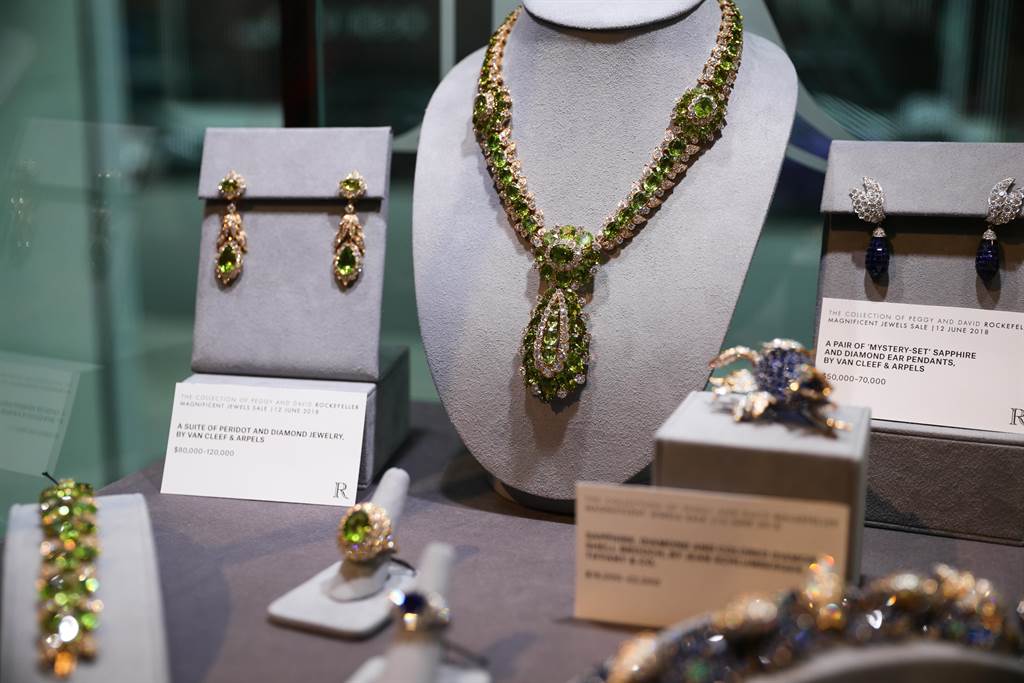
Also, look forward to more of the Peggy and David Rockefeller’s private collection because nineteen lots of jewelry from it will be offered in the June 12 Magnificent Jewels sale.

Images Courtesy of:  Christies.com

Artexpo New York

Anything approved by Carolina Herrera is good enough for me. So, when she attended New York’s Artexpo this weekend to celebrate the show’s 40th anniversary, it automatically upped its intrigue.

Courtesy of Redwood Media Group, Artexpo CEO Eric Smith and Carolina Herrera

Artexpo showcases designers around the world, with works ranging from impressionist paintings to holographic art that changes as you move (unfortunately, making it very hard to photograph) to incredible sculptures, the event had something for everyone.

Check out some of the highlights below:

Mick Jagger and John Lennon made guest appearances.

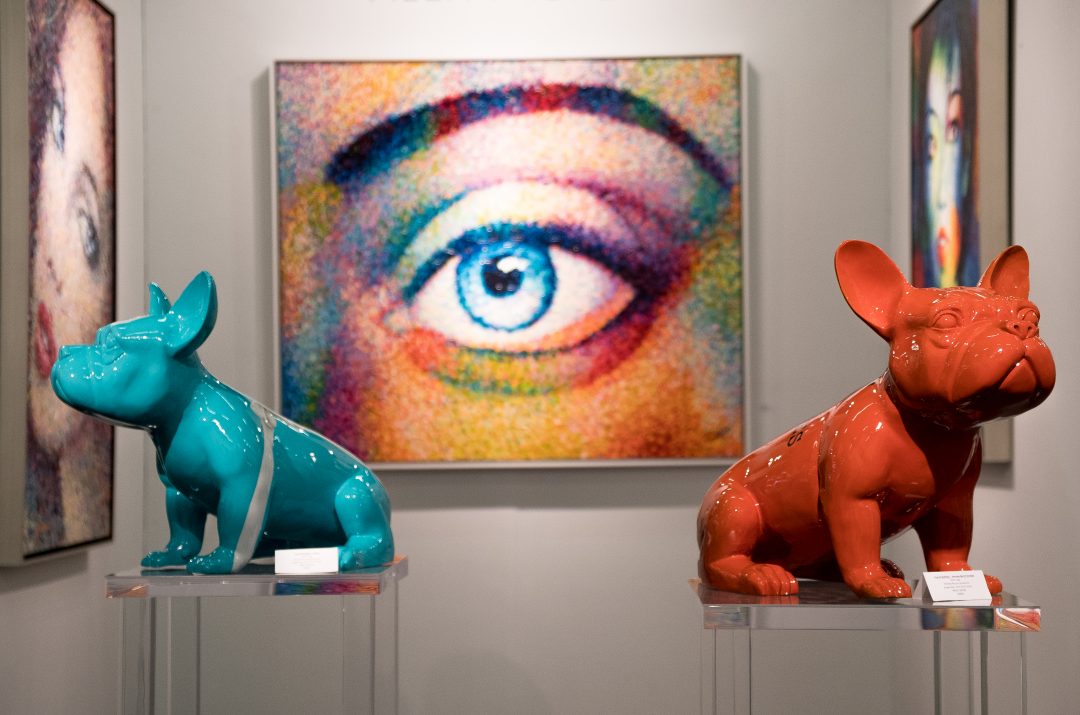
Marc and Matt Lipp created these designer dogs. The New York born brothers that make up M&M fashioned the series of painted and lacquered bronze sculptures as a part of their latest venture.

Canadian artist James Paterson created large works out of wire and stained glass, exhibiting his collection called “A Prayer Machine.” Each piece is intricate and complicated, but every work varies in size and composition. A huge feat of the work, though, is that it takes Paterson only about three weeks (albeit three weeks of non-stop work) to complete a large piece.

Mher Khachatryan‘s The Smoke collection combines the ephemeral beauty of smoke and the softness of a woman’s silhouette to create a series full of intrigue and dark beauty. The black and white color scheme creates a moody feel, and the beauty of them all is ever-present.

Two years after David Bowie’s death, his presence is still strong as ever. Of course, his eccentricity is perfect for art, and German and American duo Micha Kuechenhoff and Grant Rosen took the musician’s legacy one step further. Saving damaged dictionaries that date back over 100 years, they handpick pages that connect in some way to the artist they are depicting. Words for Bowie include “admire, musician, space” and the like, drawing from the musician’s history. Each of their pieces, depicting various public figures, is considered one of a kind.

Toronto-based Vito Piacente creates works that grapple with psychological juxtapositions between two extremes, like pain and pleasure. This series highlights the complexity of the relationship between individuals and society, bringing to light the detrimental nature of self-doubt.

Franco-Hungarian photographer Pol Kurucz is now based in Sao Paolo, combining the absurdity and the sensical to create jarring photographs heavily influenced by fashion and fine art. Each piece makes a statement about the world around him. His work has been featured in several major publications, like Vogue, Elle and Glamour.


Photography by: Emilie Genuard

Mark Rothko’s No. 7 (Dark Over Light) to hit the Auction Block

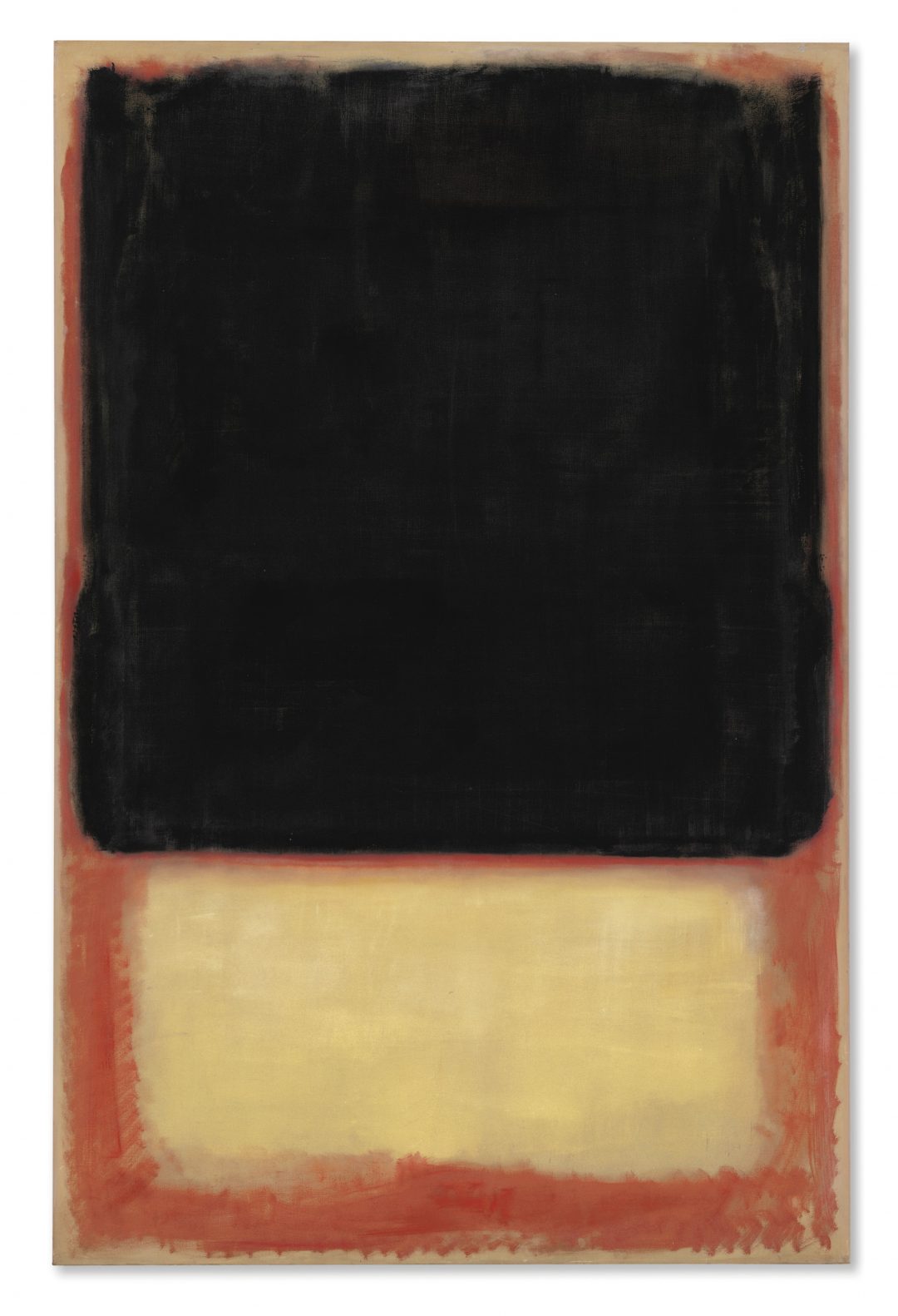
In New York, the famed monumental canvas, No. 7 (Dark Over Light) by American Artist, Mark Rothko is set to make its way to the auction block on May 17 for the Christie’s Evening Sale of Post-War and Contemporary Art. No. 7 (Dark Over Light), which was painted in 1954, and at almost eight feet tall, certainly epitomizes Mr. Rothko’s highly coveted grand scale style.

Mark Rothko once remarked (on the subject of size): “I paint very large pictures. I realize that historically the function of painting large pictures is painting something very grandiose and pompous. The reason I paint them, however—I think it applies to other painters I know—it is precisely because I want to be very intimate and human. To paint a small picture is to place yourself outside [your] experience, to look upon an experience as a stereopticon view or with a reducing glass. However, you paint the larger picture, you are in it. It isn’t something you command.”

The sheer size of No. 7 is only paralleled by its magnificent content, which channels intense raw emotion.  Additional noteworthy factors that make this work particularly coveted include both the period of the work’s inception as well as its vibrant surface. Characteristically defined by its rapid cloud like corners, No.7 is a perfect demonstration of Rothko’s desire to produce direct works that bring viewers into a pure unperverted state of emotional sentiment.

Jussi Pylkkänen, Christie’s Global President, remarked: “No. 7 (Dark Over Light), comes from a small and highly sought-after group of monumental canvases by Mark Rothko. Standing before this radiant picture, one is immediately enveloped by the dramatic brilliance of Rothko’s artistic vision.  Between its intensely kinetic surface and its epic scale, No. 7 is a consummate example of Rothko’s ability to convey pure emotional power. Given the international demand for canvases of this quality by Mark Rothko, we expect that No. 7 will draw enthusiasm from collectors around the globe.”

One of Mark Rothko’s most coveted desires was to depart from the conventional norms associated with the relationship between not only artist and creativity, but also paint and canvas.  His efforts proved most successful, especially in the way they altered viewers long established perception of preconceived notions regarding art as an illustration rather than an experience. This pursuit of turning art into an experience governed Rothko’s work for more than a decade, controlled by his two main principles of space and color.

As part of a very limited series Rothko painted in the 50’s, No.7 exhibits dark colors, which reminisces alongside a conquering array of splendid paintings such as No. 203 (Red, Orange, Tan and Purple) and Untitled (Violet, Black, Orange on Gray). First acquired by storied collector, Count Alessandro Panza di Biumo, Sr. in 1961, this is the first time No. 7 has come to auction in over 10 years. No.7 (Dark Over Light) is estimated to fetch somewhere in the region of $30 million USD.

Image credit: CHRISTIE’S IMAGES LTD. 2018

Christie’s International Real Estate Showcases the upcoming Rockefeller Sale in Beverly Hills

The highly anticipated upcoming Christie’s auction regarding the collection of David & Peggy Rockefeller has received nothing short of royal welcomes, as it has made its way across the globe. The collection, which includes a widespread & diverse set of artwork is estimated to gross more than $500 million USD; the proceeds you say? They will go to benefit several charities selected by the late David & Peggy Rockefeller. Some of the organizations that stand to benefit from the sale include charities dedicated to medical, educational, cultural, and environmental causes.

“The Rockefeller Collection is arguably the most important and valuable to ever be sold at auction,” Christie’s International Real Estate Executive Director Zackary Wright said. “The opportunity to provide both art and real estate clients an up-close preview of this historic sale, as well as a glimpse into the lives of the Rockefellers and their passion for art and philanthropy, is what sets the Christie’s luxury brand apart from the others.”

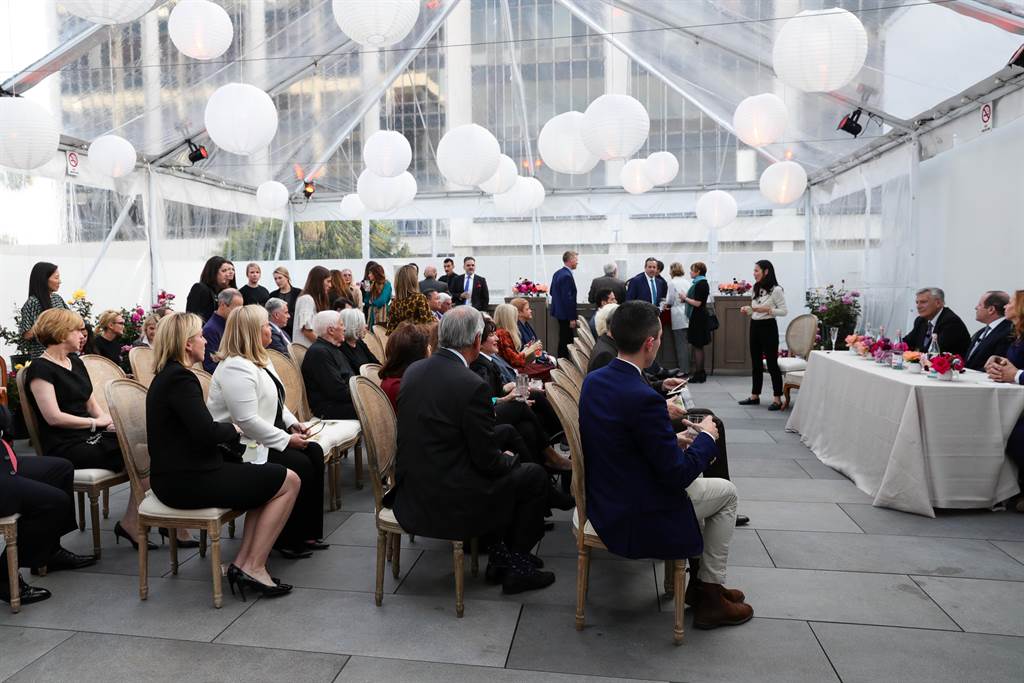
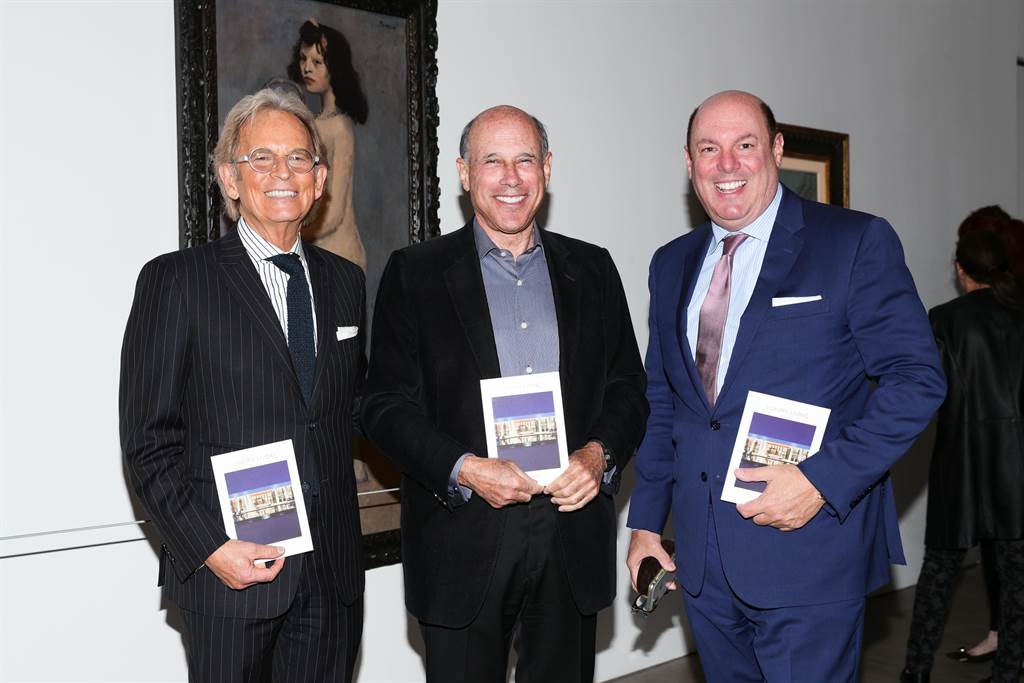
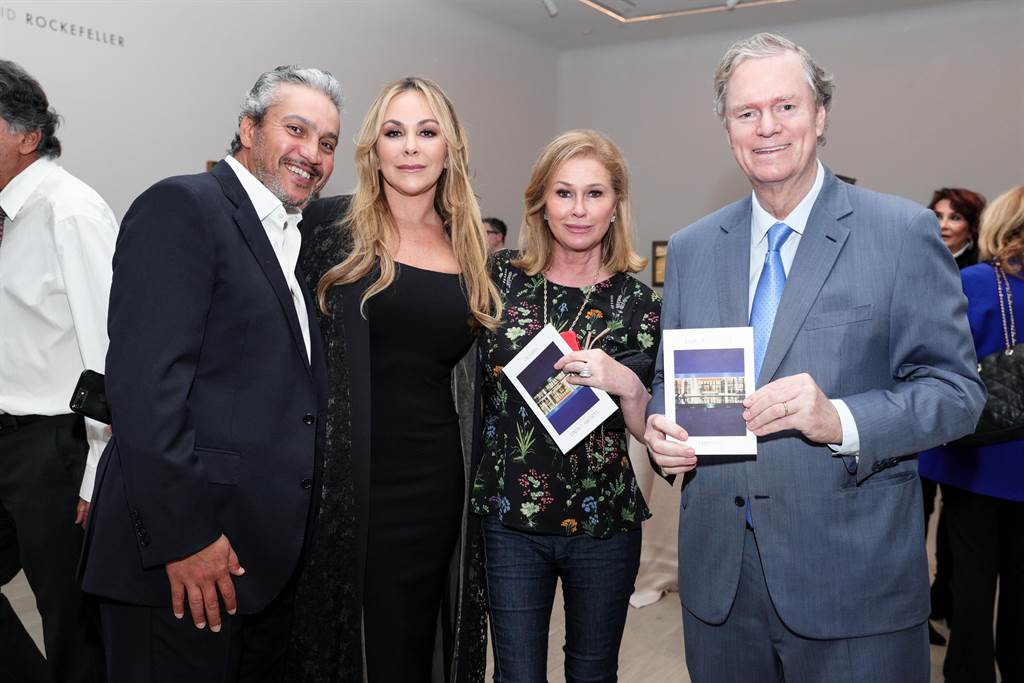
On April 10th of 2018, Christie’s International Real Estate in collaboration with Hilton & Hyland, VistaJet and U.S. Trust hosted an exclusive gala style discussion titled “The Rockefellers: Art and Philanthropy, A Family Legacy”  which acted to conceptualize the upcoming May 8th through 11th auctions that will take place at the Rockefeller Center in New York City. The High Society committee included Marc Porter, Chairman of Christie’s Americas and John Goldwyn, producer of the hit TV series Dexter.

The committee, who explored insights on The Collection of Peggy and David Rockefeller also explored ideas and thought processes regarding the tax implications related to sale, donation, and holding of one’s own collection. The discussion was followed up by a chic gala and private preview of pieces belonging to the collection.

The collection consists of numerous works; pieces that are particularly noteworthy are Picasso’s Fillette à la corbeille fleurie (Young Girl with a Flower Basket), as well as a Claude Monet water lilies painting.

Images courtesy of: Christie’s International Real Estate

Talking Art: Interview with Prince Rostislav Romanov

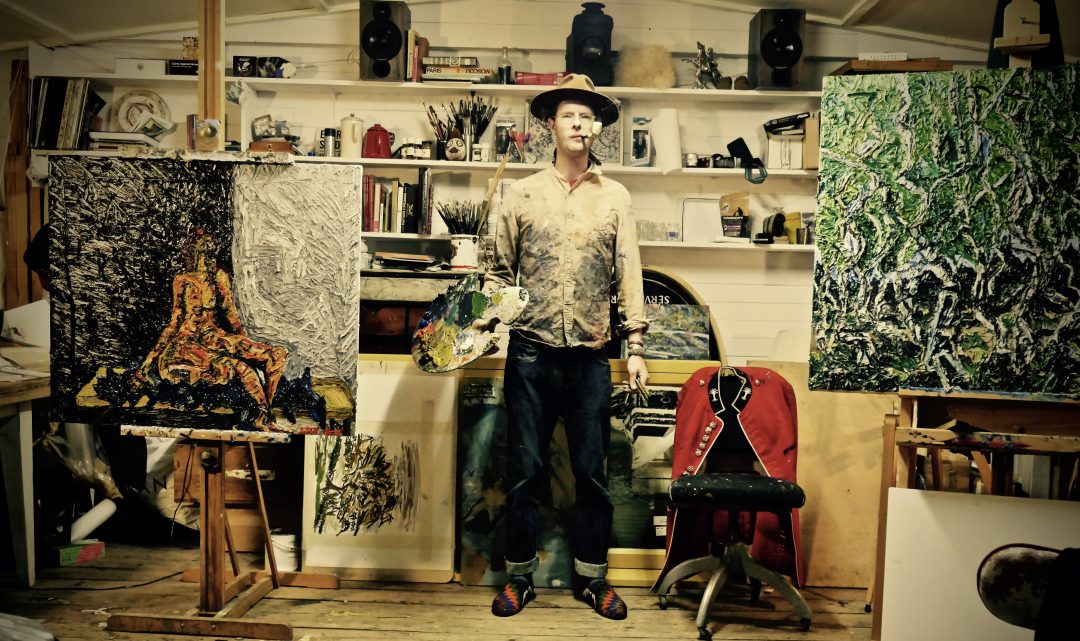
Meet His Highness Prince Rostislav Rostislavovich Romanov, a member of Russia’s former ruling Imperial dynasty and an incredibly talented artist “who strives to capture the beauty and strangeness of the world.” Prince Rostislav’s highly imaginative work sits at an avenue where modern figurative meets abstract. 

The Prince, who is best known by his nickname Rosti, pushes his viewers to see the underlying work beneath his art by rationalizing a time-tested approach of trial and error. Prince Rostislav’s compositions force us to feel in an era that has nearly lost itself to meaningless pieces of art.

His Highness’s artwork leads viewers down a path of the utmost originality, showcasing provocative scenes reminiscent of a bygone era of Russian History mixed with modern cultural elements that engulf the strange world around us. If a typical picture says a thousand words than a painting by Prince Rostislav screams a million. 

What is the inspiration for your current series?

“Inspiration is a funny thing for me! I have travelled and asked that question to many people across the Art World. The best quote about inspiration, is when I asked that question to the late Oscar De La Renta, he bent down to me (I was 17 at the time, he was a tower of a figure!) put his fingers to his eyes, widened them, and said, “Everywhere!”

That took me a long time to understand, from the ages of 17 to 28, I thought how arrogant! Only after turning 28, when I got sober and started to look what was around me, I realised he was right! So that is the foundation for me to build on.

At the moment, I am really into shapes and lines with a limited palette. Which reminds me, I had a conversation with the Queen of Denmark once, found out she is a keen artist! So, we were talking about art, and I foolishly told the Majesty that I deal with just colour no shapes or lines. The Queen of Denmark turned around to me with her cigarette in one hand and said to me this, “No matter what type of artist there is, from the back of their minds to the paper they all use lines.””

You’ve lived across the globe, from the USA to Russia and the UK, that said, how do you feel that your travels have influenced your work?

“The one thing I learnt from my family history, is that they always acclimatise to where one is.  This little bit has helped me to adapt to the local culture; also, to have lived in so many different places helped me understand a different side of the world. The fact is I always want to be influenced by different cultures, people and art! We live in an age where travel is more accessible now than say 20 years ago! Where ever I go, I look into local folk art and textiles to figure out how they use colour and shapes.

For example, I was in Lisbon for a holiday. Strangely, it was the first holiday where I did not take any art equipment with me – never again! Portuguese ceramics – their tiles are amazing! It gave me an idea to put tiles on the lower half of my house one day!

But for me, I want to go to Mexico on the Day of the Dead! Ever since I worked at the De Young Museum, and was there to help out in the Chicano art exhibition, South America has genuinely interested me, the stories, the shapes, and colours will be forever burned inside my skull.” 

How did you first get involved in the Art world? Was it an encounter with art in your childhood, or through family or school?

“Simple, I was terrible at art when I was a kid from ages 0 through 14. I was not setting the school alight with my art! The only reason I choose Art and Design for my GCSE, (Which is the English National Exam every kid has to take when they are 16. Kind of like one’s SAT’s I think?) if an artist can put a shark in a tank like Damien Hirst, or drip paint like Jackson Pollock. I said to myself I can do that, so I thought it would be easy! But at that time, I was speaking to my art teacher (God, I feel sorry for her, me spilling my guts about the death of my father to her! I do not know if she had training in that? Oh well.) She told me to paint my feelings, which I did, then she told me to look at Kandinsky, which I did.

That is when everything changed, I had an outlet where for a brief moment I could escape and use my pain, my emotions inside of me. She left, then came in my mentor John Hinchcliffe, he put me onto landscapes. When John Hinchcliffe arrived, I was in my last year of school, and John turned around to me and said, “You could do it. You can become a professional artist.” I had nothing better to do with my life, so I thought why not! Off I went.” 

If there is just one thing that a viewer takes away with them from your work what would you like that to be?

“To get to that finished piece of art, I had to fail so many times. So, failure is only really a failure if you do nothing about it, failure can be the best type of inspiration! So, try to learn, feel, be open! I always say that art is my life, and my life is art! It makes it that much more precious and fun. Oh, a couple of things my mentor taught me, first keep it simple. (The best thing is your simple, will be different from my understanding of simple, which is spectacular in itself!) The other thing, is everything leads back to itself like printmaking has helped me understand more about shapes and patience, which has allowed me to see and explore different ideas and develop my paintings.”

Tell us about some of the work you’re doing with Raketa, Russia’s oldest Watch Factory, which was founded by your ancestor, Peter the Great. Have you always been passionate about Horology?

“Ever since I was a child, I’ve loved watches, how they are designed, how they all work beautiful and efficient, with no waste what so ever! That alone has taught me the importance of what I am working on, and not to waste that space. Also, to learn a different and highly crafted art form is rare! I don’t think the big watch companies in Switzerland would allow me into their workshop, and learn for free. Working in Horology has put a different set of limits on me, which is wonderful. How to get all of the information that I use into such a small area, and to still have the same effect of one of my art pieces! Last thing horology has taught me, is working inside the limits. (If one looks at the limits, there is a lot of space to play with.)”

What does it mean to you personally to be a member of the Romanov family?

“This question has always troubled me. Am I an Artist, or am I a Romanov? For so long, I thought both could not coexist with each other! So, it was easy to rebel against both of them for a long time. It is only now, I have come to realise that both can work together. (I learnt this from my collaboration with London jewellery company Ortaea.) I found that being part of the Romanov family and history has given me an absolute lack of expectation, and fear of people, ideas, and places. But, the most important thing I learnt from my family is that A.) Family matters, and B.) That I have a platform to do some good in the world. I have a friend, Max McLaughlin working on a design for me of the Russian double-headed eagle, but instead of holding a staff and orb, the eagle would be holding a paintbrush and palette with a quote by Tom Waits going around it, I hope. He is still working on it, so I have not seen it yet.”

Tell us about your passion for cigars. What are some of your preferred brands at the moment? 

“My passion for cigars is something I love! It is strange for me because I am very much an introvert, I love my solitude! But when it comes to cigars, I love going to the cigar room in London on St. James Street, sitting there with people I have never met, from different walks of life, and we are all talking with one another like we are friends. It is amazing comradery.

For the type of cigars, what I like changes with the mood I am in. I do not stick to the big brands, I enjoy trying things further afield. I remember, I was on holiday with my family off of the coast of Venezuela in this beautiful, strange place, and some locals found out that I like cigars. They told me to go to this woman on the Island. So, a driver, a family member and I set off on this journey. We pulled over, and the driver and my family member told me to wait in the car, but the things I saw there were too strange! So, there was a group of locals next to the car with half a carcass of something big!  I was freaking out a little bit, thinking the worst. I got out of the vehicle and took a speedy walk to the house, where this old woman was. What I saw was terrific! This old woman was from Cuba, learnt how to make cigars by hand in her home country, but fled to Venezuela where she kept on doing it. I must have got about 200 handmade cigarillos for $4. Kind of wish I took a photo back then.”

Any thoughts on the art scene in Britain today? How do you feel it compares to its counterparts around the globe?

“I can only use my viewpoint. In the UK the whole art scene is flourishing, there are more opportunities here for artists from music, performance, to exhibitions. It is exhilarating to me, I can feel the energy in the air kind of like the early 1900’s but with more health and safety.

In Russia, the art scene is more politically driven, but art in Russia has been like that for more than 100 years, pull and push situation, which gives art a deeper meaning for me. For example, when there was a massive change in two governments that I am close to, I decided that I am going to be more creative use more colour be more vibrant, be more positive with my works to rebel against all the negative judgemental right wrong viewpoints of individual people. So, in a way, I want my art to be there for the people if they want it?  Lastly, I have artist friends in the UK and Russia that inspire, drive and push me and my art.”

How has your style changed since you first began painting? And are there any other mediums you’re looking to explore further in the future?

“Yes, I always look at where I started. At random years, I go back to one spot in the world where I did my first plain air painting just to see how I have changed, as I can remember the first one. For a long time when I was drinking, my art was stuck in one place! Mind you, I thought back then, to be an artist one must be an addict, and/or a drunk, playing into the stereotype. Strangely, when I gave up drinking, my mind was playing a trick on me saying, that is the end of being an artist! How wrong was that part of my brain! Literally, my art was an explosion of feelings and colours, when I gave up drinking, only then, I finally gained the perfect practice of my art to control, and manipulate those raw emotions into my art. Not to shy away from my feelings and body, but to let all that speak out!

Also, I am always exploring new things, mediums, and techniques in the art, as it is another way for me to speak. Art has given me a voice, and I am going to shout out with it. I was told from a young age that I am dyslexic. I found it very hard to learn, and the support from schools was not significant until I fell into the art world which led me to a new way to communicate. I have just started to learn about different forms of etching which are amazing, I love it. I am trying different ways to paint by using more body motions. Next year I am going to get into textiles and weaving. I also want to try ceramics!  Maison d’Art gallery in Monaco always tells me I should do that! Hell, why not? I live in the UK where it has some of the best ceramics factories. It is beautiful, the more I explore different mediums, the more it helps me in my life and art.”

Like Kandinsky, you often listen to music while painting, with that said, who are some of your favourite artists to listen to while painting?

“When I learnt History of Art at school, I was taught that some artist in Paris in the early 1900’s use to take drugs and drink the Green Fairy to get to that strange place to create. When I was looking at Kandinsky, I started to use music as one of my tools in art. I found that drink could not get me to that strange place to work, the only thing drink took me to was more drink. But, music has brought me to the most bizarre parts of my mind.

Remember that scene from Almost Famous, with The Who album Tommy. For me, the mind-bending staple music is Tom Waits post drink, where he is not afraid to do what he wants in his records, just thinking about it wants me to work even now. One other thing I love is Iggy Pop confidential on BBC Radio 6; it is the same teaching to be open to new beautiful, strange ideas, and music. (I swear every time I listen to him, I end up buying new music that I heard on that show!) But, if I am genuinely stuck, bring out Chuck E. Weiss. I owe these musicians a painting for driving me. I am really into Punk, I just cannot get enough of it, it might be because they stand on the edge of music and push it to where it is just recognisable, and to rebel against the norm and anyone can join. But, to counterbalance it I found this British rapper called Kojey Radical; again, it is how he uses his words and music to communicate what he sees around with his eyes.”

How would you describe your creative process?

“I met an artist back in my younger years in San Francisco, and asked her that question. (Sorry, I sadly cannot remember her name for the life of me.) She said she goes into her studio every day and works. For me, I love being creative, but also what is an essential for me is the craft side of art. That side has made me appreciate and value what I am doing more. I would never let anyone else do that for me, where is the fun in that? When I look back at a painting, I know that I stretched the canvas and sized it with rabbit skin glue and primed it to just how I like it, that gives my pictures a complete feeling for me. I try new things, mostly fail, learn, and work again then slightly change where I failed. I keep my eyes open to new shapes and my mind open to different ideas. For me, even the simplest concept can give me so much creative drive, even if the concept does not come to bear fruit. Lastly, I never stop thinking about art, continually considering, painting, and creating in my mind to see where it fails or not and/or where I need help on my obsession, like that character from Stefan Zweig novella called Chess.” 

Any upcoming shows that we should keep our eyes peeled for?

“Sadly, I like collections of museums more, they are regularly there, which means that I can return at any time; so here are the top three museums. One of the places is a part of the Pushkin Museum in Moscow, called the European Gallery, it is the most amazing of museums. Their collection is the envy of any other significant museums’ collections in the world, here they have everything from the only painting Van Gogh sold Matisse “The Dancer” to a whole floor of Cezanne! But, what makes it remarkable is that it is always empty! So, one has plenty of time to look at these paintings and sculptures. Oh, did I mention when you start, the first thing one sees is a whole room of Rodin; how genuinely spectacular that is? But, the other two museums for me are the Chicago Art Institute, (This place holds a special place in my heart. A world of wonder.)  and lastly, The V&A in London, for the fact that they have a piece of textile from my mentor John Hinchcliffe.

For me, I follow artists then exhibitions. So, the artists that push me to be a better artist are Dickon Dury, Poppy Jones, Dan Feit, Daira Fursey, Jethro Buck and Louise Thomas. They all are jaw-droppingly fantastic, but what links them all is their work ethic. I feel guilty, but hey, while here, I do have an exhibition coming up in London at C. John gallery from May 14th-18th, just a mention.”

Image credit: Richard Williams

Where can we follow you?

“Here is my website: rostislavromanov.com, also Instagram: @rostislavromanov and lastly Ello is again: @rostislavromanov that is for the World Wide Web, but I am always lurking about somewhere on Winchelsea Beach with my Chocolate Labrador, Bister.”


Images courtesy of: His Highness Prince Rostislav Romanov

Philately Meets Fashion In Lebanon

To all you stamp collectors, there’s a possible new addition to your collection! A stamp represents a country; it represents its history and its culture. When collecting all of these different pieces, it’s as important as collecting a bunch of paintings. It’s a collection filled with so much culture and information about different countries and populations.

When thinking about culture, you think about the literature of the country, about its art forms, or its music. Fashion is immediately on the mind. From their traditional costumes to the new designers coming up, fashion has a great part in a country’s accomplishments and memories.

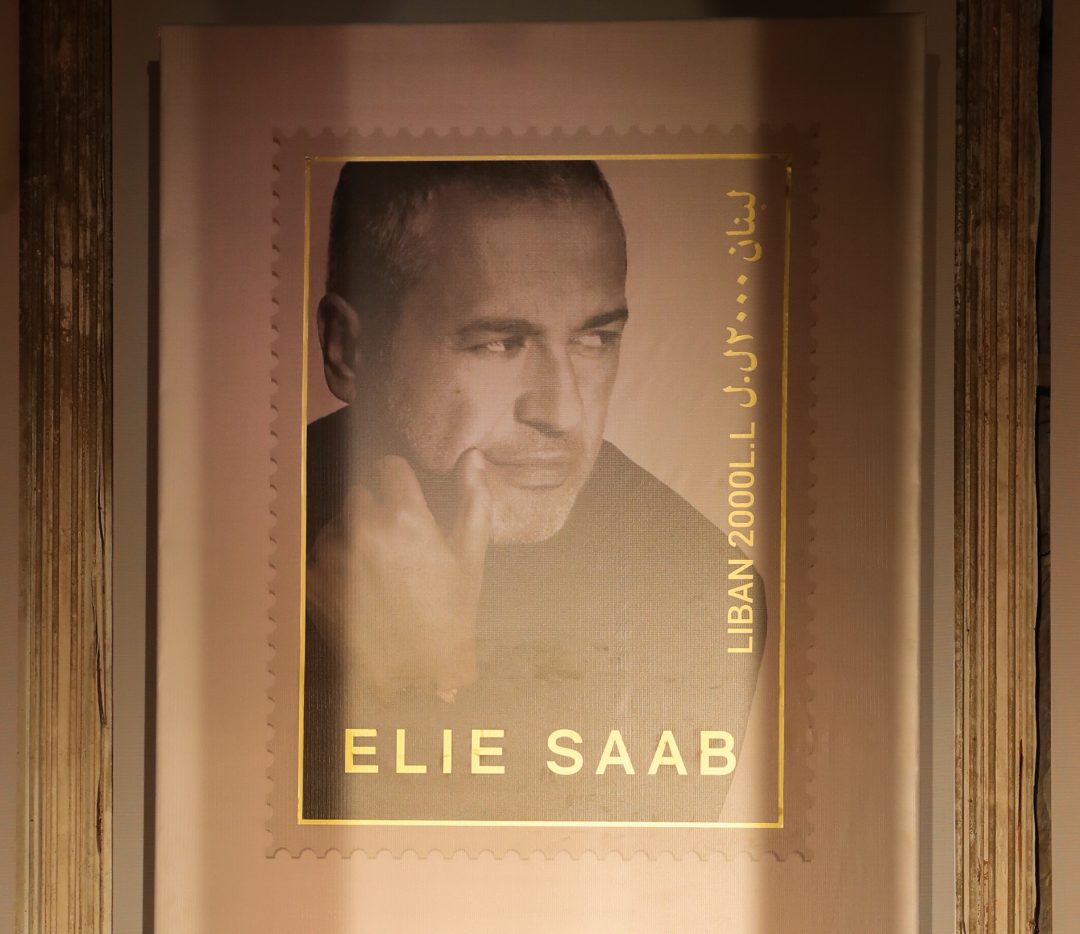
On the 29th of March, Lebanon took a step and officially added Fashion in the culture behind the stamp. Liban Post, the official post office of Lebanon, commemorated the Lebanese designer, Elie Saab with a stamp in his name.


It was a way for the country to honor his accomplishments and all of his work”, says model Cindy Bruna.


Caroline Daur, Elie Saab, Cindy Bruna – Liban Post

Being a post office, one of Liban Post’s main jobs is to deliver any Lebanese package to the world. Elie Saab, through his remarkable designs, did the same in delivering “Lebanon” to the world.

The stamp was purely designed by Elie Saab himself, following all of the brand’s rules. It was named “Elie Saab, Le Timbre” (Le Timbre meaning “The Stamp” in French).

As for the event itself, it was held at Beit Beirut, an old house in the middle of Beirut that was destroyed during the civil war. By planning the event there; it was a way to honor Lebanon, its history and its culture in every way possible.

Beit Beirut was fully designed by the Elie Saab team with different works, pictures and information displayed around. It was as if one was walking into an Elie Saab exhibition, gaining so much knowledge about the designer.

Beit Beirut – Liban Post

The unveiling of Elie Saab Le Timbre by Liban Post was an event that did more than it had to. It gave people a chance to be part of a point in history: where fashion meets philately in Lebanon, a chance to see culture be appreciated, and lastly observe and learn about the beautiful designs of Elie Saab.

The Unveiling of the stamp: Khalil Daoud, PM Saad El Hariri, Elie Saab – Liban Post