Browsing Category

People

Men's Style People

Talking style with the one and only Paul Feig
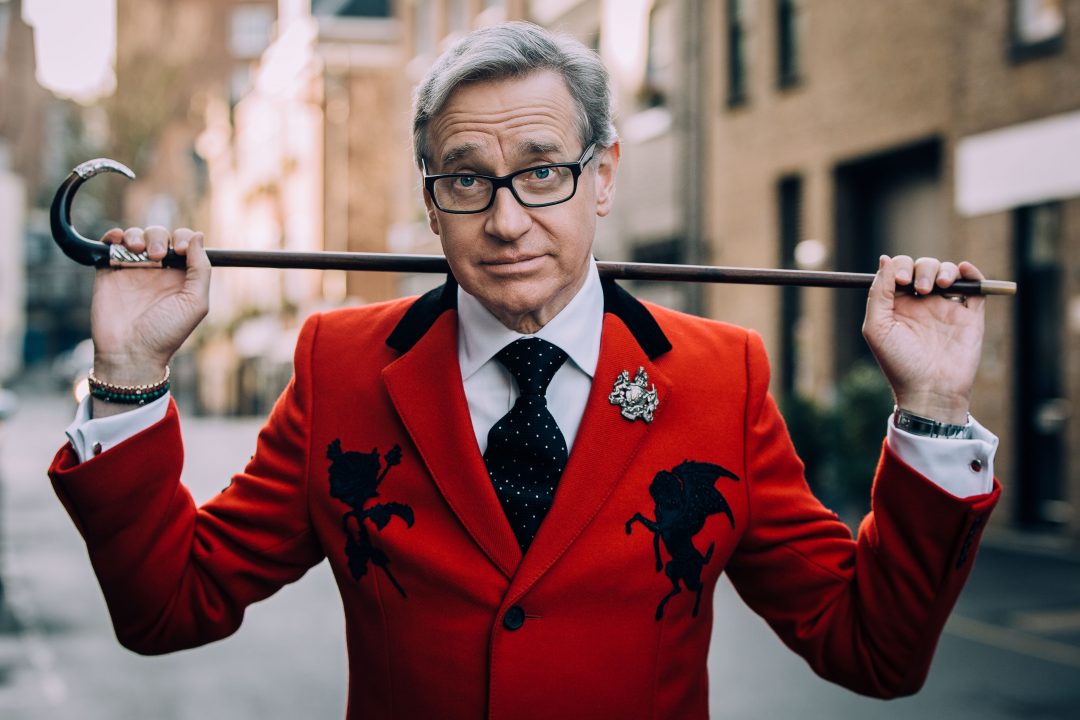
Paul Feig

During these unprecedented times we are very pleased to inform you that we were recently given the privilege of interviewing one of Hollywood’s most stylish men. Allow us to introduce you to Paul Feig, well known for his box office hits such as A Simple Favor, Ghostbusters: Answer the Call, and Bridesmaids. Feig is a gifted actor, writer, director and producer whose style is much more old Hollywood than any leading man often seen on today’s red carpet. Regularly dressed…

Continue Reading

Art & Culture People

The World of Visual Art with Angelique de Limburg Stirum

The World of Visual Art with Angelique de Limburg Stirum

Recently, The Extravagant was given the exclusive privilege of interviewing Angelique de Limburg Stirum on her passion for artistic expression through portraiture. The young Belgian artist and former model is currently developing a unique take on modern portraiture. The daughter of the Count and Countess of Limburg Stirum is proving to be an innovator in a world where capturing human likeness on canvas is becoming increasingly underrated. Read on to see how Angelique’s own artistic ability has been shaped by…

Continue Reading

Art & Culture People

The Art of Portraiture with Fanny Rush

The art of portraiture with Fanny Rush

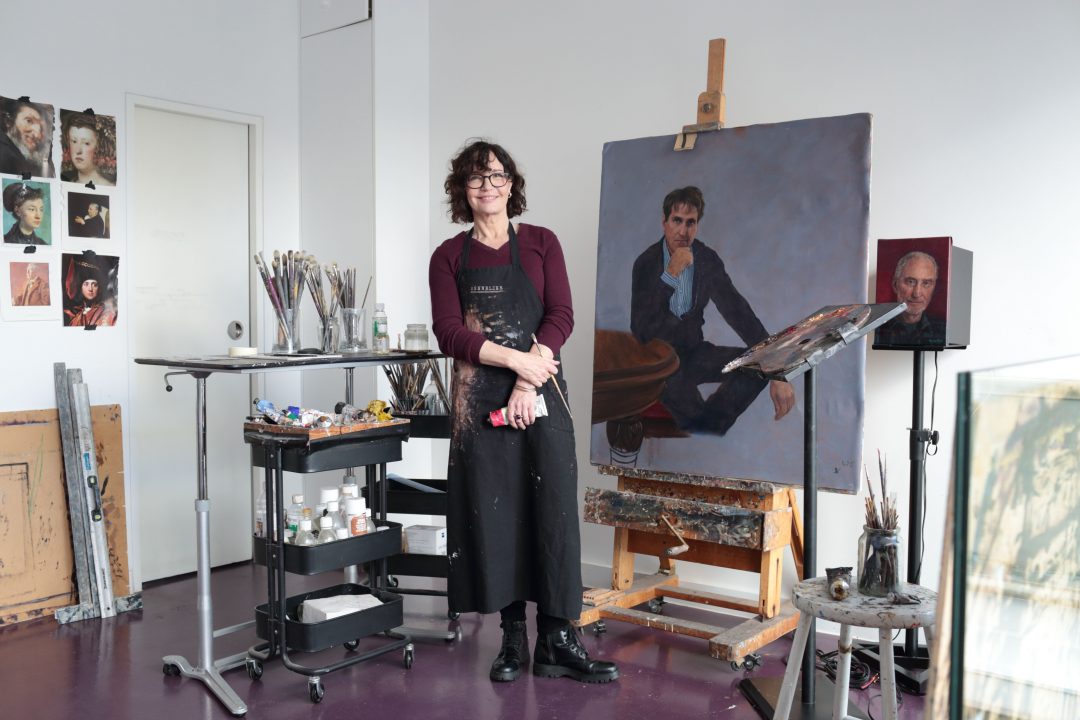
Portraits created by Fanny Rush are stylistically characteristic of a bygone era. The London based artist, who just built a new home and studio in Battersea after relocating from Chelsea, employs seldom used Old Master techniques in her portraits that immortalize both her subjects and their personalities. Rush’s prestigious commissions are numerous and include American Ambassador Robert Holmes Tuttle, famed actor Charles Dance OBE, as well as Sir William Castell, Chairman of the Wellcome Institute, to name just a few.…

Continue Reading

People Watches

Talking Watches with Penny Morris of Bonhams

Penelope Morris

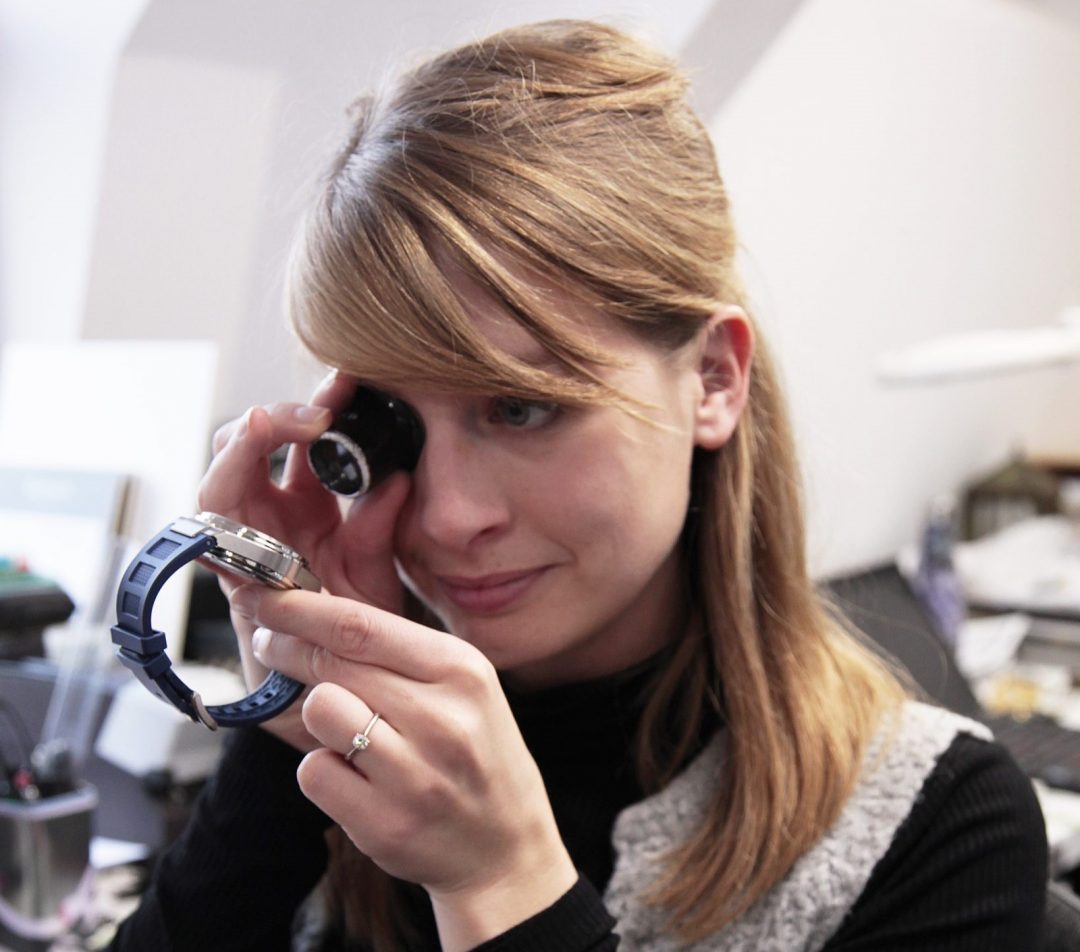
Recently the team here at The Extravagant enjoyed the exclusive privilege of interviewing Senior Watch Specialist Penelope Morris, who heads the Bonhams Knightsbridge Watch department. Morris, who is an Associate of the British Horological Institute and a member of the Antiquarian Horological Society, has now worked for Bonhams for nearly a decade and has proven to be one of the most talented women in the watch industry. The knowledge possessed by Morris is vast to say the least with highlights…

Continue Reading

Fashion Health & Wellness People Women's Style

Talking Sustainable Fashion with Pauline Hansen of PAMA London

Pauline Hansen - PAMA London

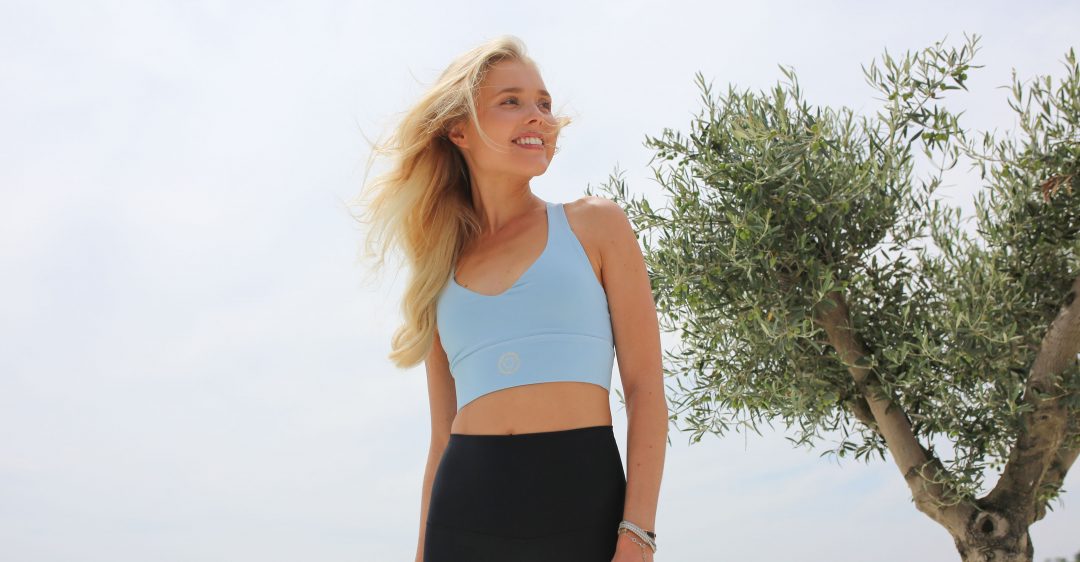
German born, London based eco-entrepreneur, active-wear designer, and yogini, Pauline Hansen is passionate about contributing to a more mindful world. For Pauline, Yoga is more than just an activity, it is a lifestyle. With this in mind, we seized the opportunity to chat with the Creative Director about how she aims to make a difference and why sustainability in fashion is so important. When meeting Pauline you are quite literally intoxicated by her overwhelming energy and enthusiasm. As she showed…

Continue Reading

Jewelry People

Talking Jewellery with House of K’Dor’s Zena Kaddour

Talking Jewellery with Zena Kaddour

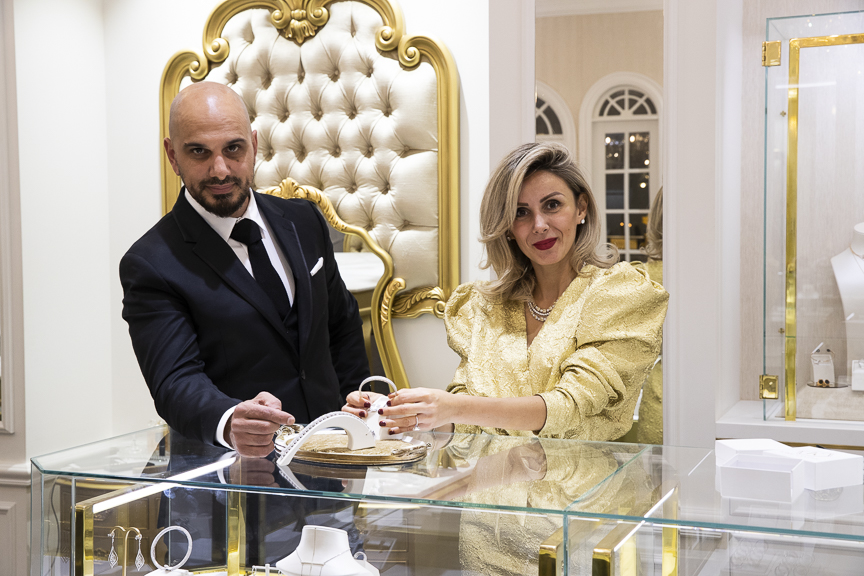
Meet Jewellery designer, Zena Kaddour, who along with her husband Tarick, head the Sydney based House of K’Dor. Now entering its 20th year of business, the House of K’Dor, which was founded by Tarick in 1999, has become a name synonymous with extravagance. The husband and wife duo currently craft some of the most desirable creations in the bespoke jewellery industry. Having just returned to the House’s flagship Double Bay Boutique from a recent trip to California, Zena who serves…

Continue Reading

Fashion People

Interview With Couture Hat Designer – Heidi Lee

HEIDI LEE Swarovski ENDLESSECHOHAT Photo by Joseph Jagos

New York City based hat designer and NYU professor, Heidi Lee, has had her head-wear featured in VOGUE, the New York Times, MTV, New York Magazine, among many others. As the recipient of the 2012 MET Museum Costume Institute Accessory Design Award, Lee has an A-list clientele which includes Anne Hathaway, Lady Gaga and Jennifer Lopez. She is most notable for her “Endless Echo Hat” that is created with a 3D printer from a scan of her face. Tell me…

Continue Reading

Epicure People

Chika Tillman: From Wall Street Banker to Pastry Chef

Chika Tillman: From Wall Street Banker to Pastry Chef

“I really loved the job as a banker, but the first thing I checked every morning in the newspaper is not the stock market section but the restaurant section,” said Chika Tillman, founder and head pastry chef of ChikaLicious Dessert Bar. In the late 90s, when Tillman was working amid the hustle and bustle of Wall Street, in a suit and heels, she would attend the evening classes at French Culinary Institute after work. Having helped out in the kitchen…

Continue Reading

Epicure People

Chef Samuel Clonts: a Modernized Kaiseki Dining Experience at Uchū

Chef Samuel Clonts: a Modernized Kaiseki Dining Experience at Uchū

Having come to realize his love for food at a very young age, Chef Samuel Clonts started down his cooking career by helping his mom out with everyday dinner. With a huge passion for food and the process of making food, it did not take long for Clonts to begin cooking professionally by attending a culinary program at high school while at the same time working as a dishwasher. The 15-year-old Arizona boy never expected that in five years, he…

Continue Reading

Auto Lifestyle People

The Man Who Made Monterey Car Week | An Interview with Gordon McCall

Interview with Gordon McCall

Featured Image Credit: Angela Decenzo, provided courtesy of Gordon McCall On a warm, June afternoon in Monterey, California we were given the privilege of interviewing one of the Automotive and Motorcycle world’s most interesting personalities. “The location for this interview?” you may ask. It is what appeared to be a humble storage unit, however it ended up being anything but. As the door opens to this metal building, you are greeted by an expansive automotive paradise. If you haven’t already…

Continue Reading

Talking style with the one and only Paul Feig
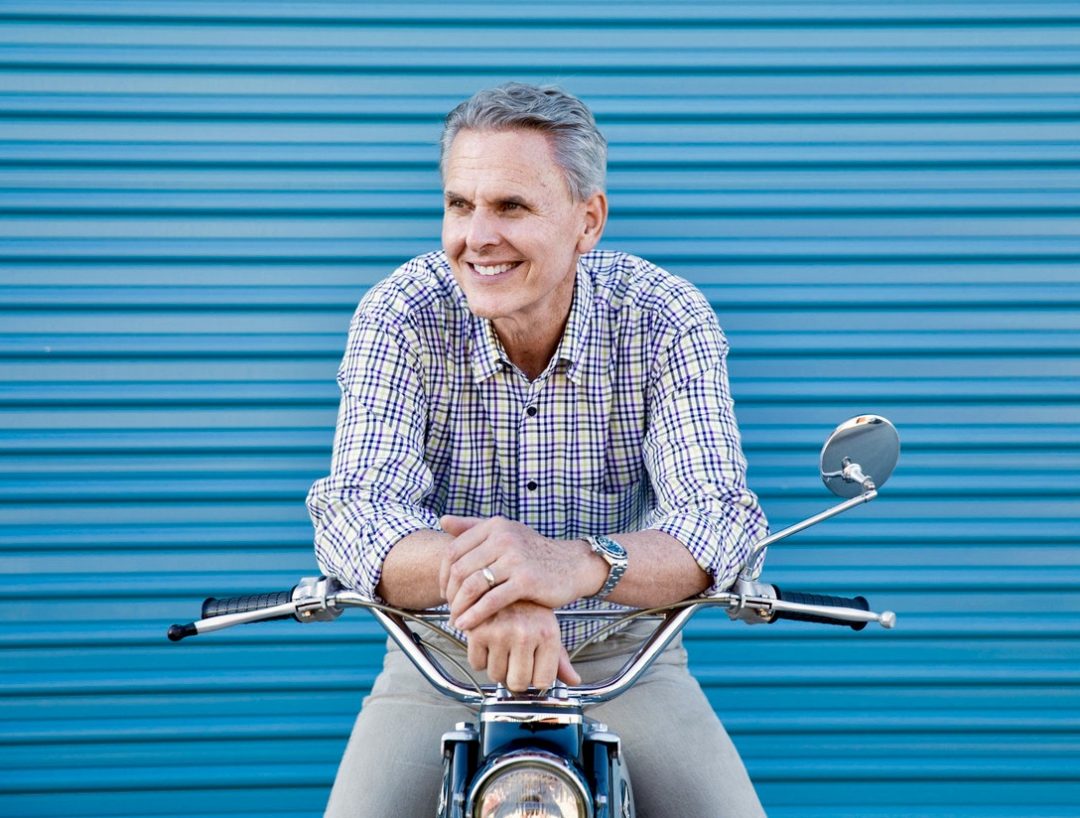
During these unprecedented times we are very pleased to inform you that we were recently given the privilege of interviewing one of Hollywood’s most stylish men. Allow us to introduce you to Paul Feig, well known for his box office hits such as A Simple Favor, Ghostbusters: Answer the Call, and Bridesmaids. Feig is a gifted actor, writer, director and producer whose style is much more old Hollywood than any leading man often seen on today’s red carpet. Regularly dressed in bespoke English suits and shoes, Feig’s style is both sensible and entirely exciting.

We don’t know a man who wouldn’t benefit from Feig’s tasteful philosophy and his quintessentially brilliant humor. Read on to learn how Feig developed his one of a kind wardrobe, love of watches and his exciting new Gin.


Is there a certain place or moment that you trace the start of your sartorial journey to?

It was a combo of things.  When I was a kid, I was an only child and close with my mom.  And so we used to watch old movies from the 1930s and 40s together.  I was always so taken by how great Cary Grant and Fred Astaire, as well as most other men in the films, looked in their clothes.  I loved the scenes at the old dinner clubs where everyone was in tuxedos and gowns.  Cary Grant in ‘His Girl Friday’ gave me an obsession for double-breasted suits.  I also loved all the three-piece suits you’d see guys in, with their watch chains and pocket silks.  Then, one day I was reading a biography about Groucho Marx, who was my comedy hero, and it said that he never trusted men who didn’t dress well.  That was all the prodding I needed to decide that I too had to dress well all the time.  So, it wasn’t a far jump to decide I would dress like the guys I admired in the movies.  My decision to wear suits was decided then and there at the tender age of eight.

When you began building your current wardrobe, what were some of the first pieces that found their way into it and why?

“I had (and still have) an obsession with Ralph Lauren.  He always seemed to be influenced by the same things that I was.  He had such a classic American style that seemed many times to be torn right out of those old Cary Grant movies I loved so much.  And so I started buying Ralph pretty exclusively.  Since I had also developed a love for the suits of the 1950s and 60s because of early James Bond movies and comedians like Lenny Bruce as well as the Rat Pack, when Ralph launched the now defunct Black Label line of thinner fitting suits with narrower lapels I went wild, buying as many as I could.  (When they went on sale, that is!)  But then in 2011 when I was living in London developing a film, Eric Fellner, one of the heads of Working Title, gifted me a bespoke suit from Anderson & Sheppard on Savile Row because he saw that I only ever wore suits to work.  This created a whole new (and rather pricey) obsession for me.  Simply put, once you put on a truly bespoke suit made to your exact measurements it’s very hard to look back.  It then lead me to expand out to a newer bespoke tailoring house in London called Thom Sweeney, as well as getting wonderful made-to-measure suits from the Italian designer Isaia.  But I still have pretty much all my old Ralph Lauren suits and thanks to my wonderful tailor, Mario of Beverly Hills, I have been able to have them re-tailored and brought up to speed so that they are happily back in rotation in my closet.”

Do you believe that your personal style has evolved over the years? If so, how?

I have definitely gone from classic style in the 1970s that still had a heavy disco influence to it to 1950s style suits to English traditional to Italian sprezzatura and even had about a decade where my style was everything from Willi Wear unstructured suits with rolled up sleeves and bolo ties to vintage bowling shirts with baggy pants and Converse All-Stars to Hawaiian shirts and shorts.  But I always made sure to have a style.  I never want to make anybody feel bad about how they dress but to me the worst thing you can do to yourself is to not have a style.  It doesn’t have to be fashionable and frankly it really shouldn’t be because then you’re just following trends and being led around by the wallet by the fashion industry.  It should just be your way of telling the world “This is who I am.”  Because like it or not, we’re all judged every day on our appearance, whether we like it or not.  It’s up to us once we meet people to show who we really are in human interaction, and there are plenty of times in life where outer appearance doesn’t match what’s on the inside at all.  But why not use your appearance to help people know who you are right off the bat?  You’ll look great and you’ll feel better about yourself.  I guarantee it.

When it comes to dressing, do you employ any particular philosophy?

I personally want to make sure the world knows that while I like to dress up, I’m also not some stodgy old lawyer who doesn’t have a sense of humor and fun about myself.  So, I always try to throw in items that keep a suit from being just a suit.  Fun colored pocket silks, ties that stand out, silk boutonnieres and happy looking socks are all things I use to set myself apart from the world of men who have to wear suits everyday for work.  So many guys seem to be at odds with their suits and it’s clear that they can’t wait to take them off when they get home.  I want the world to see that I enjoy wearing a suit and that I do it because I choose to.  I think it shows not only who I am but also a respect for the world around me, especially when I’m at work.  As a film director and producer, I’m so lucky to be able to work with so many talented people.  When I’m in meetings or on the set or in the editing room, I’m the captain of the ship that is my movie.  And so I want to dress the part.  I always say that if I got on a ship and the captain was wearing sweat pants, I’d get off the ship.  Getting dressed is about respect for yourself, respect for others and respect for the world around you.  And if you just happen to look better when you do it, then that’s an extra win!

What is your personal opinion when it comes to deciding between acquiring or commissioning a Bespoke, RTW, or MTM garment?

“I have very sloping shoulders and so as much as I love ready to wear, they always require a lot of alterations.  The shoulders of a suit are so much the main structure of a suit jacket that there’s only so much most tailors can do to make it fit perfectly.  I abhor shoulder pads and so to avoid doing that, it’s usually a pretty big undertaking to get an off the rack suit to fit me correctly.  It’s why I took so enthusiastically to bespoke.  The problem as we all know is that it’s very expensive.  The upside is a bespoke suit pretty much lasts forever.  The tailors always make sure to leave enough fabric in every seam that if you gain weight they can let it out and keep your fit right.  But the best part about an expensive suit is it puts you on what I call the Tailoring Diet, which means that if you start to gain weight and your most expensive suit starts to get tight, it’s the greatest motivation to lose weight.  And if you do lose too much, they can always tailor your suit smaller!  That’s what we call a win/win!

What I like about made-to-measure is that you get the bespoke experience but for not quite as much money.  It’s still not cheap, not by a long shot, but it’s also not as astronomical as bespoke can be.  Some of my favorite suits in my collection are my Isaia MTM suits.  They have a true Neapolitan style and fit and are insanely comfortable while looking very cool and Italian.  And once they have your pattern, you can order new suits from whatever new fabrics they come out with.  The same is true for bespoke, but I have found that many times true bespoke takes several more visits to the bespoke house to get just right than the MTMs do.  But either way, you’re going to look great in the final product.  And sometimes that’s worth the extra money.

I assume this is a rather difficult question, but if you could only have one suit maker, one shirt maker, and one shoemaker for the rest of your life, who would they be and why?

That is a very tough one, and one I’m not sure I can properly answer.  I think I have to cheat and give you two for each choice.  For suits, it’s a split between Anderson & Sheppard and Isaia.  For shirts, it’s a tie between Anto of Beverly Hills and Budd Shirts in London.  And for shoes, I love George Cleverly shoes (in particular their Churchill style that has fake laces and elastic vents on the side so that they are basically loafers that look like laced-dress shoes) and Salvatore Ferragamo shoes.  I find that there are certain brands that just fit your specific foot better and so it’s a bit of a trial and error with different brands to find the ones that seem to be made for your shape of foot.  Don’t be afraid to try on many brands before deciding what to buy.  That’s what stores are there for!

Where do you look for sartorial inspiration?

Where don’t I look?  For me, style inspiration is everywhere.  I watch old movies, look in magazines, look through photography books and for the most part really observe the people around me.  It’s why I love traveling to other countries to see how the men who dress actually dress.  I’ve found inspiration in every country I’ve ever been in.  Most times it’s not even a complete look I’m inspired by.  It’s usually a detail I see.  A way of tying a tie, the unusual fit of someone’s jacket and pants, a piece of jewelry or adornment on their clothes or self, or some bit of odd sprezzatura I would never have thought of.  I like to collect these ideas and then try them for myself.  But not every look and idea works on every person the same.  I’ve seen guys who look amazing in a specific look but then when I try it I look ridiculous.  Style is very personal and it has to match who you are in total.  It’s why I always say the main thing you have to do when you try a new style is to not just look at your body when you look in the mirror but to then look at your head on top of those clothes.  I’m not saying you shouldn’t take chances.  You always should.  But you will know in your heart if you’re trying to dress too young for who you are, or too cool for who you are, or if it’s simply not working for you.  If you’re on the fence, then go with it.  But if you feel at all like something’s not right, or it’s not sending the message you want to send to the world, then don’t buy it, and look for the thing that makes you feel great.

In addition to your fantastic clothing collection, you are also quite the watch connoisseur. With that said, how did you initially become interested in the world of horology?

I feel like as men we have so few options for adornment.  Women’s style and fashion seems to have a million different looks, especially when it comes to dressing up.  But for guys, if you’re a traditionalist like me, all we really have is the suit.  I’ve never been a fan of too much experimentation with the cuts and styles of suits.  (Just say no to the Nehru jacket and its never-ending quest to come back into style.) Again, it’s fine if you’re young and cool but for most guys traditional suits just work.  And so all we can really do is play with our ties, silks, boutonnières and cufflinks.  But watches are something we can really have some fun with.  Also, I just love that they are these little machines that we wear on our wrists.  The work, craftsmanship and genius that goes into making something so small, that is so complicated and accurate, will never cease to amaze me.  It doesn’t mean you need a bunch of watches.  But once you get the fever, it’s sort of hard to stop at just one.  I love things that I can have on me that are both functional, but that also make me happy when I look at them.  Being in the middle of a stressful day and looking down at a watch that I love is sort of a man’s security blanket.  Or, at least it is for me!

How would you explain the relationship between your watch collection and wardrobe?  

I try to make sure that they work together.  I have some watches that are big sports watches and so putting that on with an elegant suit for a night out at a nice restaurant always feels wrong to me.  I never want the watch to overpower the suit and cuff.  For formal wear, a smaller profile watch is the way to go.  That, or simply no watch.  It’s okay to go without one occasionally because, like it or not, we always have our phones on us to check the time.  But I’d never want the clock on my phone to make my watches obsolete.  Watches are about telling time but they’re also about appreciating precision and craftsmanship.  They’re like works of art on your wrist.

Is there a grail watch that you’ve been coveting? 

That’s such a hard one.  There’s so many I’d love to have.  But I guess if I had to snap my fingers and a watch would magically appear, it would be a Richard Mille.

Where can we follow you?

You can find me on both Twitter and Instagram at @paulfeig.  Also, for the foreseeable future you can join me every day on my Instagram live feed for Quarantine Cocktail Time at 5pm PST/8pm EST and then streaming on replay for the next 24 hours after that.  Hope to see you there!

I also have my very own gin rolling into stores as we speak.  It’s called Artingstall’s Brilliant London Dry Gin and its already won Best Gin and Double Gold at the 2019 Worldwide Spirits Wholesalers Association competition and been awarded a 94 from The Tasting Panel magazine.

Featured Image Credit: Jamie Ferguson provided courtesy of 42West

The World of Visual Art with Angelique de Limburg Stirum

Recently, The Extravagant was given the exclusive privilege of interviewing Angelique de Limburg Stirum on her passion for artistic expression through portraiture. The young Belgian artist and former model is currently developing a unique take on modern portraiture.

The daughter of the Count and Countess of Limburg Stirum is proving to be an innovator in a world where capturing human likeness on canvas is becoming increasingly underrated. Read on to see how Angelique’s own artistic ability has been shaped by her family’s many generations of talented collectors and artists.


Tell us about how you first became interested in art, and what initially attracted you to the human form and visual art in particular? 

I come from a lineage of artists, so in a way I inherited an interest and an affinity for artistic expression. These interests were further magnified by being surrounded by art. My grandmother, Princesse Hélène d’Orleans, is an amazing painter and also composes classical music. Since I was nine, I roamed around her atelier, which was a sort of magical safe haven, where she taught me how to paint and draw. 

When I was little and first started making art, all I wanted to do was paint portraits. My grandmother refused to teach me portraiture and insisted that I first learn the basics of painting through inanimate objects. Although at the time I remember feeling extremely frustrated, I am now grateful to her because she understood the complexity and skills necessary for capturing the human form in a worthwhile way.

Besides, I realise now that being dyslexic has played a big role in being attracted to [create] visual art. It has always been easier for me to express myself with images than it has been with words. I also have synesthesia which means that I perceive sounds, smells and tastes as inherently coloured.

In a few words how would you personally describe your work?

My work is very varied right now. I am trying out many different styles and ways of working. But you can usually recognize my big brushstrokes in all of my paintings. 

My art is mostly figurative and the human form is one of my main interests.

The common thread in my paintings is my unquenched thirst for beauty and harmony.

My creativity is my vital energy. I embody this energy in vibrant colours in order to exist.

My paintings and drawings follow a certain cycle. You can read my energy frequency through my art: It goes from periods of big sobriety and very limited pallets of colours, to periods of explosion and a very vibrant colour palette.

You’re currently studying at the Royal Academy Antwerp; with that said, what in particular attracted you to the Royal Academy?

Before going completely [into] the arts I thought it would be useful  to have  a degree in business in order to be able to manage my own career. 

After getting my bachelor in business management, I wanted to know more about the history of art. So I continued studying. But this time, I did it in evening school for two years combining it with my work as an artist in my own atelier during daytime. How I loved to be completely free artistically!

Although, after a while, I felt like I needed some guidance to take my art to the next level. I required some extra technical abilities and knowledge. Going back to school felt like the right thing to do. Finally I was going to study [what] I was born to do: painting.

The academy of Antwerp, is one of the only schools that still offers a kind of academic way of teaching, all the while giving us the freedom to explore. Huge spaces, [massive] windows, inspiring teachers, small groups, [as well as] space and time to discover oneself. The right place for me.

Describe a day in the life of Angelique de Limburg Stirum.

I wake up quite early and have a little ritual to start of my day: short meditation, cold shower, healthy breakfast and … off to school.  Most of my days are spent at the academy right now.

At night I work in a bar near the school. It is very pleasant as many students and teachers come and have a drink there. I find it to be a nice way to disconnect from painting. Plus I get to meet and talk to many different people, which is always a source of inspiration and inner richness.

Do you believe that being based in Antwerp has affected your work? If so, how? 

Actually it’s not the city but the the academy which has affected my work. It has helped me [to] broaden my horizons and see all the different directions my art is able to go. This is such an exciting time for me. I am constantly being challenged and encouraged to question my own creations. Being surrounded by so many creative people is so stimulating and inspiring!

Although your career is just beginning, which of your pieces do you believe defines your work best?

As I said before I work in cycles and different periods, so I can only answer this question to what defines what I make right now. 

And currently I am creating portraits, interior scenes and still lives. The common feature between these different works is the colourful intimacy of everyday life or the soul of the characters I portray.

Take the portrait of my friend Guilia for example. It’s not exact copy, but rather an interpretation of her ‘being’. I capture the moment we shared. It is a glance in the intimacy of a privileged moment of daily life.

Where to next?

There are so many different mediums that I would like to explore! Sculpture, ceramics, photography….  Give me more hours in one day, more days in a year ; – )

Where can we follow you?

You can follow me on Instagram: angeliquedelimburg

Image credit: Sarah Kirchner

The Art of Portraiture with Fanny Rush

Portraits created by Fanny Rush are stylistically characteristic of a bygone era. The London based artist, who just built a new home and studio in Battersea after relocating from Chelsea, employs seldom used Old Master techniques in her portraits that immortalize both her subjects and their personalities.

Rush’s prestigious commissions are numerous and include American Ambassador Robert Holmes Tuttle, famed actor Charles Dance OBE, as well as Sir William Castell, Chairman of the Wellcome Institute, to name just a few. Regardless of the fact that Rush has never trained professionally as an artist, it’s an underestimate to call her working anything but fantastic. The artist spent years analyzing the works of old masters, such as Rembrandt, Titian and Velasquez to develop her own style which blends old master discipline with a sensible contemporary touch.

Read on to learn more about the process behind Rush’s portraits as well as her inspirations and the reasoning behind her recent move to Battersea.


What are you currently inspired by?

Amongst many others I am inspired by the techniques of the old masters namely Rembrandt, Goya, Titian, and Velasquez.  I am also inspired by the use of light in the work of painters such as Vilhelm Hammershøi, William Nicolson and Andrew Wyeth, and the design sense of Edward Hopper, Matisse and Degas.

Great photographers inspire me too, such as Cartier Bresson, Cecil Beaton and Irving Penn.

In my work, an amalgamation of these influences comes together with my own painting style. I love strong colours and shapes and I am captivated by the way light behaves.

The art of portraiture with Fanny Rush
Ambassador Robert Holmes Tuttle

Is there a certain place that you trace your love of portraiture to?

I think I have always been fascinated by faces. My father took me to the big national galleries in London as a child, so at that age I saw some of the best portraits that have ever been painted – I fell in love with portraiture then.

In a successful portrait the whole of the facial muscular structure has to be understood. For example, how the slight lifting of the corners mouth will gently and almost imperceivably push up the muscles under the corners of the eye, making a genuine soft smile. 

As human beings we read true emotion in other faces better than we do anything else, our lives have depended on us interpreting them correctly. Mistaking a smile for a sneer where the eyes are not involved could be fatal.

I keep a constant subliminal communication going with the face as I paint, and this will tell me that it rings true and that the likeness is there – ‘this is this man’s smile’.”

The art of portraiture with Fanny Rush
Charles Dance

Have you always possessed an affinity for old master techniques?

It was very natural for me to seek out their methods and strive to emulate them because I love the way they painted.  When I started painting, I read everything they wrote and I visit the same great paintings often, understanding more every time I see them. 

In the old masters I find the richness and luminosity of the colour in the glazing, the variety of skin tones and the portrayal of texture fascinating.  In these works you can often feel that you almost know the person portrayed.

I also love the way these portraits are designed to sit so comfortably in the eye of the beholder. What looks easy and natural is actually very skilled design.

The art of portraiture with Fanny Rush
Elizabeth Philion

Currently, what are some exciting projects that are keeping you busy?

I am just finishing a portrait for New York at the moment, and there are some exciting British and international portraits in the pipeline. I’m really looking forward getting to know my new clients.” 

The art of portraiture with Fanny Rush
Rush’s New Studio in Battersea

Why the move from Chelsea to Battersea?

I rented a beautiful Victorian laboratory which was my studio for many years, it was just a few streets from my home in Chelsea.  I was heartbroken when the land the studio was on was sold to developers.  Studio space in the area just doesn’t exist anymore and there was nothing else for it, I had to leave Chelsea.

 I followed the American Embassy to just over the river Thames to Nine Elms, Battersea and I’m so glad I did.  I bought two adjacent properties, knocked them together and built the perfect home and studio for me. I’m very happy here.

Where can we follow you?

“My website fannyrush.com is updated regularly and you can follow me on Instagram @fanny_rush

The art of portraiture with Fanny Rush

Images courtesy of Fanny Rush via Damson PR

Talking Watches with Penny Morris of Bonhams

Recently the team here at The Extravagant enjoyed the exclusive privilege of interviewing Senior Watch Specialist Penelope Morris, who heads the Bonhams Knightsbridge Watch department. Morris, who is an Associate of the British Horological Institute and a member of the Antiquarian Horological Society, has now worked for Bonhams for nearly a decade and has proven to be one of the most talented women in the watch industry. The knowledge possessed by Morris is vast to say the least with highlights of her career that include the sale of 2,000 watches that belong to a European aristocrat and the the sale of a Josiah Emery pocket watch for £117,500.

Read on to learn more about Morris’ guide to collecting, her passion for complicated women’s watches, and her busy schedule at Bonhams.


How did you first get involved in the world of horology? Was it a particular encounter with watches in your childhood, or through a family member or work?

Straight after university I started working at an independent jeweller. Our on-site watchmaker Mike, as the only Rolex trained technician in the area, was inundated with work and so I used to help him with some of the basic repairs, such as battery changing and pressure testing, etc. His incredible generosity and patience with my questions is really what got me interested in horology and from there I joined Bonhams Watch Department just over eight years ago.

Take us through a day in your life at the Bonhams Auctions Watch Department.

The joy of working at an auction house is that no two days are the same – more often than not you really don’t know what watches you will be seeing and handling that day. Auctions work in cycles and, as we are always working on two to three sales at any one time, the work changes over the course of the year.

Today, I’m catching up with estimate enquiries that have come through by email over-night. We are fast approaching the deadline of our next auction, (Watches and Wristwatches, Knightsbridge, 18 February) so we are following up and reaching out for potential consignments to ensure we have an interesting and accessible collection to auction.

Throughout the day we have appointments scheduled with clients bringing in their watches to be valued. In both our New Bond St and Knightsbridge offices, we also have ‘walk in’ valuation clients who are passing by.

In between seeing these clients I’ll catalogue and inspect the watches already assigned as well as keeping tabs on our photographer who is halfway through shooting each watch ready for our designers to compile into a brochure next week. Meanwhile, I’ll run through everything to ensure we have all the I’s dotted and T’s crossed – everything from checking the contracts are correctly signed to liaising with the manufacturers for access to their archives.

As we are starting a new season, I will book my travel arrangements for our valuation days that we conduct across the world. I primarily focus on Spain, Italy, Scotland and other parts of the UK, but as a team we have representation and are active in most major cities or states across the world. We also host travelling exhibitions of our highlights for potential buyers, including in [places like] New York and Hong Kong.

Tell us about some of the pieces that are in your personal collection.

Ironically, my collection is very sparse – as many can identify with, when you first come out of college or university the dreams of owning that watch or that car or travelling to that exotic location get put on hold whilst ‘real life’ and paying the bills take front.

As time has gone by my dilemma has evolved. Now the issue is that there are just too many I would like! How do you settle on any of them when your job involves handling (and playing with) on average 30 different styles a day?

At Bonhams we auction timepieces from as far back as the 17th Century up to something that theoretically could have been manufactured last week – it makes narrowing down the choice very difficult indeed. The upside is that it allows for neutral first impressions when meeting clients – best to be judged on what you know than what you have on your wrist.

©GaryMorrisroe

What has your time in watch collecting and selling been like? Have there been any particularly memorable points or challenges along the way?

Working in an auction house has to date been unlike anything else. One of the things I enjoy is that you get to meet people from all walks of life. Watches are a commodity which can be incredibly versatile and as such are one of the more accessible forms of collectibles. Not everyone has a grand villa filled to the brim with Renoirs, but more often than not there is always a watch lurking in a drawer if not already being enjoyed on someone’s wrist.

Some industries can be dominated by dealers but, for us, nearly 90 percent of all watches we sell in London come from private owners, with stories that can be absolutely fascinating.

One of my most memorable experiences was handling the sale of a single owner collection of 2000 watches. The logistics behind that project were extensive and although watches themselves don’t take up much space their accompanying boxes sure do. As part of that undertaking, we pioneered an entirely new Online Only sale platform for Bonhams as well as touring highlights from the collection around the world. It was a real eye opener into the different influences enthusiasts have while building up their collections, as well as demonstrating that beautiful watches can be found in all price brackets.

Do you believe that your collecting philosophy has evolved? If so, how?

Yes, for sure. When I started out in this industry, I was very young and it was easy to be distracted by the flashier names, who incidentally often have the bigger marketing budgets. Nowadays I am far more interested in smaller companies where they allow room for expression in their work rather than following an algorithm of what is likely to be the most profitable design. That is not to say, however, that I do not have an appreciation for the bigger brands – you don’t make it to the top for no reason and that deserves respect.”

What is the most impressive piece that you’ve come across at Bonhams and why?

This is a tricky one –since starting at Bonhams I have been involved in the sale of just over 14,000 watches so it’s hard to pick just one….!

However, shortly after joining Bonhams, we offered for sale a private collection of amazing pocket watches. One that really stood out for me was a pair case by Johannis (or John) Thompson of York from circa 1665, which had the most delicate outer case made of silver filigree (a form of metal work made with tiny beads or twisted threads and stylised into artistic motifs). Coupled with this the dial had what are called ‘tumbling hours’, where the numerals look like they are, quite literally, tumbling down the dial – that analogy is one that has stuck with me and I just love the idea of it. For a watch just over 350 years (old) it was in impeccable condition and absolutely stunning.

Do you have any special take on the demand that is growing for complicated women’s watches?

As a female it can get boring when all the R&D conducted by the different brands leads to just putting some diamonds on a smaller version of something originally designed for a male audience. As such I think it is brilliant that there is a growing awareness that when designing a watch for women, they, just like men, want something that is just as interesting on the inside as it is on the outside.”

Any advice for women that are looking to start building a horologically savvy and balanced collection?

Don’t be influenced by whether a watch is marketed in a gendered way – if you like it you like it. Once it is on your wrist it is no longer a male or female watch but your watch. Look at brands that were producing chronographs in the 50s, for me that was a period of really interesting development when the manufacturers were all experimenting. This is something that continued on into the 70s and can really offer you so much more variety for those looking for something a little different. Vintage watches also historically tend to be on the smaller side compared with their modern counterparts, so for a female [they] can be more accessible.

Currently, what are some vintage pieces that have been capturing your attention?

Last year we had the opportunity to offer for sale three spectacular Patek Philippes – references 1518, 530 and 1579 – all manufactured within a six-year window around 1950. Even after 70 years, their clean designs still resonate with today’s audience and are timeless blends of deceptively simple dials with complicated movements. I also have a thing for early Cartiers and I highly recommend a great new book by Francesca Cartier Brickell, one of the descendants of the original Cartiers, covering the history of the family.

What is your advice for those who are looking to acquire a vintage watch?

“Do your research and be realistic – condition is a huge thing nowadays in the pre-owned market and replacement parts can cause you quite a bit of bother down the line if you are not careful. However, there is a balance – watches are mechanical objects, they are little machines and as such they need TLC to preserve them and keep them functioning. The desire for vintage watches only in perfect condition is increasingly only met with a deep pocket whilst those that have been sympathetically restored are getting increasingly overlooked. If you remain realistic and take them for what they are – a restored watch – you can still enjoy and obtain a great timepiece.

My other advice would be to browse the auctions, try the watches on and get a ‘feel’ for the watches physically. Auction houses are like interactive galleries where the exhibition regularly changes and if there isn’t anything that works for you in that sale there is always another one coming up. They are perfect for offering variety and getting a hands-on experience that you don’t necessarily get anywhere else.

Where can we follow you?

You can follow me on Instagram at both @pennymorris1 and @bonhamswatches

Images courtesy of: Bonhams

Talking Sustainable Fashion with Pauline Hansen of PAMA London

German born, London based eco-entrepreneur, active-wear designer, and yogini, Pauline Hansen is passionate about contributing to a more mindful world. For Pauline, Yoga is more than just an activity, it is a lifestyle. With this in mind, we seized the opportunity to chat with the Creative Director about how she aims to make a difference and why sustainability in fashion is so important. When meeting Pauline you are quite literally intoxicated by her overwhelming energy and enthusiasm. As she showed us her most recent collection titled ‘Moon and Stars’, Pauline’s first statement was “the new collection is all made out of recycled plastics from the ocean.” 

All of the fabric in PAMA London’s current collection is sourced from plastic gathered from the ocean and sea around Spain. After the plastic is collected it is woven into a yarn, which is made into a superfluous fabric in Italy. Pauline’s desire to produce high quality and environmentally conscious clothing is at the heart of her brand. “The Issue with fast fashion [is] people just keep on buying and buying and then they threw [the clothes] away,” says Pauline. “It’s better to buy a couple of things that are really nice and then keep them for longer.”

In the past, Hansen’s brand PAMA London had their line manufactured in Los Angeles, however for this new collection, PAMA moved manufacturing to Portugal where ultramodern equipment is able to assist in the creation of the brand’s current line. When discussing the subject of the move, Pauline explains “I moved everything to Portugal because actually the technology is much better there for Active-wear and flatlock stitching.” 

Read on to learn more about the woman behind what can easily be described as one of the best active-wear brands on the market.

How did you initially become interested in Yoga and Wellness? And how did that subsequently inspire you to create PAMA London?

“My Mom always took [me and my four sisters to do Yoga] since we were little. My Mom has always been really into Yoga. I decided to do my Yoga teacher training in Costa Rica just for myself to deepen my practice and I learned a lot about the chakras and the energy fields and how it also helps you when you wear [particular] colors; and I thought at least when you practice yoga it’s nice to wear something sustainable, made [mindfully], and eco conscious. I live in London and I’m always in big cities. I live in my PAMA leggings because they are comfortable and you know you run around and it’s important when you practice yoga, or [at least personally] for me it was important because everything that you put on your skin [should be made ethically] and good for your skin and has no chemicals. So I wanted to create something [that is] fit to form because leggings are really high waisted, so they really tuck you in and support you [in] your active lifestyle and for yoga practice. I wanted to create something not only like organic cotton or linen, because [many] yoga clothes [are made from those materials]. All the gurus in India wear organic cotton or linen. I wanted to create something that could be worn in the city and look fashionable.”

What has been the inspiration behind your collections so far?

“So I did my Yoga teacher training in Costa Rica with Marianne Wells Yoga School and we [focused] a lot on the Chakras. So [the Chakras inspired] the first collection, which is made from charcoal bamboo. [My second collection], the Moon and Stars Collection was very influenced by astrology. I’m bringing out new leggings in October, so they are [influenced by] astrology and star alignment. I work with the ECONYL brand, so that’s an organization that cleans up the ocean, they take the plastic from the ocean [and repurpose the materials into nylon which is used in our second collection].”

“The Moon and Stars [collection was inspired by the] love [I have for] the moon cycle and my interest in bio dynamic farming. The cycle of Bio Dynamic Farming and the Moon Cycle [were definitely major inspirations]. I [became] inspired [one year ago] when I was in Tulum because there was an astrology workshop [with] a woman, who spoke a lot about the star alignments. The energy in Tulum is very magical, it is healing.”

We absolutely love that PAMA London is eco-conscious and ethically made. With that said, why do you believe that it is so critical for brands to produce great products that are both environmentally considerate and ethical?

“It really depends on the industry that you are in. If you make flowy dresses or [like my brand PAMA London], it’s really high-performance and activewear with a focus of fitting really well and providing support. [For me] it’s important to use fabrics that are biodegradable for the earth. There are so many things now, it’s like ‘where do you start and where do you stop?’ I think [with] the whole cycle, it’s important to tick all of the boxes [in regards to] sustainable production. So [for me] it’s always [fabric] quality; [the material in the Moon and Stars Collection] is wonderful because it gives great support and is just [all around] such a nice fabric. [Though] even if it’s not a legging, it’s still always about the material. It’s also important to me that there are no toxins in the fabric because eighty percent go straight into your skin [and then] the blood stream.”

What do you believe makes PAMA London stand-out compared to other Active Wear brands?

“It’s important when you produce a product that is [very desirable], especially for me. Selling in London, I think people in the [USA] are more open minded but it is still fit to form and is still fashionable [not to mention] looks nice. I wanted to create something that is young and fun, and not too organic because there are a lot of sustainable organic brands. I see their [products] and it’s nice that they use [organic or sustainable materials] and it’s [also] nice how they produce, but for me personally I would never really love to wear [those products] because I’d like to wear something that looks [stylish] and not too strange. Most of the other eco-friendly activewear brands have very baggy garments made from hemp or [similar materials]. With the Nylon [that I use in my collection our products] are fit to form and really tuck you in very well because all of the leggings are high waisted.”

“We use sustainable recycled fabric. Very few activewear brands are using recycled plastic [in their products]. What is nice about PAMA is that it is a simple and timeless active wear [brand]. [Our pieces] can be worn in the city and are not too funky like many other organic brands that [resemble a] hippy [style], you know? A lot of other brands’ designs are just too hippy yoga. I wouldn’t feel comfortable wearing them in London when I’m running about all day.”

Can you tell us a little bit about the healing colours of the seven Chakras in your collection?

“The Chakra collection is all about the colours and how you are attracted to a [particular] colour each day. Based on the colour that you are drawn to, this is the Chakra that you should work on. It is nice to wear the colour Chakra that you are working on to balance out that Chakra. Each of the Chakra bras come with a booklet that explains each chakra and how each Chakra helps you when you wear the colours.”

“So the bras are made in the colours. The first collection featured all of the colours and now the new Chakra bra is available in two [shades] of blue, green, and violet. The chakra is all about the energy field, so it [always tells] a story. And it is quite like mystical.”

Take us through a day in the life of Pauline Hansen.

“Well, it’s always so different because I travel so much! My parents brought [me and my siblings] up so internationally. In the summer my [family] is always in Germany and then in the winter my family is in the US. But I’m based in London [and] I’ve been there for seven and a half years now. I start my day with morning Yoga because it really grounds me and helps me to set all my intentions. I focus and I feel great with my Yoga practice, it really helps me.”

What is your favorite work-out and how do you find the time to fit it in?

“Well I always do Yoga, [so] I should work-out more. [Aside from] Power Yoga, Yoga really isn’t a workout; it’s more for your mind and your spirit. It’s great to work out – I love going hiking, I love swimming, and I love just being active. I actually [dance] Zumba, [as well]. I love dancing, I used to dance professionally in Germany until I was 19 [years old].”

How do you feel that Yoga has impacted your life?

“For example when you travel, sometimes you cannot do Yoga. But I try to do it every day even if it is just for ten minutes. It really helps me just to ground myself and to have clear thoughts. You know when you’re really stressed out, and you have so many meetings, I just do Yoga and it helps me to [compile] my thoughts and to get to a decision when [I] can’t make up my mind about things.”

“Yoga is really a whole lifestyle. Only twenty percent is on the mat and 80 percent is off the mat. That’s why I also produce the [PAMA London clothing] because I think it’s silly if you just sit there on your mat and then everyone says ‘be mindful, be good to the planet’, and normally people only speak about eating organic and gluten free [as well as] vegan or vegetarian. But then all the yogis don’t really care so much [about] what they wear. [However, yoga] is a whole lifestyle. It’s just as important [as] what you put on your skin and see where it is manufactured. Before I started my brand I was sitting there in my Lulu Lemon outfit and I just thought ‘great, but what I’m wearing was actually produced in Bangladesh’. And now I’m sitting here doing my yoga [and] talking about ‘be good to the earth and mindful to every being’. Like I’m vegan for four years [now], but I’ve been vegetarian since I was 14.”

Being a frequent traveler, what are some of your favorite wellness destinations?

“Actually, I’ve honestly never been to such a special place as [where we are here in Big Sur, California] I’ve traveled a lot, and Big Sur and also [specifically the Post Ranch Inn] is very impressive. The garden here [at the resort] and all of the vegetables they grow for the [restaurant]; the nature is so impressive here. Yesterday I went on a four hour hike and I learned so much! The [giant Redwood] trees are so impressive. I had never seen so much nature in one day, and in one place. You have the ocean and then the forest. I think it’s very special and super magical. [Also, in Big Sur] everyone is so into Yoga.”

“I also love Tulum, especially since there is this healer from Los Angeles – his name is Bobby Klein. I’ve been [visiting] Tulum for eight years, and now because of Instagram everyone is there, so it’s great to visit Tulum off season. Tulum is great because it’s very eco-conscious. Then there is the Yäan wellness spa by Bobby Klein. The Mayan energy [in Tulum] is super healing and they work everything with the Chakras, as well. I think Mexicans are really amazing people, they are so nice! Whenever I’m in Tulum I feel the best because [many] of the hotels are on the beach. You are right on the beach and it’s so nice! You also have the jungle. You can drive around there and visit so many sanitas and healing waters and [natural] springs.”

Is there anywhere that you have not yet visited, but are dying to go and see?

So [Big Sur] was really on my bucket list. I would love to visit Bhutan to see all of the temples, hike around there, and also visit the Himalayas. I think that is supposed to be really amazing. I’ve also never been to Bali or Hawaii.

Where to next?

“I want to make sustainable fashion even more accessible to everyone. My dream is to see everyone wearing sustainable fashion.”

Is there anything you’d like to add that you didn’t have the chance to say?

“I’ve already filmed the [PAMA clothing] production, but I am really hoping to share more about our sustainable production and the educational side of things as well. I am going to be starting a blog in October. No one really knows what goes into the fabrics [of most clothing], there are so many toxins and then even if you wash them the clothes still have toxins in there.”

“I think the new generation is so much more aware of [being environmentally conscious] and supporting sustainable fashion. I work with ocean cleanup and they clean up the ocean [from] the plastic. But then you have all this plastic, so it’s great to recycle that into something. It’s a whole cycle! Our packaging is made from organic cotton.”

“In the process of making things, it is not only that vegan is much better and like non-vegan is bad. Because for example, leather is biodegradable. So, I’m vegan, but I wear leather goods. I think natural shoes are much nicer than plastic. One of the worst vegan fashion products is vegan fur, because the process of vegan fur production is so much more polluting to the environment than like buying or wearing an organic fur that [meets] all the guidelines where the animals aren’t harmed that much.”

Where can we follow you?

We have the @PAMALONDON Instagram and we also have the website.

Images courtesy of: PAMA London

Talking Jewellery with House of K’Dor’s Zena Kaddour

Meet Jewellery designer, Zena Kaddour, who along with her husband Tarick, head the Sydney based House of K’Dor. Now entering its 20th year of business, the House of K’Dor, which was founded by Tarick in 1999, has become a name synonymous with extravagance. The husband and wife duo currently craft some of the most desirable creations in the bespoke jewellery industry.

Having just returned to the House’s flagship Double Bay Boutique from a recent trip to California, Zena who serves as the brand’s Creative Director tells us, “I’m inspired by creating happy moments for others through kindness, giving, hospitality and just listening and creating. I see our passion of sharing our beautiful pieces with the world as a way of spreading happiness.” 

Mrs. Kaddour, who is a mother of three, is highly passionate about sourcing ethical jewels and building House of K’Dor through partnerships with elite brands, such as Lamborghini, Moet Hennessey and Etihad. However, the Kaddour family is not only well regarded for their contributions to the world of jewellery, but also the world of philanthropy, where Zena and Tarick regularly support organizations that improve the lives of women and children.

Talking Jewellery with Zena Kaddour

When did you first become passionate about jewellery design?

Naturally, I’ve always loved jewellery. I come from a big, vivacious family where the women always dress up! My husband Tarick has been a jeweller for as long as I can remember, and through observing him create art and working together I was able to connect the emotion of wearing a stunning piece with the architectural and technical aspects that give it harmony.

“I think of jewellery as much more than mere ornaments, but rather personal and unique pieces that are an extension of ourselves. Jewellery can reflect our personality, and instantly connect us with the energy of the universe. It is great that Tarick and I share the same passion, as our taste has been refined and expanded into more global influences over the years.

What are you currently inspired by?

“People! Always people. My family, friends and guests make my world go around, and I am so inspired by everyone I get to meet in my travels and in my every day [life].”

Talking Jewellery with Zena Kaddour

What are some of the differences between House of K’Dor’s Fine, Signature and Bespoke lines?

The Fine collection is underpinned by modern, elegant classics – think thin diamond stackable rings, fine delicate tennis bracelets and chic diamond studs. It uplifts a daily wardrobe. Our Signature collection is inspired by the honeycomb, which, with its sweet centre and hexagonal base, underpins the joys of life derived through teamwork and an abundant, positive mindset. We translate those elements into design by playing with the hexagon, honeycomb and bee motif in our delicate diamond pendants, bracelets, initials and earrings. It’s a lot of fun and this range is eternally popular with our guests. The Bespoke line, for me, is a personal relationship that exists between a person and a precious stone. The stone is the star that pulls at someone’s heart, which are then housed into a collaboratively designed setting that enhances the shine in both the stone and our guest. The initial consultation is my favourite part of the process, because it’s an invitation to embark on a journey with our guests and together, create magic to bring a bespoke piece to life.” 

How would you describe the House of K’Dor’s ready made collections?

“Elegant, modern, joyful. We love to play with diamonds and precious stones for every day, ensconced in delicate and wearable pieces. Sleek and streamlined design that still feels glamorous and elevated is true luxury. Our guests instantly feel their spirits lift as soon as they put on a K’dor jewel, even in a jeans and a simple t-shirt… and that is the point. To bring happiness and confidence through love and beauty.”

“She is rare, exceptional – exudes in sophistication, confidence, grace, kindness and timeless elegance. She is a K’dor Diamond.” is a motto we love.

Talking Jewellery with Zena Kaddour - Sapphire Broach
Talking Jewellery with Zena Kaddour - K'Dor Jewellery

Walk us through the process of creating a bespoke piece of jewellery with a client?

“Our guests are greeted and welcomed into our home and instantly become part of our K’dor family. The initial design concept takes place in our beautiful boutique and around our dining table, which is always brimming with love and energy! Our Kdor concierge team ensure that every element of the consultation is unforgettable by going above and beyond: we like to take our guests on a journey that elevates all their senses. Whilst we design, for instance, our guests indulge in Michelin star cuisines paired with French champagne.”

Our guests may already have an idea of what they’re looking for, so we hear out their ideas and contribute our professional suggestions to the consulting process. I look at everything – what they wear, their facial proportions, the length of their fingers and hands… to discern what would elevate their self expression and dazzle their features. All ideas are valued and heard. Then we go about selecting the stone. We don’t compromise on a stone’s quality just to achieve size, all our diamonds are D E F and VS clarity and are ethically sourced. This is incredibly important to us. That special stone is then meticulously placed into an impeccable setting, fusing our guest’s desires with a technical artistry that maximises that stone’s brilliance.

What is your personal approach when commissioning a bespoke piece of jewellery? What are the key elements that you look for?

Lifestyle, lustre, proportion and instinct. To me, jewellery is very personal and alive. So, if I get a hunch of what may work but isn’t readily considered, I always put that idea on the table. I believe we are all diamonds at heart – unique, bright and brilliant. We all have a light within us and we shine the brightest when we connect. So, creating a bespoke piece is a very precious moment. Every stone has a story and as a jewellery designer, it is up to us to create art and showcase its beauty to the world.” 

Talking Jewellery with Zena Kaddour K'Dor Jewellry
Talking Jewellery with Zena Kaddour - K'Dor Jewellry

I imagine this is a difficult question, but can you tell us about some commissions that you are most proud of?

“We are of course proud of all our commissions, as an intensive amount of care, meticulousness and creativity goes into each piece to ensure its perfection. However, recently, we designed and created a magnificent work of art featuring an exceptional and rare vivid green emerald weighing 13.44 carats, meticulously handcrafted in 18k white gold adorned by over 5.19 carats of diamonds. It’s a truly captivating design that harnesses the emerald’s innate beauty.”

Do you feel that you and your husband’s Arab heritage have influenced the brand? If so, in what ways?

I think if anything, it influences our sense of hospitality! We love to have people over, we love to celebrate, and that attitude rings through every touch point of our brand. As a designer, my husband is actually rather pared back, preferring clean and elegant lines to overly ostentatious pieces…. and I would also consider my style quite restrained and low key. I love black! But yes we definitely love a big, opulent celebration…

Talking Jewellery with Zena Kaddour

Take us through a day in the life of Zena Kaddour.

We have three kids – so my days always begin with them. They’re my number one priority and endless inspiration. After school drop off, I drive to our Double Bay boutique, where the day is filled with consultations, appointments and phone calls to build our corporate relationships, as well as the philanthropic arm of our business. I always feel like I am zipping around and always on the move… However I feel truly blessed, like a diamond there are so many facets to this business that I love and adore. And I am incredibly grateful for the love and support we’ve received globally as a brand, and our ability to give back to the community. But yes, daily I’m with my kids, in the store, or on the phone with various arms of our ‘family’. I love it!

In addition to your role at the House of K’dor you are also on the female advisory board of Lamborghini, with that said, can you tell us a little bit about how you first became involved with the automaker?

“Lamborghini approached me after they saw the growth of our business, and they were looking for professional and entrepreneurial women to help shape various brand conversations. It continues to be an incredible honour, and now we have a working relationship where Lamborghini feature in our events and we in turn, have been able to collaborate on beautiful products. As brands and humans, both Lamborghini and House of K’dor value people, artistry and pushing boundaries in impeccable design. It’s a perfect fit.”

Talking Jewellery with Zena Kaddour

Being your locale of choice, what do you believe sets Sydney apart?

Sydney feels far away from most of the world, but it’s very sophisticated. The residents here are very chic, and the clean air, beautiful food and impeccable beaches offer us a great lifestyle as a family.

Where to next?

We are excited to be showcasing our House of K’Dor diamond collections in partnership with Etihad Airways in Abu Dhabi next month, as well as expanding our presence globally. With e-commerce and a great team behind us, the world truly is our oyster – and there’s no limit to how many happy K’dor memories we can create!

To keep up with House of K’Dor visit their website and the official @HouseOfKdor Instagram account.

Interview With Couture Hat Designer – Heidi Lee

New York City based hat designer and NYU professor, Heidi Lee, has had her head-wear featured in VOGUE, the New York Times, MTV, New York Magazine, among many others. As the recipient of the 2012 MET Museum Costume Institute Accessory Design Award, Lee has an A-list clientele which includes Anne Hathaway, Lady Gaga and Jennifer Lopez. She is most notable for her “Endless Echo Hat” that is created with a 3D printer from a scan of her face.

Tell me about your background. Where are you from and where did you go to school?

“I was born in Flushing, Queens, so I am a New York native. I grew up in Philadelphia, starting [at] the age of 6. I went to school for graphic design at the Rhode Island School of Design.”

What initially piqued your interest in design and fashion and specifically hats?

“I really like hats because they are like a security blanket. It’s cozy and feels like home. Whenever you are anywhere outside of your normal routine or a new setting and environment, it’s something that makes you feel secure.”

JLO PHOTO by JORA FRANTZIS
J-Lo wearing the Endless Echo Hat (Image by Jora Frantzis)

Can you tell me more about the “Endless Echo Hat”? What inspired you?

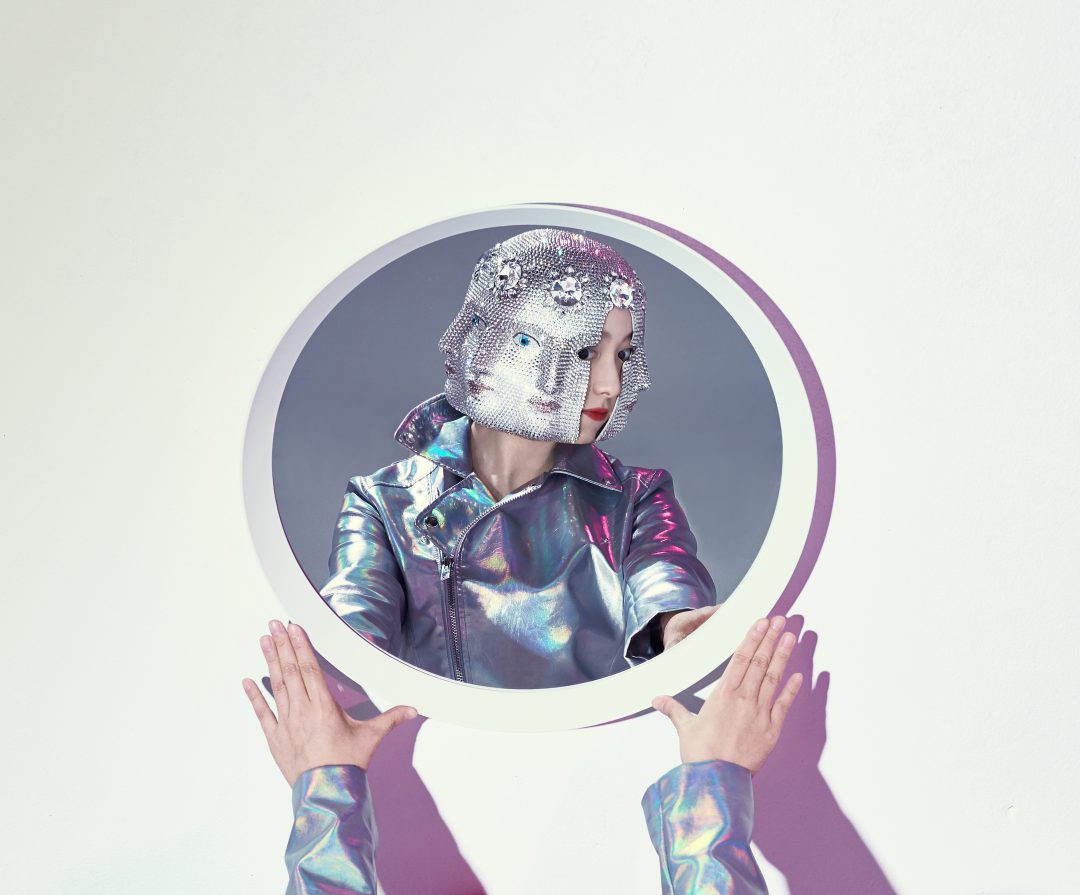
“[The hat] consists of eight overlapping faces. I got inspired by Echo and Narcissus, Greek mythology and also a painting by John William Waterhouse. Just like any artists and musicians, [the design is] semi-autobiographical. And it’s talking about the Echo Chamber effect of the internet, in which information, ideas, or beliefs are amplified or reinforced by transmission and repetition inside an enclosed system. We also contain multitudes, so it’s being multifaceted.”

HEIDI LEE ENDLESS ECHO HAT PHOTO by Bela Borsodi
The Endless Echo Hat (Image by Bela Borsodi)

What are you working on right now?

“Right now, I am trying to [become] open to the idea of being affordable to the public, like IKEA or Target. I want to make my hats more accessible. There’s a lot of research and development happening, but I want to keep it a little bit secret before I let it out. I don’t like to show the process. I like to show it when it’s done.”

HEIDI LEE SUNRA PARASOL SKELETON HAT PHOTO by Mykola Fumzhi
Sunra Parasol Skeleton Hat (Image by Mykola Fumzhi)

Do you plan to design something else other than hats?

“I am definitely open to it as a designer. I went to [the Rhode Island School of Design], and the good thing about RISD is that they help you develop a sharp eye, so I am open to everything. I would love to design a chair. At the moment, I am trying to hyper-focus on my goals, but after a couple of years, we will see.”

HEIDI LEE VORTEX HAT PHOTO by Maciek Jasik
The Vortex Hat (Image by Maciek Jasik)

What are your current goals?

“I am getting this hat (pointing at her hat) mass-produced. It’s one of my best sellers. It’s called Vortex hat. A lot of people say that it reminds them of a cupola in a building or a teapot. I also like the idea of how it looks like a virtual hat in real life. I want to refer to a quote of Charles Eames, ‘We want to make the best for the most for the least.’”

HEIDI LEE VORTEX SUN HAT PHOTO by Maciek Jasik
The Vortex Sun Hat (Image by Maciek Jasik)

Where does all the inspiration for your design come from?

“New York City, living here, like every corner and every street. You never know who you will bump into like I just bumped into an actor from Spiderman on the subway.”

HEIDI VORTEX HAT Dims black background
The Vortex Hat

Can you tell me more about your teaching experience at NYU?

“It’s a class for pre-college students. We talk about fashion in general and have some recommended readings, lectures and special guests. So by the end of the class, even students who have no prior experience in fashion, they are making four or five fashion illustrations.”

Where do you see yourself in five years?

“That’s a good question. The sky’s the limit. Who knows. I feel like I just need to hyper-focus and accomplish my goals.”

Where can we follow you?

@HEIDI_337

Images courtesy of: Heidi Lee

Featured Image Credit: Joseph Jagos

Chika Tillman: From Wall Street Banker to Pastry Chef

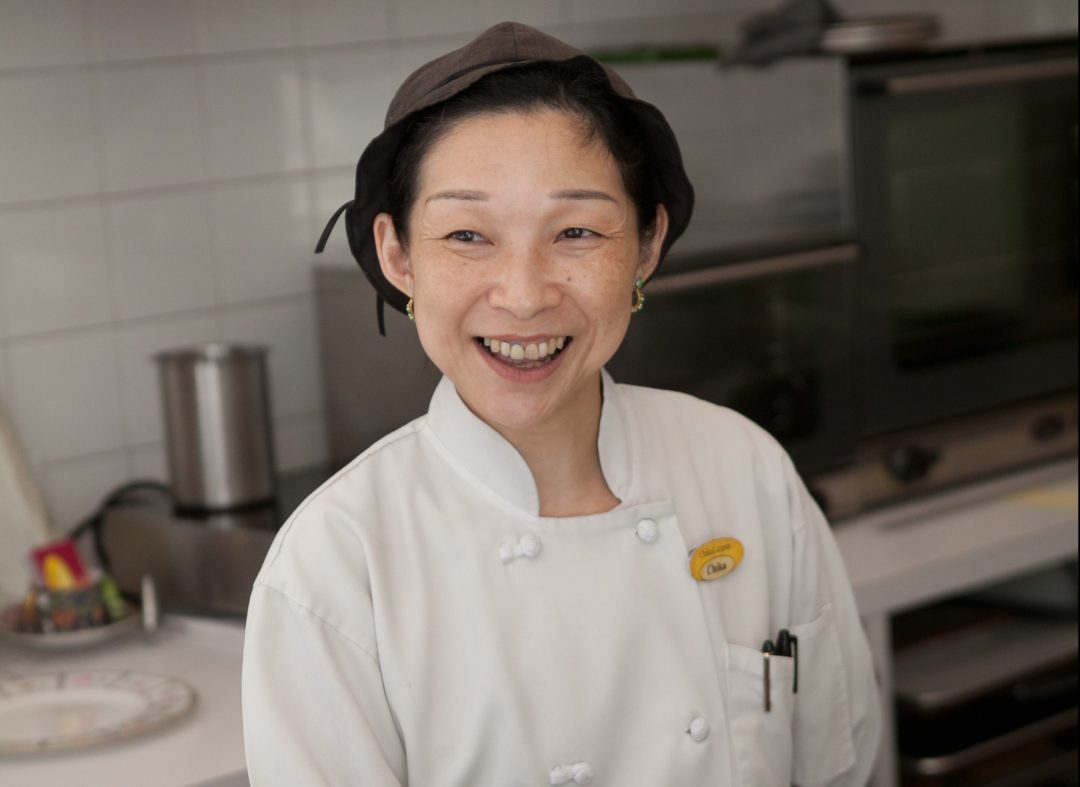
“I really loved the job as a banker, but the first thing I checked every morning in the newspaper is not the stock market section but the restaurant section,” said Chika Tillman, founder and head pastry chef of ChikaLicious Dessert Bar.

In the late 90s, when Tillman was working amid the hustle and bustle of Wall Street, in a suit and heels, she would attend the evening classes at French Culinary Institute after work. Having helped out in the kitchen at home at an age as early as six years old, Tillman has had a passion for European cuisine since she was a baby, regardless of the fact that she grew up in a traditional Japanese family in Tokyo.

Not long later, she started to set foot in the fine-dining industry in New York. From joining the Gramercy Tavern in 1994 to working at the Ritz Carlton, Tillman was finally living the life where she could talk about food as much as she wanted – the dream she kept holding onto when she quit her job as a banker.

From the fine-dining experience, not only did Tillman learn more about cooking with a professional team, but also, she noticed something else. “For most fine-dining places, you already spend $300 before the dessert course,” Tillman said. “So why not having a pizza or ramen and going to a different place for dessert?”

The prix fixe menu with wine pairing at ChikaLicious

In 2003, with a vision of providing a four-star yet affordable dessert experience, Tillman opened ChikaLicious Dessert Bar with her husband, Don Tillman, in East Village. With no waiters, this 20-seat eatery that is built around an open kitchen enables Tillman to work right in front of the guests and to serve them directly. Influenced by her fine-dining experience, Tillman created a 3-course prix fixe menu with wine pairing, which starts with a two-bite tiny tasting portion and onto a comfortable and nostalgic piece.

Blueberries on Genoise Cake surrounded by Frosted Pistachio with Blueberry Sorbet and Black Pepper Sorbet

“If I am making something that uses strawberries, I want people to think about a time when they had fresh strawberries,” Tillman said.

Finally, it ends with a more sugary piece to satisfy the brain.

Chef Chika presenting the most popular cheesecake

“Because I don’t put much sugar in the first two pieces, so I want people to have something sweeter in the end so that they have a feeling of ‘Oh, I ate the dessert,’” said Tillman as she presented the most popular “Fromage Blanc Island Cheesecake.”

Fromage Blanc Island Cheesecake

On top of a plate of ice, this white snowball is more like a milk pudding than a cake. Covered with fresh cream, it not only looks different from the traditional cheesecake, but also has a unique taste. As smooth as mousse, yet as rich as cheese, the cake will melt in your mouth after the first bite, but leaves a satisfying creamy consistency. The menu is changed every day by Tillman, with inspiration from food, color and picture, but “Fromage Blanc Island Cheesecake” is the only exception because of popular demand.

Chef Chika preparing the dessert

When asked what is the ideal job if she stops being a pastry chef, “A cashier at the liquor store!” Tillman said without hesitation. “So that I can get a discount for champagne! You know how much I love champagne,” Tillman said with excitement, just like a kid who finds her favorite toy, as she decorated a freshly-baked cake with blueberries.

Chef Samuel Clonts: a Modernized Kaiseki Dining Experience at Uchū

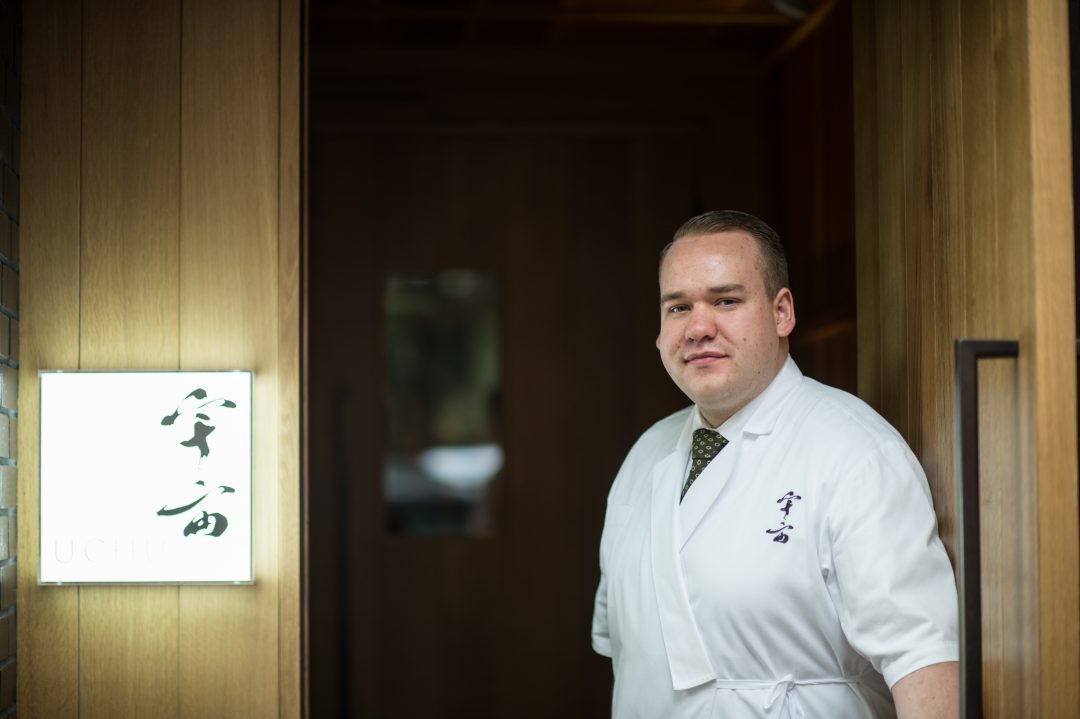
Having come to realize his love for food at a very young age, Chef Samuel Clonts started down his cooking career by helping his mom out with everyday dinner. With a huge passion for food and the process of making food, it did not take long for Clonts to begin cooking professionally by attending a culinary program at high school while at the same time working as a dishwasher. The 15-year-old Arizona boy never expected that in five years, he would be working at a Michelin star restaurant in New York.

At the age of 18, Clonts transferred from the Ritz Carlton in Arizona to one of their other locations in New York while furthering his studies at the Institute of Culinary Education. The young starter was eager to get real-world experience, especially in a city filled with a wide range of opportunities.

“When I ate at Chef’s Table at Brooklyn Fare, I knew this was the best,” Clonts said.

In due time, he got a job at this three-starred Michelin restaurant and started cooking Japanese-inspired cuisine. During his five years at Chef’s Table, Clonts found his true career passion – modernized Japanese cuisine.

“I really fell in love with their approach to cooking, the way they think about food and the way they handle it,” Clonts said after recalling his trip to Japan, where he tried the traditional Kaiseki.

Kaiseki is a multi-course Japanese dinner with a focus on seasonality and ornate tableware. It requires hours of meticulous preparation by the chef to provide an ultimate dining experience – a visually appealing meal with the taste buds dancing with delight.

By eating at different places and reading a variety of books, Clonts quickly learned the essence of Kaiseki. Since no one was manipulating it into a more western style in the city, Clonts decided to be the first to combine traditional Kaiseki with western elements, making it more approachable to New Yorkers. And it all started with Uchū.

Having opened in June of 2017 in Manhattan’s Lower East Side, Uchū, the 1-starred Michelin Japanese place is a tale of two counters, with chef Eiji Ichimura helming the 10-seat sushi counter and Clonts running the 8-seat Kaiseki counter. In contrast to a traditional Kaseki, Uchū’s tasting menu uses more high-end luxury ingredients, like caviar, truffle and wagyu that are not commonly seen in a traditional setting. Following the typical Kaiseki progression, the course starts with a light yet impressive dish to set the tone, followed by a dashi course, sashimi, grilled dish and finished with rice course. The menu changes every couple weeks, either because there is a new product or Clonts gets bored with a dish that has been there for too long. From white asparagus coming from France to caviar from Shanghai, Clonts looks for ingredients that are the best of the best.

Caviar Handroll

Among all the delicate dishes, the most popular one for customers is the caviar handroll, which includes caviar imported from the Kaluga farm in Shanghai. With a sheet of nori, a little sushi rice seasoned with black vinegar, some fresh wasabi and sumptuous caviar on top, the well-known handroll is ready to serve.

The Egg Dish with Jidori eggs and golden trout roe

Aside from the customers’ favorite, Clonts himself favors the egg dish. By using a famous Japanese breed, called Jidori eggs, and some golden trout roe, this simple-looking soft scrambled egg tastes as smooth as clouds.

“The natural fat from the yolk gives it a really nice texture. On top of it is usually some pickle that changes seasonally,” Clonts said.

Now 27 years old, Clonts is already a very successful chef in the competitive restaurant industry in New York. However, he is still not satisfied with his accomplishments.

“I think there’s room to grow and I would love to cook in front of people,” Clonts said. Without the limitations of space, Clonts would be able to prepare the food right in front of customers so that they could fully appreciate the beauty of Kaiseki. 

Images Courtesy of: Uchū

The Man Who Made Monterey Car Week | An Interview with Gordon McCall

Featured Image Credit: Angela Decenzo, provided courtesy of Gordon McCall

On a warm, June afternoon in Monterey, California we were given the privilege of interviewing one of the Automotive and Motorcycle world’s most interesting personalities. “The location for this interview?” you may ask. It is what appeared to be a humble storage unit, however it ended up being anything but. As the door opens to this metal building, you are greeted by an expansive automotive paradise. If you haven’t already guessed, this hideaway is the refuge of none other than Gordon McCall, the man whose ingenuity made Monterey Car Week into what it is today.

With a passion for automobiles and motorcycles that is seemingly endless, McCall’s imagination and painstaking work have given life to not only some of greatest automotive gatherings of our era, but also to the world of modern automotive auction photography. Having began his career as a teenager sweeping the floors of a local Ferrari dealership, the Carmel native who previously headed Christie’s Auctions Automotive division has risen to be one of the must know individuals in the car and motorcycle industries. Worlds which few individuals seldom inhabit simultaneously. 

His passion, you may ponder? Not just mind blowing hyper cars and tasteful classics, but items rich in meaning and provenance. We were given the exclusive privilege to chat with Gordon at his breathtaking hideaway, which houses not only some immaculate cars, but also over 20 motorcycles. Read on to get to know the man that – gave life to the Hangar Party, advised Bentley on paint work, and is soon to be one of the automotive world’s most entertaining television hosts.

The name McCall is quintessentially synonymous with Motorsports in Central California. With that said, can you tell us a little bit about your background with cars and your relationship with Monterey Car Week?

“Well I think, like a lot of car enthusiasts, you get the bug when you’re young. I lost my dad when I was eight and most guys I know that are into cars got it from their father or grandfather, something they hung out in the garage and spent time fiddling with cars over. I didn’t have that in my youth, but what I did have was a mom that understood that I loved Corgi Toys. And she managed to, every birthday, Christmas, Easter, you name it, whatever the occasion was, I always got Corgi Toys. Not sadly or pathetically, but I still have them. Those little cars: the little Aston Martins, Ford GTs, MGB GTs, the Jaguar E-Types… Those little cars clearly planted a seed with me in my youth. I don’t know how old I was, seven/eight years old, or somewhere in that neighborhood, cars and sports were the two things I cared about the most. And I am grateful that my mom was able to kind of keep me in cars to the point where I ended up, you know, with a career. So, Car Week is a bit of an unintended consequence for me, you know, being from here. Car Week [has] always [been] going on in my life, since the early ’50s, when they first started running the track, before I was born, before Laguna Seca was built. Actually, I am as old as Leguna Seca; it was built the year I was born. I would get dropped off at the track in the ’60s; my mom would drop me off at the bottom of Highway 68 and I would walk into the Can-Am Races as a kid. That’s back when you could do that with your kids, I just had to be back on Highway 68 at dusk. So, I did not know it was Monterey Car Week at the time—I really didn’t. Actually, we can credit the Pebble Beach Concours [with starting Monterey Car Week], but before the Pebble Beach Concours [there] were the Pebble Beach Road Races. So, it’s actually racing that started all this. Steve Earle, in 1974, brought vintage racing to Laguna Seca. I was going to Carmel High School at the time [and] I was a volunteer out of the gas station there, which was a Union 76 station. I used to pump gas into race cars. I was just mesmerized by the whole process to the point where I started volunteering my time as a Junior at Carmel High School. I started volunteering my time as a field crew volunteer at Pebble Beach and a good friend of mine, who is now the Chief Judge at Pebble Beach, Chris Bock kind of kept me on board. He saw that I was an enthusiast when it came to cars and I ended up working my way up the ranks. After 28 years, I ended up as a judge [at the Pebble Beach Concours d’Elegance], which is when I collaborated with [The Honorable Sir] Michael Kadoorie to create the Quail.”

Is there a particular place that you trace your passion for automobiles and motorcycles to? Was it an encounter with them in your childhood, or through family or friends?

“Going back to my response to the first question, I trace it probably to the carpet in my mom’s house. Between my Hot Wheels, HO Slot Cars, Corgi Toys, Matchbox toys, Dinky Toys—I think just being around it, being interested in how things work. I mean, I’ve still got a ’64 Corvette Stingray Corgi Toy that’s kind of a maroon color; the wheels are painted white and I realize I did that when I was like eight years old. So, technically I have been modifying cars since I was [a kid]. As far as where that started, definitely then. I got interested in those .049 powered Cox Gas Cars. I learned that you can change the cylinder head on it and get more compression out of it and it would be faster. I have always been into kind of how to make stuff go faster and how to make stuff work. You know, why stuff works? It has always been intriguing to me, so it led to a career in the car world”

Gordon at Laguna Seca Raceway in 1966

When did the Motorworks Revival begin its transformation from a humble get together during Monterey Car Week to a party that can only be described as one of the most extravagant of its kind?

“Well, thank you for saying that, especially with your extravagant website, which, not pandering here, is incredible. It really is an amazing job you and your team do on that site; it is above all, it really is. I used to host [the event], when I had my finish restoration business [at] the Monterey Airport, [the party was] basically customer appreciation night. We would have a barbecue. Throughout the year it was really Car Week that brought everyone together, so that’s when my customers would be [in Monterey altogether]. We would prep a lot of cars for various shows and races, etc. And it went from a somewhat of an intimate shop party to [something] a little bigger than that when I partnered up with my neighbor at the Monterey Airport, which was Alan Shugart. Alan, at the time, was the Principal at SeaGate Industries. He had the patent on the hard drive. He also owned a couple private planes and he had a wonderful hanger next to my business. I needed a little more room if I was to expand our get-together, so I asked [Alan] if he [would] mind if we utilized his hanger and maybe had the airplanes on display. Realizing that car guys and plane guys are kind of the same all-in-one, and gals. In the early ’90s, the very first year that we moved it into the hanger and still incorporated my shop, both airplanes [on display were] on a Type-135 charter. It turned out that the first year that we integrated Alan’s hanger, one of our guests chartered a three month European trip utilizing their jet. So all of a sudden [the party] became like a business entity, it’s like ‘hey this is great, can we do this again next year.’ We brought the right people to the table, well the pivotal year for us was 1997 when Gulfstream had caught wind of our guest list, and back then we were maybe a 1,000 [to] 1,500 people, which is still a fair amount of people to entertain. We had vintage airplanes, the Shugart’s Astra jets on display, and a couple other airplanes. But Gulfstream contacted me and said ‘we have this new plane, it’s not quite finished yet, but we know a couple of your guests are going to be attending—we can’t get to these people.’ And I am thinking ‘Gulfstream can’t get to these people, but I can?’ I mean, this [was] a very humbling experience. Well, needless to say they showed up with a then, new GV. [The aircraft] was [still] green on the inside; [the interior] hadn’t even been outfitted, but the GV when it was introduced was a big deal, it was a game changer in the long-distance private plane sector. It’s like, ‘this is phenomenal, I can’t believe there’s a Gulfstream at our event, and a new one that no one has seen yet.’ Admiral Alan Shepard, the astronaut, was one of our guests and [at the time] I didn’t realize he was a Gulfstream test pilot. So I am standing next to him with his wife and he is flipping out over this new Gulfstream. He goes, ‘well I’ve heard of this, but I can’t believe it’s here.’ Next thing I know he is in the cockpit with their chief test pilot, a guy named Captain Bob Osbolt—I’ll always remember him—who the thrill of his lifetime was having Alan Shepard sitting in his cockpit. And Alan is telling stories about taking his daughters for zero gravity excursions in the early Gulfstreams, the ones and twos. This is all happening at a party; what is even more comical, and is not really funny because it’s business, but they sold two planes that night. So all of a sudden not only did my wife and I pioneer this concept of integrating aviation and automotive businesses together, but we were instantly being credited with having come up with a pretty darn good idea. Not only has it been good for us because we’ve been able to maintain this now for 28 years, but we’re knocked off all across the country; there isn’t a major car show that takes place now that doesn’t have a hanger party prior to it. And everyone of them gets measured against what we do in Monterey in August and we are really proud of that. It’s flattering that these other entities will even reach out to us and say ‘we just want to let you know we are inspired by what you do in Monterey and that’s why we do this here.’ It keeps us on our toes, as well. So, every year we try to evolve the event; it’s become more of a food and wine affair now. We are really catering towards the lifestyles of the people that bother to attend Monterey during August; it’s a well traveled group [and] they know what they are looking at, it’s a discerning audience, needless to say. But, 1997 was pivotal in that that’s the year we kinda broke out. Monterey Jet Center was just being built, and we [discovered] that the original building, Alan Shugart’s building, was the original United Airlines terminal. It’s an old facility and we thought ‘wow there is a brand new, fixed base operator going up down the way. I should probably reach out and get the chance to maybe know who these new owners are.’ That’s when I met Carl Panattoni and Jack Van Valkenburg, who have obviously become partners over the years and two of the nicest guys on the planet. Monterey Jet Center is an amazing facility and in the year 2000 we moved the event to the Monterey Jet Center and we’ve been there ever since.”

What are some of the greatest challenges to hosting an epic party with supercars, private jets, and over 3,000 guests?

“There [are] a few moving parts. One of the most difficult things is the fact that after September 11th we are on the inside of  [a] FAA/TSA controlled space; and to be able to throw a party like we do inside of controlled space, that’s very tricky. We have elements of security there that none of our guests see, but we work all year long in terms of meeting the requirements of the FAA and the TSA, and the Monterey Airport Police, as well. We also have a lot of high-profile guests that travel with their own security teams. There [are] lots of elements involved here. There’s a lot of powerful folks that come to this event and security has always been a big concern of ours and we’ve always treated it very [seriously], and fortunately to this day we’ve done a pretty good job of doing that. So that’s certainly one of the challenges. It’s been an interesting challenge to transform it from what used to be everyone there was an invited guest to transitioning it into a viable business. You know, we weren’t going to be able to continue to entertain the world as our personal guests indefinitely; we needed to make a business out of it. And when companies like Gulfstream and our other airplane company sponsors are doing business at the event it seemed like ‘well maybe we can find a way to put together some sponsorship opportunities that are reasonable and have good ROIs.’ So that’s an interesting transformation because we kinda took it on the chin a little bit from some people. So [people say] ‘well, I used to come to that thing as your guest.’ Well, [that] actually got to us, which is common. I had an uncle who had a set of towels in his guest bathroom and it said ‘friends: yes, friends of friends: no.’ And I will never forget that because we were getting friend of friended to death. ‘Hey thanks for the invite, I’ve got six house guests—I’m bringing them’ That’s really hard to account for catering and, you know, it’s just tricky. So my response to that has always been ‘gosh, when’s the last time you brought a group of friends to a wedding you were invited to.’ Like you just don’t do that, right? But, you know, people are excited [and] we are flattered that people want to be there, but we really had to make a business out of it. It had to have accountability and there’s a value to those tickets and, you know, what’s important to us is to deliver. Yes, it is an expensive ticket; but then again, it’s a unique experience. So, there are a lot of challenges. Long answer to a short question.”

Gordon on the Mezzanine at the McCall’s Motorworks Revival during Monterey Car Week

Is there anything in particular that you would like to share regarding the upcoming Motorworks Revival and the Quail, A Motorsports Gathering?

“Just that I am really proud of both. I would like to give a special thanks to my wife Molly who is Vice President of McCall Events and runs all the marketing for the Motorworks Revival; in addition, Tiffani Munsey, our Event Manager, does a superb job and the event would not be the same without these two gals. I mentioned earlier that the team that puts on the Quail, A Motorsports Gathering, the Peninsula Signature Events Team, run by Courtney Ferrante, is really impressive. I am amazed at what they do, quite frankly, that’s an event owned by the Peninsula Hotel Group and it’s phenomenal what they put together. I’m the resident car guy as the Director of Motorsports, so what I do is relatively easy compared to what they do in terms of the daily work as well as the implementation of it all. You know, I look forward to [these events] every year. My wife and I are locals, we don’t just roll into town, produce a couple of events and leave. We are part of this community [and] we hire a lot of local people; that’s always first and foremost with us. We take a lot of pride in having a stake during Car Week. It’s really satisfying to think that we both grew up here and we both have something to contribute during that period of time. For any of the locals here that complain about Car Week, and we’re aware that there has been a little bit of add over the years, I can only emphasize that there is such a financial impact, a positive one, to this community that to be able to endure some car enthusiasts for 10 days is worth the sacrifice. And to that point, interesting timing right now, I’m not hearing about anyone complaining about a quarter-of-a-million golf fans being in town. Not hearing any complaints, which is good [because] we shouldn’t be complaining, we should be grateful that people choose to flock to this area. We’re pretty fortunate to be able to live here.”

How would you describe Monterey Car Week in just a few words?

“That’s tricky. So, there’s a wonderful expression I heard years ago about Disneyland, and that is you’ll hear people complain that there is too much to do during Car Week, and you know during the old days there was like two or three things to do. Now you really have to ala-carte pick what it is that you want to participate in, but there is this great expression that applies to Disneyland, which is that ‘I have never heard anyone complain that there’s too many rides there.’ So, I think Car Week is, in a nutshell, a sensory overload of incredible people that come from all over the world. They bring their interests and their talents with them and they share them. The car world is not shared in a vacuum, it really isn’t. These are people out driving their cars, they’re out showing their cars, they’re racing their cars, they’re buying cars, they’re selling their cars… It’s an exciting period of time. So to put that into a few words is, as you can tell, [is giving me] a hard time. It’s a true extravaganza for car enthusiasts.”

Gordon McCall (far left) interviewing Roger Penske and Gil de Farren at The Quail a Motorsports Gathering

All those who’ve enjoyed the privilege of attending The Quail a Motorsports Gathering remark that there really isn’t anything like it. Tell us more about the inspiration for this magnificent event and how it exactly came to be a reality?

“Well, here we are 16 years into the Quail and there isn’t anything else like it to this day. You know, people have had 16 years to copy it; it hasn’t been replicated anywhere else and to me that is a true testament to a couple things. One is, it’s a very difficult event to produce and, again, more credit in the world goes to the Peninsula Signature Events Department. But it also, kind of stands on its own as a result. The idea that everybody is a VIP. The Peninsula Hotels are into service; that’s their main forte, and they certainly do that. Everyone there does feel like a welcomed, invited guest. I think the fact that it hasn’t been knocked off, says everything about the event itself, it’s a true lifestyle event. I said years ago, that it’s like going to a five-star restaurant and having a car show break out. People are there because they want to be, there is a general level of enthusiasm that is completely real. It’s just refreshing and to have it to where everyone is a VIP, that has a special feeling to it. I learned years ago, you can’t please the world, you just can’t. I don’t care how hard you try, you are never going to be able to please everybody. So, pick a sector that you can excel in and do that. And that’s exactly what the Quail is all about.”

What are your top tips for doing Monterey Car Week right?

“Pace yourself. As I mentioned earlier, pick and choose what it is that you want to do. If you happen to have access to a motorcycle, you’d be doing yourself a huge favor to ship a bike out. I think the best way to do Car Week is, quite frankly, rent a house and spend more than the week. Don’t just get caught up in the hotel five-night minimum. Local hotels might not be happy with me saying this, but… Send your friends to the hotels, take a house for a month, make it a true holiday and book end Car Week with being here before it starts and being here after it starts. You’ll get a true sense for what the Monterey Peninsula is all about; it’s not critical mass with congestion that takes place for a ten-day period because of Car Week. I think, as we all know, it’s a really special place to live; and to be able to take that in with a family vacation, bring a motorcycle or ship one out, so that you can tool around easily when it is congested. And most importantly, pick and choose what it is that you want to do. You can’t go to every auction, you really can’t. You can’t really go to every show, you can’t go to every race. So, just pick a few things that you really want to immerse yourself in and don’t feel like you are missing out on anything else. That’s what wonderful websites are for.”

Has your personal taste in cars and motorcycles evolved over the years? If so, how?

“It really hasn’t changed that much. Getting an early start in cars, when I think about it, I have always been able to afford what it is that I like. I’ve always worked hard, I’ve had multiple jobs, I’ve always had targets on the horizon and goals. I’ve also kept my expectations for my interest in cars very real. Having the experiences that I’ve had with companies, such as Christie’s, etc. I have been around some really amazing, priceless cars that just personally have no interest to me in terms of ownership. I can appreciate them for what they are, but I have no desire to own something that’s worth more than my house. I’m just not that kind of guy. I really like driving cars, so my cars are really approachable and normal and fun. That’s my common denominator. The same for my bikes, they are just fun.”

Gordon and his cherished Datsun 240Z

What is the most cherished vehicle in your personal collection?

“So that question of which is your favorite child, though I don’t have children; that’s a loaded question. When I was going to high school I was really influenced by a guy named Pete Brock, who had an enterprise. It was called Brock Racing Enterprises (BRE). Pete is a guy that was racing Datsun 510s against Alfa Romeos, BMWs, and the like. Growing [up] at Laguna Seca, I used to go out there and cherish those Trans-Am Races. I was always intrigued by the Datsun 510s because here was an economy car that no one really heard of in the States in the ’70s, yet [Brock] was beating known brands like Alfa Romeo and BMW that were much more expensive cars. I was mesmerized by that to the point where my first car was a Datsun 510. I have to admit though, while I owned the Datsun 510, that I bought it [at]16 years old and modified heavily to replicate one of Pete Brock’s cars. The car I always wanted was a 240Z; I just thought they were the coolest things ever. This gentlemen Bob Sherry was Vice-President of SCRAMP and his son Pete and I were close friends and his mom, Julie had a 240Z. I just thought this car [looked] like a Ferrari. Again, nobody really knew what Datsun was—so many years ago I added a 240Z to my little stable. When I get into that car it just makes me think ‘okay, I didn’t have this in high school, but I have it now and I’m good with that.’ It just makes me smile. It’s a car that actually [is] starting to get recognized, one just sold for a world record the other day, on the internet of all things. People are starting to [think] ‘why is a 240Z worth so much less than a Porsche 911 of the same era when in fact [the 240Z] probably [had] more [of an] impact on the car scene than the 911 did at that time?’ Those days are starting to end; the Zs are starting to get recognized now. And so of course, I’ve lowered mine and put triple Webers on it with a hot cam and headers and all that kind of stuff. So, It’s a fun car, I love it. I’m going to say that’s the car I kind of lean towards.”

In your opinion, what is the most important aspect to consider when purchasing a classic car or motorcycle?

“I think there’s only one really important thing, actually two. You’ve got to be able to afford it. Don’t cut into the mortgage money because of the car you desire, right? So, you’ve got to be sensible about it, but to that point, buy what you love. This idea of what it’s going to be worth later; if that happens great, if it doesn’t, so be it. [It’s really about] the joy of ownership. I have actually been asked that question several times and I’ve come up with a funny analogy; I don’t know if it’s going to make any sense, but when you take a trip, when you buy your tickets for the airplane and the hotel, and all the experiences, there is zero expectations that you’re going to get any of that money back. It’s the experience that you’re paying for, so I feel the same way about cars and motorcycles. You know, you [should] be smart about your purchase; you don’t want to be the fool who fell off the turnip truck and paid way too much money for something. But be smart about buying what you’re buying. If it goes up in value, great; if it doesn’t, what was the use of it worth? How many smiles did that put on your face? It has a value to it, so factor that in. You don’t want to be a fool about it, but at the same time you can have a little reckless abandon if you put a true value on the use of it. I do, I really do. Bruce Canepa has a great expression, a friend of mine up the coast, says ‘you can’t drive art.’ I think he credits that from Jerry Seinfeld, actually. When you look at people who park money in investment art, in an investment car—it’s like, at least you get to drive the car. Worst case scenario is that the market fell out, the car is worth half of what you paid for it, but hey, you put gas into it and go have some fun, That’s not so bad.”

Gordon at the roof of the Petersen Museum while filming his television program titled “The Road to Provenance”

Is there anything that you can share with us regarding your upcoming television series on the History Channel, titled “The Road to Provenance”?

“Yeah, I’m very excited. So, I’ve been in and out of different television productions for most of my career, either as someone who has been interviewed or contributed in one way or another. This show all came about in an odd way, [in] that I’ve been featured in a couple of the episodes, the early episodes. Then got asked, ‘will you be interested in hosting the show?’ And I thought ‘well I’m not a TV host, I don’t know what I’m doing.’ Then I come to find out that’s exactly what they were looking for—they were looking for someone who doesn’t need cue cards and it’s just first-hand knowledge or whatever and driven by the passion of it all. I find that it’s a refreshing show, in my opinion, and the reason I was so eager to be involved with it is that I’m finding there’s room [for this type of show]. This is going to be a History Channel production, so this is not landing in the normal course. There are plenty of people out there looking for content that’s a little bit more in depth than just talking about what cars are worth. Our goal is to find out why cars are worth what they are, and why people are interested in collecting what they collect. And it’s not just cars, it’s timepieces, it’s aircrafts, it’s boats, it’s art, it’s all that. So, provenance is an interesting word. I’ve met some very interesting people along the way, quite frankly, most of the [27] episodes we’ve already shot. There are a lot of people that I already know, but a few of them I don’t. I’m just fascinated to walk into the world of these people that you find out they’ve done something right in their life to where it forged the ability to collect something, anything. And then you find out why they are collecting what they are collecting, and it’s just fascinating, it just is. It’s kind of a personal glimpse into people’s lives. There used to be a show called ‘Pinnacle’ that I remember watching on public television years ago. I forget who the interviewer was, but it was this very well-informed guy. He would sit with Warren Buffet in his backyard on milk crates and they would just talk about life. And that’s kind of what this show is like; we are not finding out where the money came from that bought the… It’s got nothing to do with that. It’s like, ‘why is this interesting to you?’ You’d be surprised at the similarities amongst people, as to why they collect what they collect. It’s neat, it’s really, really neat. So, [it’s an] exciting show to be involved with, and [I] can’t wait for it to air in the Fall. We  filmed four more introductions to it, just recently. We are into season two right now, so lots of fun.”

Tell us more about your involvement with the California Highway Patrol 11-99 Foundation.

“So a really good friend of mine, a guy named Ned Tanen, who used to be President of Paramount Pictures; Ned’s a part-time Carmel Highlands resident. I used to look after his car interest years ago, I’m talking about 30 years ago, or so. He’s a guy that first exposed me to the 11-99 Foundation; I [had seen] some license plate frames, [but] really didn’t know what it was. [Ned Tanen] said, ‘do yourself a favor, you know Bruce Meyer, right?’ And I said, ‘yeah, I know Bruce.’ Bruce has been a friend [of mine], I [actually] just got back from the Isle of Man with [him]. Bruce is a driving force behind that foundation. And I sat down with him one day to learn what the foundation was all about. I had friends who were California Highway Patrol Officers. I always assumed when there was an incident involving an officer, being a state agency, it was just an assumption that everything must be taken care of, right? Well, come to find out, that there’s a huge lag time when an officer is killed in the line of duty. There is a huge lag time between any kind of financial benefits that go to the family—and to me, that just doesn’t feel right. I think the way I feel is shared between many car enthusiasts. Those of us out there that may have [bent] the rules a few times on the public roads with cars, we all appreciate what the Highway Patrol does. It’s a job I would never want and particularly nowadays. I mean the whole perspective towards law enforcement has changed so much in this country, yet these folks are strapping on a badge and a gun everyday and they may not come home from work. And so, to get familiar with this Foundation and see the good it does. It was literally a check that would arrive on the doorstep of a fallen officer’s family. It’s evolved from that, into a now, well-managed fund that kicks out scholarships as well as death benefits. We distribute $2.5 million a year in scholarships to family member’s of Highway Patrol Officers. So, we are making a difference not just in catastrophic loss, but we are [also] making a difference in officers’ and CHP employees’ families’ futures. It really feels good. I also have featured that charity at our event at the Jet Center, forever. And the reason why, is I feel like anytime you get a group of successful people who have chosen to come to Monterey Car Week, something good has to be coming from it, it can’t just be a party with jets and cars and fancy food—something good needs to be happening that goes beyond the night. That’s why we utilize that night as a fundraiser for the 11-99 Foundation. We do the same thing for the Quail and it’s a genuine, bonafide fundraiser. We don’t take a percentage of what is raised. It’s monies that go straight to the Foundation. A lot of events will hold a raffle where they will give a car away, then you will find out that the venue is actually taking part of it—that’s not charity in my book. So giving them the opportunity to meet influential people that become donors has been a real thrill. Personally, I’m really elated to be part of the Foundation. It’s heartwarming, unfortunately we lose officers every year, and it’ll be like that. It’s a tough job, a dangerous job. It feels good to think this Foundation is doing something that can help. The 11-99 Foundation has its own website [called]:  CHP11-99.org. It’s a really noble cause, there’s no doubt about it. I go up to the memorial [in Sacramento] every year in May. [As a] matter of fact, the local guy, Joe Farrow, whose brother was [General Manager] down at the Jaguar dealership; Joe was a gate guard at Pebble Beach. He became Commissioner of the California Highway Patrol under Arnold Schwarzenegger’s appointment. I had my Irish green 911 and I blew past the [Pebble Beach] gate, and there [he] was. And he was a car guy, he had a ’75 Carrera actually, Joe did. He held every position with California Highway Patrol and ended up as the Commissioner. [He] recently retired as the Commissioner, but he is now the Chief of Police in Davis. He still carries a gun and still wears a badge—he’s a great guy. He’ll be coming to the event this year actually. We’ll see him there.”

Gordon with his wife Molly

With such a busy schedule, what is a day in the life of Gordon McCall like?

“I am very routine-oriented, but with a lot of flexibility—if that makes any sense. I cycle a lot; that keeps my head screwed on straight, not just [riding] motorcycles but I ride road bikes. I’ve competed my whole life; I [still] have my Tenspeed, I mean who still has their Tenspeed, right? That bike really led the way for me, that’s what I segwayed into a Honda 90. I find that I was one of those kids they probably didn’t have a name for at the time. I think they call it ADD, or something to that effect. I was one of those kids that [on] the playground, in the sandpit, I had an off-road race going on with Matchbox cars [and] a war going on with mini tanks and these little tanks and jeeps. I’d [also] have an air strip with the airplanes going… I had like five things going on at one time. That was me as a kid and that’s me as an adult; nothing has changed. I’m kind of all over the map, but at the same time pretty focused on what I do. If what I do is related to the other things I do, I’m good. It would be weird if I was in the medical world and the aviation [world]. That wouldn’t work, but my wife [Molly] and I are kind of quiet people. As I’ve mentioned we live out in Carmel Valley. We’ve got a great little German Shorthaired Pointer, it’s our third one. [My wife’s] a professional artist and does our marketing, as well. But we’re just kind of a couple of quiet people that are grateful to have grown up here. I can switch gears, which I need to professionally. I have no problem throwing myself in the arena and playing that role, as well. And it’s genuine; I love people. I find that the businesses that I’m in, they’re really people businesses. I mean cars, airplanes, motorcycles and all that. Yeah, those are things, but it’s really [about the] people. That’s the part that I really love the most, it’s neat”

Lastly, we’ve heard that you are developing an incredible space for car collectors. With that said, can you tell us a little more about the Monterey Motorsport Park development?

“Yeah, so that’s the answer to a lot of peoples’ problems, particularly here on the Monterey Peninsula. Around here, you’re lucky to get a two-car garage. Well, what’ll you do if you’re into cars, or bikes, or really anything? I don’t know what’ll you do if you have two full-sized cars, but a lot of the Carmel garages are very limited in that way. So, we’ve learned that there’s a definite market for this. Our first development Garage Unlimited sold out immediately. This is a derivative of that; Monterey Motorsport Park is a spin-off of Garage Unlimited. It’s an incredible location on Highway 68, it could not be more convenient: two minutes to the airport, 10 minutes to the track. The tax advantages to owning your own space versus renting your own space is huge, and I think it’s a ramification of the demand that is in need around [here]. There [are] so many car people that choose to call [the Monterey Peninsula] home now, and unless you’ve got a big house out in the [Santa Lucia Preserve] or [if] you’re fortunate enough to build a basement in your house, out in the forest or something. If you’ve got cars, where are you suppose to put them? Well, this is the answer. We’re sixty percent sold out, we’ve got a few months left in construction and its coming along really well. Most importantly, the people who are buying units in this building are very interesting people—and that’s going to be fun, too. My rule of thumb regarding a club atmosphere there was that around here people already belonged to the clubs they wanted to belong to. They aren’t looking for another club, so why spend the money on a common area space. I mean your space is your common area space. If you want to have a get-together, just invite everybody into your space. It’s a real solution to a pretty serious problem. These hangers at the airport, for years, have been full of cars. They’re cracking down on that and actually there’s a prevision, and I’m not saying this as a partner in a real estate development, I’m just saying this as a kind of fact. When they did the runway safety extensions here at the airport, that was an FAA nationally funded affair, there was a prevision in there to enforce the use of hangers to be restricted to aircraft only. Which, when you think about it, makes nothing but sense. If an airplane can get to it, it should have an airplane in it—not a bunch of cars. That’s kinda putting a few folks out, which are steering them over to what we have to offer because you can’t park an airplane in our space. Airplanes are limited to taxiways, accessibility. I think with that, it’s proven that there’s a bunch of tenants that have been inquiring about: ‘I need to get my cars out of the airport.’ Every unit has a mezzanine in it, so every unit has the ability to have a getaway office, a satellite office, home office, whatever you want to call it. We have been approved to multiple business uses. For instance, wholesale and retail dealer licenses have been approved by the State, which is a big deal actually. The State’s very strict; they don’t want any kind of discrimination going on and they don’t want to think that you can lock somebody out of access. So, they’ve approved our facility for car dealership licenses. They range from 600 square feet up to about 2700 square feet. Once you’re in and once your business is approved, you’re free to do what you want. It’s a great opportunity, it really is. So many people around here have storage units tucked away. They’ve got Wifi, they’ve got their car collection, but they’re in a storage unit. It’s like ‘you pay your rent, you go month to month and there you are.’ Well, here’s your chance to own a place and actually have a nice address that goes along with it.”

Where can we follow you? And also, where can we purchase tickets to McCall’s Motorworks Revival?

“So, I’m on Instagram at: @gordonmccall75, every once in awhile I put a picture up there, and the McCall’s Motorworks Revival is on Instagram at: @mccallsmotorworksrevival. The easiest way to chase us down [for tickets] is on McCallEvents.com.”

All Images courtesy of Gordon McCall