Browsing Category

People

Fashion People

Yun Qu: Fashion Designer, Musician, and Futurist

Videmus Omnia A/W 2019 Collection

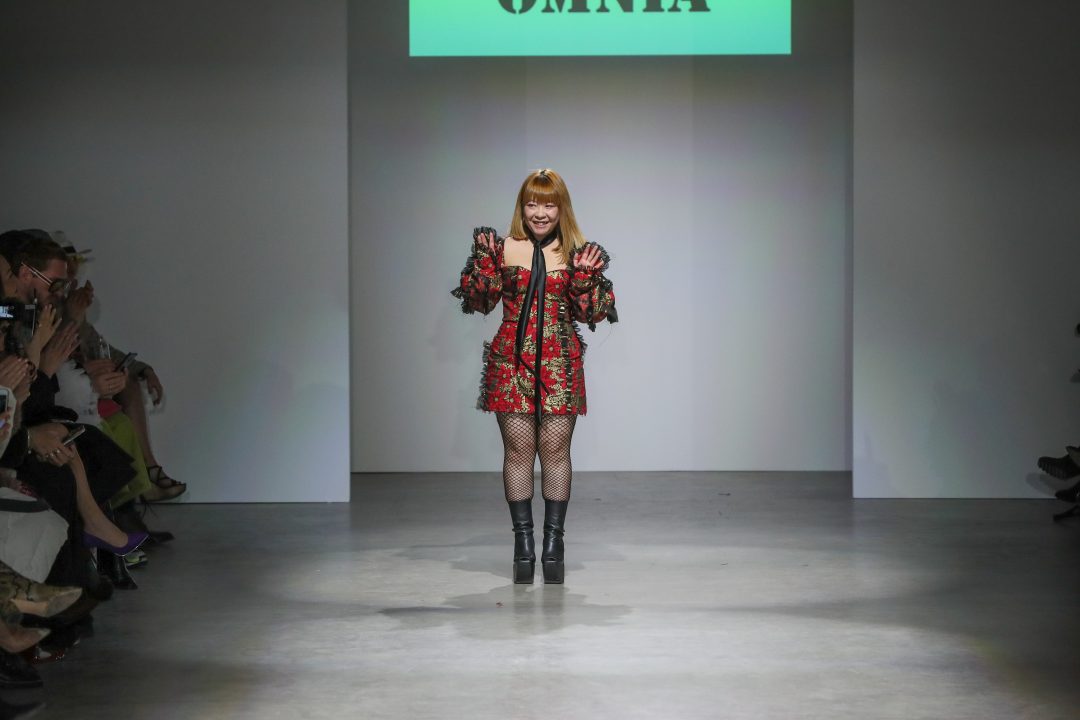
Yun Qu, the Founder of the NYC based brand Videmus Omnia, which was founded in 2016, let me know that she was listening to Nirvana when she got the inspiration for her A/W 2019 collection, “Enigma”. The collection, which features grunge fashion and Renaissance art debuted at the A/W 2019 New York Fashion Week. “Enigma” marks Yun’s third collection. When I entered Yun Qu’s studio in New York on a Sunday afternoon, the first thing that grabbed my attention was…
Continue Reading

Art & Culture People

The Art of Beya Rebaï

The Art of Beya Rebaï

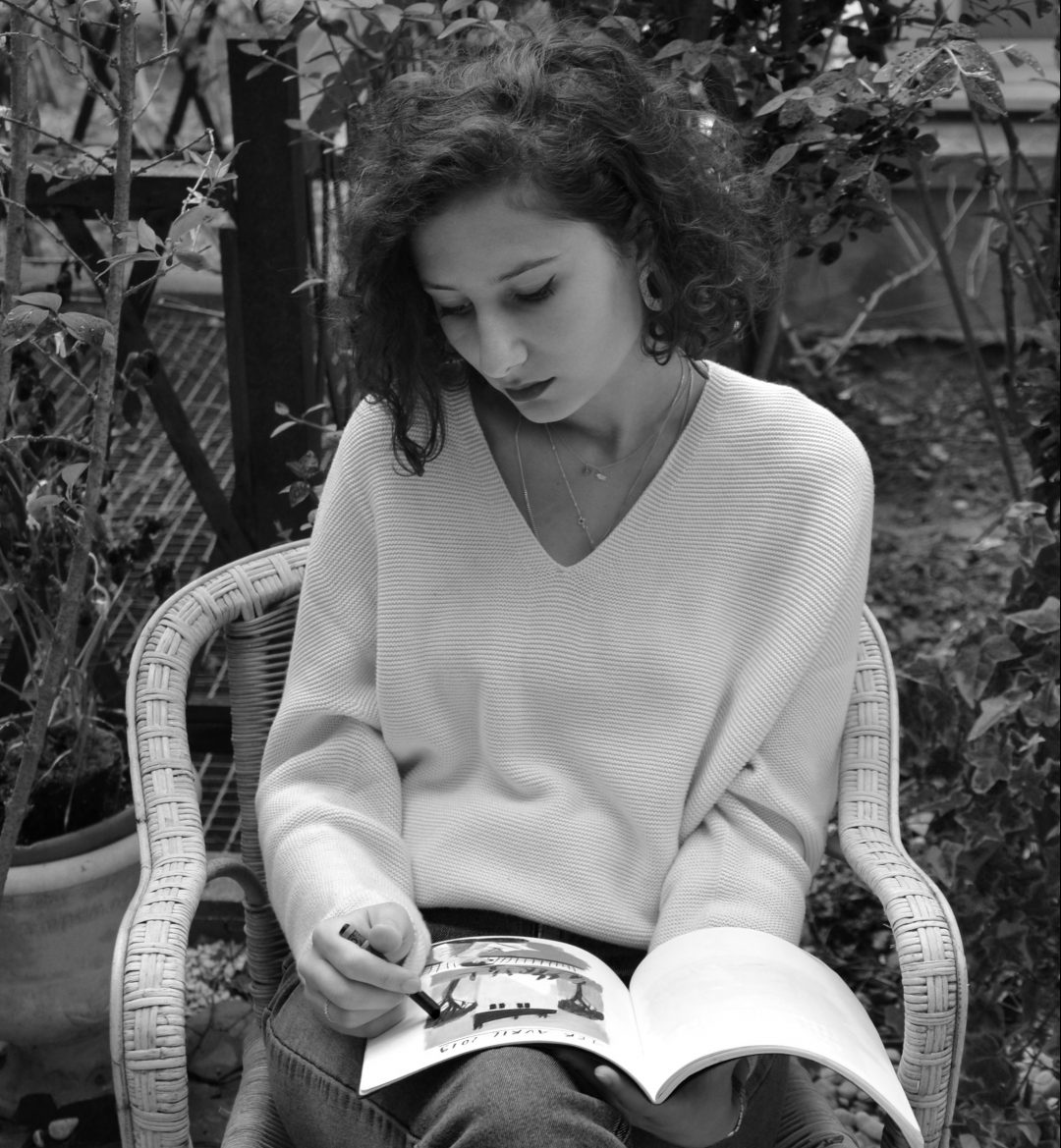
Meet the young and talented Paris-born artist Beya Rebaï, who has a passion for color as she draws narrow and select tone focus pieces. Having studied illustration in Brussels, Belgium for three years, and later attempting her master degree in Paris, Beya’s love for art has only grown stronger as time went on. With an intense drive for creativity, Beya is always seen with a sketchbook and wax pastels in hand during her travels. Not restricting herself with just what…

Continue Reading

Fashion People Travel Women's Style

Leaf Greener: “Fashion Industry Needs to Slow Down”

Leaf Greener: “Fashion Industry Needs to Slow Down”

Liberty, Enthusiasm, Aesthetics, Fantasy. Unlike traditional print magazines, the LEAF WeChat magazine doesn’t follow rules in terms of format and frequency. Nor does the magazine discuss fashion trends and gossip. “It’s about design theories, [and] about ethics,” Leaf Greener said in our interview. “We believe in slow fashion and publish articles whenever we find right angles and themes.” Leaf Greener, the former Senior Fashion Editor of Elle China and Founder of LEAF WeChat Magazine, is a Chinese fashion influencer and…

Continue Reading

Epicure Lifestyle People

Talking The Art of Wine With Lawrence Fairchild of Stones Wine

Talking The Art of Wine With Lawrence Fairchild of Stones Wine

From a young boy raised on a farm in Nebraska to the reputable winery owner in Napa Valley that he is today, Lawrence Fairchild of Stones Wine is a prominent figure in the winemaking industry. Known for his top-class cabernets from both the Stones Wine and Fairchild Wine labels, Mr. Fairchild’s passion for winemaking is characterized by his desire for perfection above all else. We at The Extravagant discuss with Lawrence the profound art of wine. How did you first…

Continue Reading

Art & Culture Beauty Fashion Lifestyle People Philanthropy Travel Women's Style

Over the Moon with Makenzie Moon Phelan

The Extravagant discusses art, culture and makeup with Makenzie Moon Phelan, NYC based artist and socialite, and daughter of wickedly fun art world patrons Amy and John Phelan. Drawing from a wide range of cultural references, we dive into her work as a makeup artist and her contemporary art practice: What drew you to the world of make-up?  What do you feel is the role of the make-up artist and how does your fine art background (i.e. painting) inform your…

Continue Reading

Fashion People Women's Style

Meet Francesca Grievson

Meet Francesca Grievson

Meet London-based designer, Francesca Grievson, whose boutique label, Tephi has made a name for itself as a provider of elegant and innovative womenswear. Having studied at both the Oxford Design School and Central St. Martins, Francesca’s passion for design led her to create Tephi in 2009. Initially offering only Bespoke, Tephi has extended their line to offer both Ready-To-Wear and Semi-Bespoke pieces. Now, Francesca’s clothing line has marveled many with its unique style and accompanying accessories. For Tephi’s latest collection,…

Continue Reading

Art & Culture People

Talking Art: Interview with Phoebe Dickinson

Talking Art: Interview with Phoebe Dickinson

Meet one of the 21st century’s most gifted classical painters, London based Phoebe Dickinson. The 34 year old artist is turning heads with her quintessentially timeless portraits, which evoke a feeling of Gilded Age nostalgia. Probably best known in the United Kingdom, the artist has been heralded for her painting of Carson from Lord Julian Fellowes’ hit series Downton Abbey, as well as for her painting of the Cholmondeley children at Houghton Hall, which was selected for the 2018 BP…

Continue Reading

Fashion Men's Style People Women's Style

Paris Fashion Week without Karl Lagerfeld: now what?

Paris Fashion Week without Karl Lagerfeld: now what?

For many decades, Karl Lagerfeld has been widely regarded as one of the most influential individuals in the world of fashion. With an outstanding trajectory, Lagerfeld was acclaimed by many as a design genius. The fashion industry just lost a major icon and idol after the Kaiser of fashion, Karl Lagerfeld passed away on February 19th. Lagerfeld, who had been the creative director of Chanel since 1983, left a legacy of ideals in fashion for future generations. Lagerfeld was born to…

Continue Reading

Fashion People Women's Style

Meet Amanda Cronin

Meet Amanda Cronin

Meet Amanda Cronin, the British born Model, Socialite, Brand Ambassador and Founder of the brand Forever Young. We were given the exclusive opportunity to talk all things fashion, travel, and lifestyle with the always stylish London based Influencer. What are you currently inspired by? “Strong independent compassionate women, supportive compassionate men, my 22 year old daughter and her amazing friends, aspiring artists, fashionistas, financiers, gallerists, London, my amazing loyal successful hardworking talented friends, my beautiful home in Belgravia, travelling often but not too…

Continue Reading

Yun Qu: Fashion Designer, Musician, and Futurist

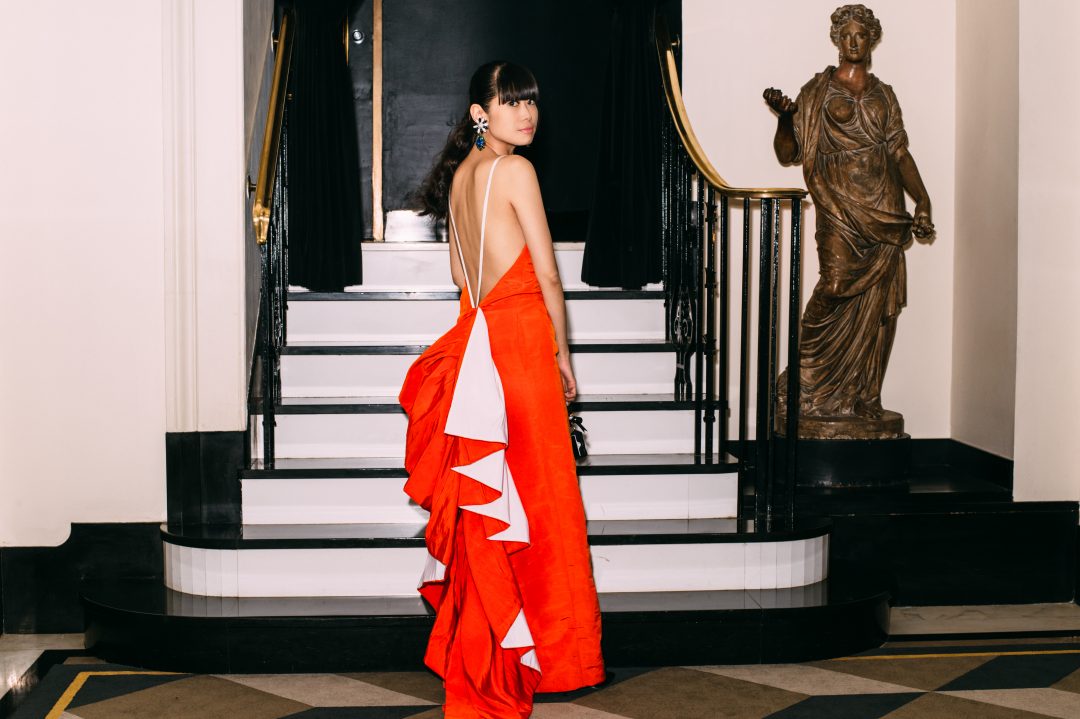
Yun Qu, the Founder of the NYC based brand Videmus Omnia, which was founded in 2016, let me know that she was listening to Nirvana when she got the inspiration for her A/W 2019 collection, “Enigma”. The collection, which features grunge fashion and Renaissance art debuted at the A/W 2019 New York Fashion Week. “Enigma” marks Yun’s third collection.

When I entered Yun Qu’s studio in New York on a Sunday afternoon, the first thing that grabbed my attention was a guitar against the window that faced the street. This confirmed my suspicion that Yun is passionate about music and once played in a rock band during her high school years. In fact, the influence of music on Yun is so powerful that when asked about her fashion icon, the first name that hits her mind is Marilyn Manson, a heavy metal vocalist who was famous for his controversial appearance and personality. [He] looks scary, but I think the way he dresses is cool,” said Yun.

Aspiration of music is in Yun’s DNA. Born and raised in China, Yun started studying music when she was four. At 16, she moved to the States to attend high school, though with a passion to explore jazz. “Jazz is not as popular in China as it’s here”, said Yun. However, her pursuit of music met a major obstacle when her mother told her that it’s unrealistic to continue a musical path in college. “My mom said that ‘I don’t want you to sleep on the street after graduation’,” Yun told me. It’s not uncommon in Chinese culture that chasing after a career in music is frowned upon, because it’s regarded as a rebellious sign of “hopeless kids.” Yet intervention from her mom was not the end of her story with music. Instead, she decided to dabble in fashion design and transcend her understanding of music into a new area. Acceptance from many top fashion schools surprised her at first. “I didn’t know that I could get into fashion,” she told me. Doubtful as she was, it turned out that her time at the Fashion Institute of Technology (FIT)  brought out the best in Yun, who now shines as a prospective young designer and shows originality in her unconventional designs.

The phrase Videmus Omnia means “we see everything” in Latin. “It felt like a mysterious prophecy when I heard the translation. And I was correct”, she said. “I love reading Sherlock Holmes series when I was little,” Yun giggled, “and something like secret organizations always fascinates me.” The mysterious vibe of her design, however, means more than fantasy to Yun. It’s also a unique expression of her personal identity. “I want to hide behind my brand and [people] won’t be able to predict my next move,” said Yun. Although her design incorporates traits of mixed cultures, she suggested that the stereotypes toward works by Asian artists do exist. “They will judge what my style is based on what I look like.” For her latest collection, she received feedback that her work had an “Asian flavor” from people who were not familiar with the brand. She said that the feature of Renaissance period and grunge rock could be easily overlooked just because she is an Asian artist.

When facing critics who directed statements such as “crazy” and “not for real life” toward her design language, Yun thinks that it’s a matter of personal taste. The black floral pattern and deconstructed silhouette, in her opinion, are not just for stage wear. “It’s just artistic but still can be worn in everyday life,” she said. A supporter of the slow fashion movement, Yun has insisted in crafting handmade clothing since day one. The fabrics of her clothes, in particular, are not only of high quality, but can be adapted to different styles. “The silk doesn’t have to be soft,” Yun said. Moreover, as she explained, the versatility of her fabrics will not be limited to multiple uses, but advanced with the aid of technology in the future. She recalled that a couple of years ago, a fashion designer (Manel Torres) developed a spray-on fabric in collaboration with a professor of particle technology in London. The magic material is a liquid mixture that enables you to spray clothes directly onto your body and after the spray dries, it becomes a washable and re-wearable shirt. As a New Yorker, Yun found the unpredictable weather here rather annoying. “I want to design a kind of clothing that can change according to different weather conditions.”


Please follow Yun’s collections on her official website and the Instagram account of Videmus Omnia.


Shop her design in DREAMS ON AIR – SOHO, NY 120 Wooster St, New York, NY 10012

Images Coursey of: Yun Qu

The Art of Beya Rebaï

Meet the young and talented Paris-born artist Beya Rebaï, who has a passion for color as she draws narrow and select tone focus pieces. Having studied illustration in Brussels, Belgium for three years, and later attempting her master degree in Paris, Beya’s love for art has only grown stronger as time went on. With an intense drive for creativity, Beya is always seen with a sketchbook and wax pastels in hand during her travels. Not restricting herself with just what she sees with her eyes, Beya draws what she sees in her own unique way by adding an abundance of color.

Take us through a day in the life of Beya Rebaï.

“I recently decided to leave my Masters degree, so now I can take more time doing what I want, especially in the morning. I could say that my day starts around 10am, by going to the gym and then back to work on the computer, responding to all my emails and investing myself in the different projects I am currently working on. These days, I am mostly handling my e-shop, managing the orders that have been placed. So, there is no « typical » day for me, really.”

Tell us about how you first became interested in art, and what initially attracted you to illustration?

“I think it started with my parents, who are big fans of art and made me travel around the world since I was a little girl.  My dad has a travel agency. Each place we would go to, we would visit a lot of museums and it developed something in me. I did not see these visits as obligations; on the contrary, I really loved them. I remember my parents placing me in one room of the museum and telling me “pick a painting, try to reproduce it maybe while we go take a look around”. When they would come back, I realized a lot of people had gathered around me, watching me draw. Reproducing paintings and being so sensitive to colors and art in general led the way for me. The specialty of illustration really came in my prep school, after high school, when I met some people who were passionate about it. They made me realize illustration was the closest technique to drawing. And so I left for three years to Belgium to do a bachelor’s degree in illustration.”

Your work is inherently unique yet reminiscent of several celebrated modern artists such as Hermann-Paul, Maurice Denis, L.S Lowry, yet your bright pastel remind us of a colorful Matisse. With that said, who are some historic or contemporary artists that you look up to for inspiration?

“Matisse is definitely an artist that I always look up to and admire for his unique colors. I [also] feel very close to the Nabi movement (approximately 1888 to 1900), which Maurice Deny was part of. But one of the greatest artists for me is Pierre Bonnard. His light and his color touches are very moving. I tend to incorporate a lot of pink tones in my drawings, something that Matisse and Bonnard used to do, too.”

In a few words how would you describe your work?

“I would say colorful, pink, melancholic, with a touch of loneliness. I am actually thinking about the American painter Edward Hopper: in his canvases, there are colors, people, but they really seem alone. I actually did a presentation about him in high school that really impacted my work now that I think about it.”

Can you walk us through your creative process?

“I can just sit down and draw directly something that inspires me. Or I let my imagination wonder around.”

“But most of the time and when I travel, I take a lot of photographs of the places I visit, of images that “speak” to me. For example, right now, in the very café we are conducting this interview, I would like to take a picture of the two men behind us and re-draw them afterward. The process is the following; I try to do a very thin sketch and then I start putting some color layers. That is the moment when I try to only choose four to five colors for my drawing. At the very end, I scan my work and I sometimes photoshop it to brighten up some tones.”

How has your color range developed over the years?

“I must say it developed very quickly. When I joined my bachelor’s in Belgium, I remember my teachers saying that I was using very strong and uncanny colors for my works. They were not very similar to what I use today, softer smoother colors.”

“Now, I am trying to create a balance between pastel colors and dark greens or vermillion, for example. The various exhibitions that I have the chance to see, but also the photograph magazines that I read can inspire me. The harmony that I decide to create can come from many sources.”

Le Lac Norvégien,©Beya Rebaï

What are some of the most rewarding aspects of using a limited pallet?

“I like to re-invent my own drawings, especially in the subjects of my work. Undoubtedly, there are certain colors that I particularly feel drawn to (like pink, green and blue), but if I decide to re-use them, I have to challenge myself in creating new subjects, new matter. For example, I recently did the portrait of a couple walking and also a robot, but all in the same colors. Also what can be challenging is the combination of new colors. For instance, I absolutely love yellow, but I have not found a way yet to associate it to another color in my creations.”

“And I would say the rewarding aspect of using a limited pallet is that an artist feels more reassured, but also quite simply, enjoys working.”

Les Amis, ©Beya Rebaï

Is there one drawing that you are particularly close to or proud of?

“I am not especially proud of my drawings. If I were proud, I would probably just stop working! I am at a point where I am experimenting a lot of things, but if I were truly satisfied [with] everything that I did I would not search to diversify myself. But I really admire artists who can keep up their search, and follow the same subject for a long time. I think one my favorite pieces of work is the one from “I mountain” I did a while ago.”

Where to next?

“I have several projects that I would like [to] accomplish this year. But I am currently working on a book, and I have an exhibition coming up in London in October, [at] the Blue Shop Cottage (Brixton). Also, I would like to test a lot of new things like ceramics and textiles. My goal would be to get out of my comfort zone and work with various creators for collaborations; like perfumes, or cars maybe…”

Where can we follow you?

“On instagram: beya.illustration

“And on my website: www.beyarebai.com

Leaf Greener: “Fashion Industry Needs to Slow Down”

Liberty, Enthusiasm, Aesthetics, Fantasy. Unlike traditional print magazines, the LEAF WeChat magazine doesn’t follow rules in terms of format and frequency. Nor does the magazine discuss fashion trends and gossip. “It’s about design theories, [and] about ethics,” Leaf Greener said in our interview. “We believe in slow fashion and publish articles whenever we find right angles and themes.”

Leaf Greener, the former Senior Fashion Editor of Elle China and Founder of LEAF WeChat Magazine, is a Chinese fashion influencer and creative consultant with more than 300,000 followers on Instagram. A rising star in the Chinese fashion industry, Greener has shown her talent in not only styling modern chic looks, but also in discovering the values behind fashion designs.

After graduating with a degree in fashion design, Greener didn’t choose to pursue a career as a fashion designer. “I was more interested in doing the work behind the scene, like writing articles,” she said. In 2007, she decided to work for Elle China and made the move from Beijing to Shanghai where the headquarter’s of the magazine is based. Having lived and worked in two of the best-known cities in China, Greener told me that she felt like the vibes between the two cities were just so different. “It could be like two countries sometimes,” she said. She later explained that this difference was revealed to her as a versatility of Chinese culture between the North and South.

As a fashion journalist whose work has been featured in publications such as Vogue, New York Magazine, New York Times, and Elle, Greener expressed her concern about fashion journalism today in our interview. “Journalism [has] vanished, fashion [has] failed, and we are living in a fake-news era,” said Greener. “It makes me sad.” She added, “We can’t write something without responsibility, just as jokes.” The media, in her opinion, is a vital means of education. “Before, we knew things by talking to people around us and reading; now, we learn from the TV and social media.” She’s aware of the need to make fashion more approachable through the media. As she said, there’s a gap regarding the notion of fashion between insiders and outsiders.

When discussing her experience in fashion journalism, she stated: “I was trained as a fashion designer at first, [so] I know how the fashion industry works. Later on, as a fashion editor, I got to know where the creativity of fashion comes from.” How has Greener’s stint at Elle China from 2008 to 2014 influenced her ideas about fashion journalism and the industry as a whole? “I was trained professionally. Thanks to the training, I have been equipped with the skill, taste, and knowledge. [And] I really appreciate the chance to work with creative artists and other editors.”

In 2015, Greener founded the LEAF WeChat magazine and switched her focus to digital media. “Our magazine is based on [a] social media platform,” she said, “and I want to reach out to [a larger] audience.” When asked about the role of social media in the world of fashion nowadays, she said, “it’s more democratic.” However, she pointed out that luxury businesses today haven’t fully taken advantage of digital platforms and social media. “There [is so much] fake news and a lot of brands are focusing on the quantity not quality,” she said, “but luxury is kind of exclusive and private, which is focused on the quality not quantity. Yet her confidence in the industry was also conveyed as she continued. “It’s a process. Luxury [businesses] may develop too fast and they need some time to be more cautious.”

Having traveled around the world and appeared in many photographs at ultra prestigious fashion events, Greener shared with us her personal style, philosophy, and favorite cities. “My style is pretty playful and I enjoy playing with my wardrobe,” said Greener. She attributed her unique personal style to her own personality and interpretation of social connections. “I [dress] like my personality, which has multiple layers. And when I go to different social occasions, I will dress differently based [on] my connections with [the] people present.” In terms of the places she has enjoyed visiting most, Greener has given her heart to Rome, Tuscany, Paris, and Shanghai. One thing she must do whenever she goes to a city is to visit the food market there and experience the local culture. Greener is also passionate about visiting local museums, galleries, and churches. Earlier on the day of our interview, Greener had just returned home to Shanghai from a trip and would soon hit the road again to attend a festival that supports new talent in the fashion industry held in Hyères, a prominent city in Southern France. Greener mentioned it would be her third visit to Hyeres, and that last year she was one of the judges for the festival.

In the end, Greener said that she is now kind of in an “in-and-out” status regarding the fashion business. Recognizing the fact that fashion is the second most polluting industry globally, she advocates the idea of slow fashion and hopes more people won’t just express sentiment to “protect our planet”, but act upon it. “I am glad that I can choose something that is very meaningful and helpful for the society,” said Greener.

Follow Leaf Greener on her Instagram Account and personal website.

Images Courtesy of: LEAF WeChat Magazine

Talking The Art of Wine With Lawrence Fairchild of Stones Wine

From a young boy raised on a farm in Nebraska to the reputable winery owner in Napa Valley that he is today, Lawrence Fairchild of Stones Wine is a prominent figure in the winemaking industry. Known for his top-class cabernets from both the Stones Wine and Fairchild Wine labels, Mr. Fairchild’s passion for winemaking is characterized by his desire for perfection above all else. We at The Extravagant discuss with Lawrence the profound art of wine.

How did you first become interested in wine and wine-making?

“Having grown up on a farm in rural Nebraska, it would be an understatement to say that my wine passion came from my environment; although my love for terroir and finely produced products did start on the farm. While I was attending the University of Nebraska, “Scotch Club” on Fridays was my entry into tasting – probably the James Bond brand of the moment. I was then fortunate while working on Capitol Hill to have staffer friends that loved the (free) National Symphony performances on the West Lawn of the Capitol Building – which included charcuterie, cheeses, …….and wine.”

What do you personally believe makes a great wine?

“Winemaking at the highest level in the world is an interesting process, as it entails approximately twenty (20) layers of detail over a period of years; a number of which have to be perfect, or as close to perfect as humanly possible. First and foremost is the vineyard location and soil, and applying farming practices that allow the vines to prosper, while at the same time providing a stress level that allows for depth and concentration. Without perfect grapes, there is no perfect wine. We follow through with every detail of winemaking; sitting on the skins for extended periods of time to enhance depth and structure; then finish with the best French oak barrels in the world.”

Where did your passion for French wines begin and how do you believe that passion has influenced Stones Wine?

“When I moved to San Francisco to pursue my professional interests, there was a small, fine wine shop down the street from my office conducting eight-week long wine courses; the first of which focused on Burgundy, followed by Bordeaux. The evening classes featured and discussed the different micro appellations, soil structures, winemaking, and a tasting of 10-15 different wines from multiple producers. Having the opportunity to taste and compare some of the best Burgundy and Bordeaux wines in the world–as it related to the soil and the winemaking style–was as good of an entry as you could get.  It was fascinating, and set my passion for the soil, wine, and the art behind it. Understanding the importance of terroir is what made Stones what is it today.”

Talking The Art of Wine With Lawrence Fairchild of Stones Wine

Do you believe that your family’s background in agriculture has contributed to your success at Stones Wine. If so, what particular part do you believe it has played in the grand scheme of things?

“I have come full circle with farming and agriculture, although farming vines is slightly more technical and romantic than corn and soybeans. What did come from such a hands-on agricultural environment was understanding the importance of quality farming and seeing that the level of detail from one fence line to the next varied drastically. Farming the Stones vineyards in the Napa Valley is similar, in that the detailed level and attention to the farming and to the grapes determines what goes into the bottle.”

Can you take us through your process for selecting a vineyard? What particular characteristics do you pay most attention to?

“The vineyard characteristics: rocks, gravel, and more rocks. Rocky soils provide perfect drainage, more stress on the vines, layers of minerality – chalk, graphite, lead pencil, sage…all of the flavor profiles that I love in a great wine. The second most important characteristic is exposure – preferably southwest facing allowing for perfect sun and air. I seek out vineyards years in advance; tasting the grapes and walking the land for that perfect moment.”

How would you both compare and differentiate Stones Wine and Fairchild Wine?

“The Fairchild wines were my first two Cabernet Sauvignons beginning in 2005; produced in very small amounts. Stones was created in 2011 and featured my entry into rocky to extremely rocky vineyards. Fairchild and Stones are produced with the same high-quality standards; the difference being the vineyard terroir, all from different locations, with the Stones vineyards displaying more rock and minerality. And of course, the Stones packaging and design. Stones labels, packaging, and presentation were designed to be the most artistic, exquisite and collectible in the world.  Designed at the level of Hermes and Cartier, each bottle resembles art and should feel like a special gift. The Stones labels are hand-made in France, all hand applied. The wood cases made from white French oak sourced from France. Our clients love and appreciate our level of design detail.”

Talking The Art of Wine With Lawrence Fairchild of Stones Wine

In addition to your passion for wine, you are a very creative individual which reflects both in your personal style as well as the label and packaging of your wines. To where do you trace your passion for design?

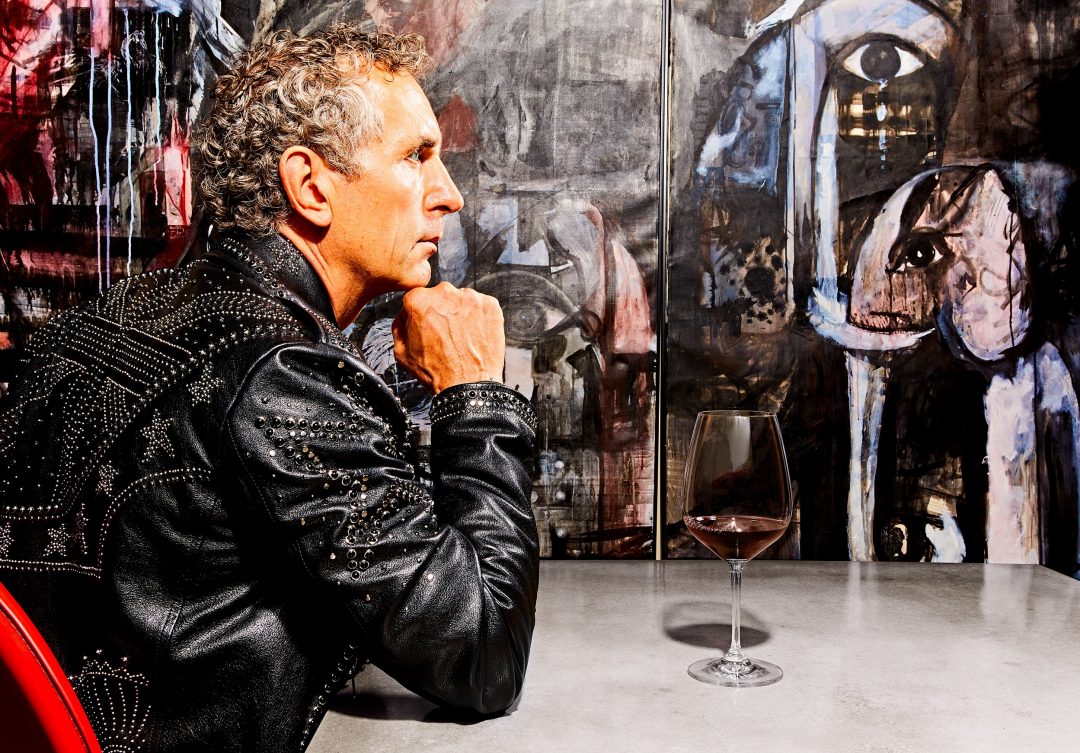
“My love for fashion and design dates back to (surprisingly) Nebraska, where I may have been the only university student reading GQ and buying entry level Armani. And today, I may be the only Napa Valley winery owner that wears runway Valentino and Gucci, and is comfortable rocking it. Although I have never studied architecture, I spent years pouring over architecture and design books and magazines; fascinated by the aesthetics of color, fabrics, and interior and exterior design combinations. My current residence feels like a small art gallery; simple, but with great pieces that I love. I have begun collecting large- and medium-scale, original modern art. The pieces provide me with label and design inspiration that I will incorporate into my future special wine projects.”

When you first launched Stones Wine did you intend for the winery to sell its product solely to wine club members?

“Providing our wines only to our private client members is a fortunate result of producing very limited amounts of wine of very high caliber, and not having enough wine to meet the demand. Early on with the Fairchild wines, I did not have that luxury. I want to begin providing our wines to select restaurants throughout the world once we have more wine available; primarily to 3-Star Michelin.”

Your 2013 Stones No 1 was simply a masterpiece. Many other Napa Valley wineries crafted exceptional Cabernets that year; however what do you believe set your vintage apart from other great makers?

“The 100PT 2013 Stones No. 1 was start to finish a magnificent wine. My winemaker friends joke with me that my 98 & 99PT wines must have a flaw! Our Stones No. 3 also received the honor of a perfect 100PT score with the 2016 vintage. For the 2013 vintage, I focused more on blacker fruit and greater extractions for all of my wines, resulting in huge depth on the palate. The 2013 Stones No. 1 achieved that goal.”

Talking The Art of Wine With Lawrence Fairchild of Stones Wine

We’ve heard that you are going to produce a Chardonnay in the not to distant future; with that said, what characteristics can we expect from your first white wine?

“I had one directive for my winemaker; to create the Chassagne-Montrachet / Pulingy-Montrachet of Napa Valley. The best Chardonnay ever made in California; as Burgundian as possible. We did it.”

Where can we follow you?

“Follow us on our Instagram @Stoneswines, our website Stoneswines.com. Or contact members@stoneswine.com to be added to our waiting list for exclusive releases.”

Images courtesy of: Stones Wine via Quinn PR

Over the Moon with Makenzie Moon Phelan

Makenzie Moon Phelan in the Studio, all images courtesy of the artist, 2019.

The Extravagant discusses art, culture and makeup with Makenzie Moon Phelan, NYC based artist and socialite, and daughter of wickedly fun art world patrons Amy and John Phelan. Drawing from a wide range of cultural references, we dive into her work as a makeup artist and her contemporary art practice:

What drew you to the world of make-up?  What do you feel is the role of the make-up artist and how does your fine art background (i.e. painting) inform your practice?

“Since I was young, I have been interested in both fine art and make-up for cinema or fashion.  Before parties and events, my mom and her friends would have me apply their make-up just at the age of seven, and I realized this is something I really enjoyed creatively. Creating and being around Contemporary Art heavily influences my make-up practice.  From thinking about how palettes and materials work together, to the physical application of pigment is so painterly.”

What inspires you, where do you draw inspiration from?  We noticed Stephen Hawking on your Insta, who inspires you?

“In my opinion, everyone’s view of the world is very different up to the point where my blue could be your green. I think how different people view our world is what has shaped and shifted basic human knowledge and understanding. Whether it be philosophers, artists, scientist, or famous mathematicians; had they not shared their personal world [inside of their head] with the public, our universe would lack so much color and expansiveness.”

“I am really inspired by the artists Will Cotton, Marilyn Minter, Marc Dennis, and Richard Phillips due to their fine craft. Currently I’m hooked on this brilliant Italian artist Paola Pivi. I think the mind and methods behind her works are beautiful.”

“I am also really inspired by trends in decades. I love the 60’s, especially Edie Sedgwick, and I also am fascinated with 18th Century aesthetic. Adding contemporary palettes to an old time period is really fun for me.”

Ornamentation on an anthropological level exists throughout human history, what is the role of make-up in society in your opinion?

“Makeup is a form of self expression. It also allows people the ability to enhance their natural beauty by using different color palettes, glitter, symbols and light diffusion.”

What is your dream commission as a make-up artist?  Is it cinema, is it runway, etc;

“I feel like my work is multi-faceted, so I would be thrilled to work in film or runway, but my dream project would be any form of collaboration or work with Ve Neill [of Beetlejuice and Hunger Game fame] one day. She is an extremely powerful woman in the makeup industry who’s work has influenced me since I was a little kid.”

What trends do you love in make-up and obversely what do you dislike?  Favourite brands? Favourite makeup artists?

“My favorite trend in makeup is a basic cat eye with a red lip. I usually never leave my house without a cat eye. It’s a classic yet sexy look. I’m also really into the 60’s makeup trends. I think the big brows, dark sculpted eyes and dramatic lashes is a very feminine and playful look. I also love drag makeup. I’ve learned some of the best techniques through the drag community when I was living in London.”

“I’m not a huge fan of the heavy contour look, or any kind of makeup that covers freckles. I think makeup should always enhance one’s natural and inner beauty.”

“My favorite makeup artist in the beauty industry of all time is Charlotte Tilbury, that is a person I would also love to work with. In the special effects realm my favorite artist is Ve Neill. Pertaining to music, it is hard for me to pin down a favorite band, but my favorite musician is Marilyn Manson. I think he is brilliant, and a walking piece of art. There’s so much more to him than what lays on the surface.”

What is the relationship between art and fashion?

“Both art and fashion are an extension of an individual’s creativity.  Creating or collecting art is an expression of self, just as fashion is.”

When did you become interested in art?

“From a very young age I have been creating art!  I grew up in a household that not only welcomed creativity, but championed it.  I have always been surrounded by incredible works of contemporary art, and I feel very fortunate that in most cases I know or am friends with the artist that has made them.”

Tell us about your own work as an artist? What projects have you taken part of? What’s your favourite media to work in (other than cosmetics)

“I love working with oil on canvas, and have had private instruction by some incredible artists such as Marc Dennis and Will Cotton. When I was younger, the problems I faced growing up (my personal inner turmoil) created a lot of noise in my head, I started writing poetry at a very young age as an outlet, then began illustrating the emotions behind my poetry and it evolved from there.”

The Freedom Within, Makenzie Moon Phelan, Oil on Canvas.

How do you navigate between a cultural patron, an artist, and a muse?

“I don’t see these as being separate parts of my personality.  I think they all relate to each other, and I am just thrilled I can be part of a creative community in all of these capacities. People inspire me on a daily basis, and I feel happy I can inspire others as well.”

Skull, Makenzie Moon Phelan, oil on canvas.

How does growing up in a family of art collectors impact your own aesthetic preferences?

“Growing up around some of the best examples of contemporary art is an incredible education.  Not only do I get to learn about new artists, but I am able to study the depth behind the individual behind the work, and learn about the material process of an artist. It also really helped me embrace my individuality as a person, leaving me unafraid to push boundaries with the way I dressed, or wore my makeup. Growing up around art the way I did also inspired me to let go of any fear of being experimental.”

Without any limitations tell us five artists or works of art you’d love to see in your dream collection.

  1. One [of] Paola Pivi’s colorful feathered (life size) Polar bears and a piece from her “Zebras” series 
  2. One of Marilyn Manson’s water color pieces 
  3. Anything by Marc Rothko
  4. One of Will Cotton’s Cake Sculptures
  5. A Donald Judd “Stacks”

Are you affiliated with any institutions, foundations, or organizations?

“I just moved back to New York City, and am exploring new opportunities. As of right now I am affiliated [with] my family’s foundation. The Phelan Family Foundation believes that all people deserve the opportunity to succeed. To accomplish its mission, the Foundation funds a broad range of causes including education, the arts, health care, military personnel, and vulnerable populations. The Foundation seeks to address community needs at all levels—be it access to clean water, safe shelter and nutritious food, or education and training that unleashes the potential for economic prosperity. It also seeks to effect lasting change and measurable outcomes, while maintaining the Phelans’ sense of compassion and gratitude to the world.”

Having lived in many different places: where is home, literally and philosophically?

“I am currently based in New York, which is where I grew up. New York City is home for me.  I’ve spent time living in London and Los Angeles, but I recently moved back to NYC after finishing a program in special effects makeup on the West coast.  I also spend a lot of time in Palm Beach, FL and Aspen, CO with my family.”

What are some of your favourite places to visit in the world, what shouldn’t we miss?  What are some of your favourite art world or cultural events?

“Every summer I look forward to attending the ArtCrush events for the Aspen Art Museum, an event hosted by my amazing Mother, Amy Phelan. My favorite places I’ve traveled to though are Dubai, Chiang Mai, Jaipur, and Kyoto.”

Makenzie Moon with her mother, Amy Phelan, event chair for ArtCrush. MarySue Bonetti photo.

Follow more of Makenzie Moon Phelan’s adventures on Instagram at:
@Moonefx @Kenziemooner

Meet Francesca Grievson

Meet London-based designer, Francesca Grievson, whose boutique label, Tephi has made a name for itself as a provider of elegant and innovative womenswear. Having studied at both the Oxford Design School and Central St. Martins, Francesca’s passion for design led her to create Tephi in 2009. Initially offering only Bespoke, Tephi has extended their line to offer both Ready-To-Wear and Semi-Bespoke pieces. Now, Francesca’s clothing line has marveled many with its unique style and accompanying accessories. For Tephi’s latest collection, Dutch model Lara Stone had perfectly represented the label’s ‘elegance and originality’ style of clothing by modeling fashionable jumpsuits (seen below).

What initially piqued your interest in design and specifically womenswear? Have you always been interested in fashion?

“From a young age, I was always interested in design – I used to make and adapt so many of my clothes. I loved dressing up as a child and have always had a huge interest in what goes with what and sourcing wonderful pieces, this led to an in interest in fashion design and subsequently going onto study it.”

What are some of the differences in Tephi’s Ready to Wear, Semi-Bespoke and Bespoke dresses?

“Our semi bespoke service is an adaptation of the RTW, often clients would like the pieces, but made to their own measurements with small alterations like a different neckline line or colour. All women’s body shapes and colourings are different and it gives me great pleasure in working to create something that suits and fits perfectly. The fully bespoke service varies, sometimes the client has a god idea of what they would like and often I design something totally from scratch. We make a lot of wedding dresses, which is [a] really enjoyable process – it is a real honour making the dream dress for a client’s big day. “

Lara Stone - Tephi

You originally started off with a focus on bespoke, with that said, how would you describe the evolution to offering both RTW and Bespoke womenswear?

“I have always loved creating a piece of clothing for somebody that fits perfectly to their body and this was something that I felt wasn’t being offered as much, when this became established it seemed like a natural progression to offer clients both options. I couldn’t say which I love more – both RTW and bespoke have amazingly, fulfilling aspects to them.”

How would you describe Tephi’s current collection?

“I have created a capsule collection of jumpsuits this season, which I am super happy with. I wanted to produce the perfect jumpsuit – its feminine, chic and very flattering.”

Lara Stone - Tephi

Take us through a day in the life of Francesca Grievson 

“My studio is in my house that I live in with my boyfriend. I often wake up and go to the gym so that I have got out [of] the house before my day starts. Throughout the day it will be a combination of fittings with clients, fabric sourcing and a couple of hours up in Queens Park with my production team working through the pieces we are currently making. Often I have fittings with people after their work day – we stop appointments at 8pm.”

Do you feel that your British heritage has influenced
the brand?

“Every piece we make is made in England, which is very important to me. Not only do I want to support British production, but it means that I am there everyday to quality control what we are doing. I couldn’t get my head around not overseeing the work we do, so production overseas was never an option. “

Lara Stone - Tephi

What advice would you give to young designers?

“I really stand by quality and timeless designs over trends. I think a lot of people focus too much on what’s current and lose sight of what looks good!”

What is your personal approach when commissioning a bespoke dress? What are the key elements that you look for?

“When doing a bespoke dress the client is the most important person – listening to what they want is essential. With bespoke dresses, we always make a toile of the dress (a mock up in a polyester fabric) this is where a lot of design decisions are made before we cut in the real fabric. When it comes to fabric sourcing for a bespoke piece, I make sure that the client has seen the fabric draped over her body and not just in a small swatch – the fabric is so important and even the smallest difference in shade or texture makes the most enormous difference.”

In addition to dresses, you also have an accessories line, can you tell us more about it and how the idea originally came about?

“Tephi’s luxury garment bags came out of always wanting to [have] a chic and stylish way to carry my dresses. Travelling with a plastic dress bag to carry a beautiful garments didn’t seem right to me, so I saw a gap in the market to make the dream dress bag – it’s really practical as [it] has lots of different compartments for shoes and folded clothes, so [it] works as an essential piece of luggage. The Tephi Washbag was a progression on the accessories as the garment bag was a success – I wanted a washbag that was stylish enough to sit on the bathroom sink looking great and practical enough to fit all your products and bottles standing up – with this, I again, did lots of different compartments so everything has a place.”

Lara Stone - Tephi

Do you have a favourite neighborhood in London? If so, what are some of your favorite things about it?

“I’ve always lived in West London and Notting Hill is a firm favourite, there [it] seems to always be evolving which means it never gets boring. I have to say, I love getting out of London on the weekends, too – I was brought up in the countryside and it’s really where my heart lies.”

Where to next?

“I am very excited about all the brides we are working with at the moment for summer weddings and we have just launched the new collection with Lara Stone as the face of the campaign, which is fantastic. I am also expecting a baby in a month, so on a personal level, that is very exciting!”

Where can we follow you?

www.tephi.co.uk to sign up to the newsletter and @tephilondon for our Instagram account.”

Images courtesy of Tephi

Talking Art: Interview with Phoebe Dickinson

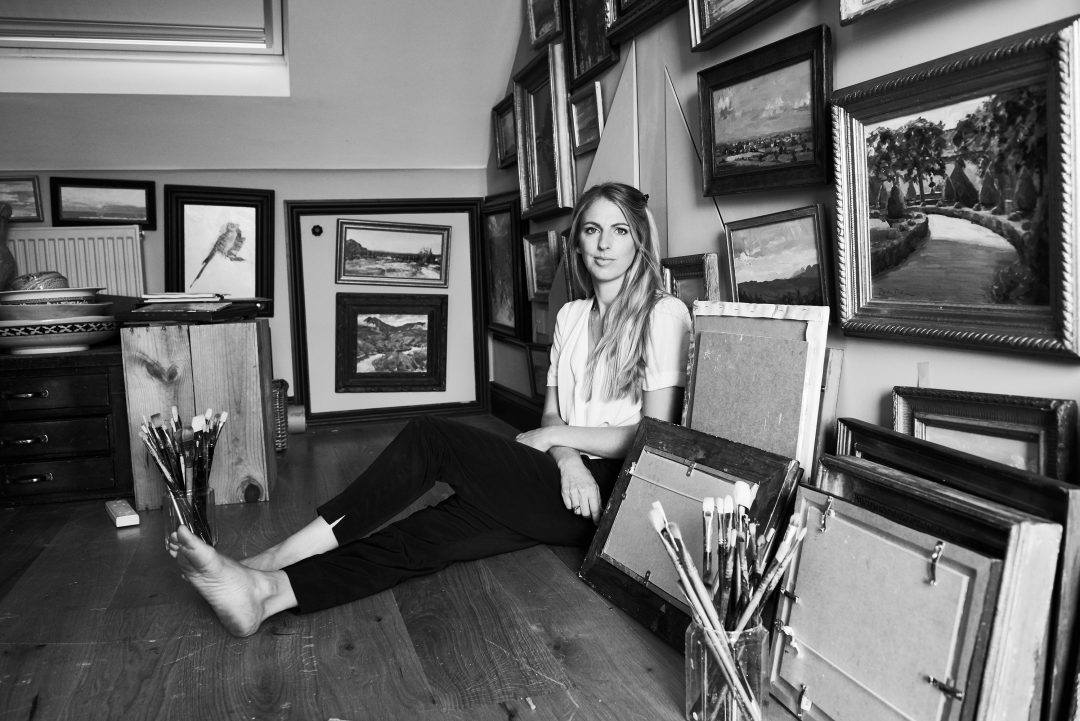
Meet one of the 21st century’s most gifted classical painters, London based Phoebe Dickinson. The 34 year old artist is turning heads with her quintessentially timeless portraits, which evoke a feeling of Gilded Age nostalgia. Probably best known in the United Kingdom, the artist has been heralded for her painting of Carson from Lord Julian Fellowes’ hit series Downton Abbey, as well as for her painting of the Cholmondeley children at Houghton Hall, which was selected for the 2018 BP Portrait Award exhibition at the National Portrait Gallery in London.  Phoebe’s training includes stints at Charles H Cecil Studios in Florence as well as the London Fine Arts School. Since the days of John Singer Sargent, the world has seen few truly gifted artists with an affinity for classic portraiture, however we feel that Phoebe’s brush certainly revives an art form which is too often underappreciated in our fast paced world. We were given the privilege to catch up with Phoebe just ahead of her exhibition at the Royal Society of Portrait Painters.

Tell us about how you first became interested in art, and what initially attracted you to portraits, still lifes, and landscapes?

“My father is an art dealer and because of this I grew up in a house hung floor to ceiling with paintings.  As children we were constantly taken around galleries and told interesting stories about the artists and their subjects.  I think since my father is an old masters art dealer I became more interested in representational art and that is [what] drew me to a traditional training and then on to painting portraits and still life.  The love of landscape painting came later for me and I enjoy it so much because it allows much more freedom than portraits and still life and gets me out of the studio and in to nature.”

Who are some historic artists that you look up to for inspiration?

“For portraits my go to reference is always John Singer Sargent.  For still life, I love William Nicholson and for landscapes I’ll look at Corot.”

Talking Art: Interview with Phoebe Dickinson
Portrait of the Marchioness of Cholmondeley titled ‘Rose at Houghton’ Photo Credit: Alex Fox

In a few words how would you personally describe your work?

“Classic and representational, but with a contemporary touch.”

You’ve just been selected for this years Royal Society of Portrait Painters Exhibition. With that said, what do you believe makes a truly remarkable portrait?

“For me the most important thing is what makes a beautiful painting and one that is interesting whether you know the sitter or not.  In the perfect world I also think the setting should add interest.”

Do you have a special routine to get your creative process started?

“Not really….I actually think its quite important to be flexible and be able to adapt to any environment.  The only routine I have is in what I listen to in my studio whilst I paint.  In the late afternoons if I am lagging sometimes I put on dance music to keep me going.”

Photo Credit: Alex Fox

What do you feel are the greatest challenges of being a portrait painter today?

“People don’t have the time on their hands that they would have had 100 years ago, so getting people to sit is harder.  Studios with North light in central London are very expensive and hard to come by now and they all get developed into swanky flats, which is a shame.  I also think our typical everyday clothing is not nearly as glamorous or beautiful to paint.”

Take us through a day in the life of Phoebe Dickinson.

“A typical winter day starts with stories in bed with my 2 year old and husband followed by breakfast and maybe a few e mails.  I then go up to my studio and paint until lunch time when I take a break to eat with my daughter and au pair.  After lunch I usually go straight back to painting and if I do have any meetings I always try my best to arrange them for the late afternoons when the light starts to fade and my energy is waning.  Towards the end of my day I do more admin and then I do bath and bedtime with my daughter while my husband cooks something delicious for our dinner.  In the spring and summer we travel a lot more and my day would be pretty different and involve walking or driving to find beautiful landscaping spots or picking flowers from my mother’s garden to paint.”

Tell us more about your upcoming painting course at Villa Cetinale?

“Villa Cetinale is a 17th century Italian villa renowned for both its beautiful architecture and gardens.  I feel so lucky to be able to teach there.  The course is primarily a plein air landscape course, although there is the option of doing still life or interior paintings.  There is a day in the middle of the course for people to explore the surrounding towns of Sienna and Florence if they wish and there are masses of amazing activities for non-painting partners.  It really is the ultimate luxury to stay at Villa Cetinale and have a glorious day of painting peppered by delicious meals with the incredible local produce and Italian wine and 5 star service.  The October 2019 course is now fully booked, but we plan to do two more weeks in spring 2020.”

Talking Art: Interview with Phoebe Dickinson
‘The Bamford grandchildren at Daylesford House’ Photo Credit: Alex Fox

What is the most important item in your studio?

“My paintbrushes without a doubt.  I could get away with using bad quality paints, canvas and easel, but the paintbrushes are incredibly important.  Other than that….my father gave me a very special little pallet in the shape of a fish, which he bought at auction and was said to have been carved and used by Joshua Reynolds as a boy.”

Of all the commissions that you have completed, which has been the most challenging?

“I recently painted ‘The Bamford grandchildren at Daylesford House.’  It is the biggest canvas I have ever painted and I could only just get it in to my house.  It was too big to get in to my studio and the painting consisted of 7 figures and complicated architectural details.  On top of all that I had terrible morning sickness throughout painting it and so it was incredibly challenging, but I was really pleased with the end result.”

If you were remembered for just one piece of your work, which piece would it be and why?

“I think at the moment it would be my painting of the Cholmondeley children at Houghton Hall because it is currently hanging in the National portrait gallery of Scotland after touring the UK as part of the BP portrait award exhibition.  The painting is of three very attractive children in what has to be one of the most outstanding rooms in the world.  I think this is the painting I have done that sticks in peoples’ minds the most, but I am excited to see the reactions to the painting of the childrens’ mother ‘Rose at Houghton’ which is going to be in the Royal Society of Portrait Painters Exhibition.  This is in fact my favourite of my paintings and I hope people like it as much as they seemed to like the Cholmondeley children.”

Talking Art: Interview with Phoebe Dickinson
The Cholmondeley children at Houghton Hall Photo Credit: Alex Fox

Where to next?

“I’m staying put for the time being because I’m about to have a baby, but this summer we have plans for painting travels in Italy and Spain and then of course we will be off to Villa Cetinale in the autumn.”

Where can we follow you?

“You can see regular updates from me on my instagram: [@phoebedickinsonart]. And if you sign up to my newsletter through my website (www.phoebedickinson.com) you get news of future exhibitions, recent work and teaching workshops.”

Featured Image Photo Credit: Alex Lloyd

Paris Fashion Week without Karl Lagerfeld: now what?

For many decades, Karl Lagerfeld has been widely regarded as one of the most influential individuals in the world of fashion. With an outstanding trajectory, Lagerfeld was acclaimed by many as a design genius.

The fashion industry just lost a major icon and idol after the Kaiser of fashion, Karl Lagerfeld passed away on February 19th. Lagerfeld, who had been the creative director of Chanel since 1983, left a legacy of ideals in fashion for future generations. Lagerfeld was born to a wealthy German entrepreneur father and a Swedish mother in 1933. The future designer studied drawing and history at the prestigious Lycee Montaigne in Paris. After working on several sketches to submit to design competitions, he won first place for a coat design alongside Yves Saint Laurent, another fashion icon. Forward past the competition, the young Lagerfeld was hired as an assistant to Pierre Balmain. After three years of direct experience in the fashion industry, he later moved to Jean Patou, where he captained the design of several collections. In 1964, Lagerfeld began designing for Chloé, in which he rapidly moved from designing a few pieces onto a full collection. A couple of years after, in 1967, his long-lasting collaboration with Fendi began.

Lagerfeld’s multi-faceted personality combined with this great talent, created some of the most innovative and impactful collections and trends in the fashion industry. He founded his eponymous label under his own name in 1984, which is now known as one of the most exclusive and acclaimed brands worldwide. Lagerfeld’s creativity couldn’t have been secluded to fashion, he was also an artist at heart and was passionate about photography and film-making. Besides this, Lagerfeld owned several bookstores in Paris and had written many personal pieces as well. His extravagant personality has often left an impactful positive mark on the individuals that crossed his path or were privileged enough to have been mentored by this well-known fashion icon. Following his passing, Bernard Arnault, Chairman and CEO of LVMH commented  “I will always remember his immense imagination, his ability to conceive new trends for every season, his inexhaustible energy, the virtuosity of his drawings, his carefully guarded independence, his encyclopedic culture, and his unique wit and eloquence. The death of this dear friend deeply saddens me, my wife and my children. We loved and admired him deeply. Fashion and culture has lost a great inspiration.”

Even though Lagerfeld was born in Germany, he has been associated with Paris for most of his life, the world’s fashion capital. It is undeniable that Lagerfeld’s mark on the fashion industry will never be forgotten, and many people have expressed their deep condolences and admiration toward what is now a legend among the world’s most acclaimed lost fashion idols. Alain Wertheimer, CEO of CHANEL, said: “Thanks to his creative genius, generosity and exceptional intuition, Karl Lagerfeld was ahead of his time, which widely contributed to the House of CHANEL’s success throughout the world. Today, not only have I lost a friend, but we have all lost an extraordinary creative mind to whom I gave carte blanche in the early 1980s to reinvent the brand.”

Featured Image Credit: Siebbi

Meet Amanda Cronin

Meet Amanda Cronin, the British born Model, Socialite, Brand Ambassador and Founder of the brand Forever Young. We were given the exclusive opportunity to talk all things fashion, travel, and lifestyle with the always stylish London based Influencer.

What are you currently inspired by?

“Strong independent compassionate women, supportive compassionate men, my 22 year old daughter and her amazing friends, aspiring artists, fashionistas, financiers, gallerists, London, my amazing loyal successful hardworking talented friends, my beautiful home in Belgravia, travelling often but not too often that it’s exhausting and prevents me from living in the moment, being financially independent and in control, and being an ambassador and muse for elite British brands.”

How would you describe your personal style?

“My style is simple, elegant, expensive, and fashionable. I’m motivated by what I consider to be fashion and have a deep understanding of what suits my shape, complexion, and feeling at that moment, [as well as] what is appropriate for the occasion. Accessories (i.e. jewellery, shoes, belts and sunglasses) are key to each style looking finished. It’s a feeling… It’s creative and expressive. A woman needs to express herself through clothes, it’s key to her vitality. It’s a performance.”

Take us through a day in the life of Amanda Cronin.

“I wake up not too early and have my breakfast brought in on a tray, [which consists of] eggs, fruit juice, and diet coffee, along with vitamins. I have beauty treatments at home, [including] a Brazilian contour and lymphatic draining massage, then [I] work out with my personal trainer Kosmo or swim 60 laps in the pool or [do] yoga. I read my emails and work through admin, along with my Instagram, website, and brands. I have an investment portfolio, and have many meetings with banks, lawyers, financial advisers, and accountants on a daily basis. I meet with my brand manager, Alex, every few days to work on my brand, website, online store, and collaborate with up and coming brands in fashion and art to partner with. I’m an art collector. I have a Picasso, Miro, and contemporary art by Pauline Amos, [Suling] Wang, Barry Reigate, [and] [Wolfe von Lenkiewicz]. I often have fittings for dresses, or meetings with brands, designers, and beauty therapists. I try to save girls lunches for Fridays as it interrupts the day and it’s a reward for a productive week. I like to go to dinner most evenings and relax over a cocktail in a beautiful club such as Annabels, Harry’s Bar, or the Arts Club. Sundays I make dinner at home, usually Persian dinner with caviar to start an homage to my daughter’s heritage. There is thought behind everything I do, it’s all highly considered so as to be at maximum productivity. Time is very valuable to me. I also develop my daughter who is an aspiring artist at Parsons in New York and [is] currently interning at [the] Gagosian. I speak to her in New York every evening on FaceTime to make sure she is on track and feels supported as a young person in today’s world 3k Miles from home. @sofiayeg

Meet Amanda Cronin
Photographer: Laura Teck

Who are some of your favorite designers at the moment?

“Alessandra Rich, I have bought heavily every collection [of hers] since day [one]. Gucci big client, Balmain big client, The Elder Statesmen Cashmere, Stephen Webster Jewellery, Fendi Mania collection, Victoria Beckham, Eres Lingerie, [and] Caroline Castigliano couture.” 

Being that you’ve just recently enjoyed skiing trips to Aspen and Sankt Moritz; do you have any tips for looking glamorous on the slopes?

“Take a hat for lunch as helmet hair can be unattractive, a good looking flattering helmet, Mirror Shades, [a] fitted one piece with belts [is] always flattering, black [is] always chic and slimming, flared tight pants slim the legs, layers, strong lips and full makeup as the light in the mountain can leave you looking washed out, sunblock in the form of a makeup, metallics are very fashionable at the moment and work well with the bright sunshine, don’t ski in bad conditions it’s dangerous and impossible to be glamorous, Blue sky only, I like to take an instructor [because] it always looks chic, book the best restaurants in advance and be seen at the coolest spots, [and lastly] don’t drink and ski [it’s] not a good look!”

Being a frequent traveler, what destinations have you enjoyed most and why?

“I enjoy seeing each place and appreciate each special experience. I have loved the Maldives for romance, and bare feet holidays are always so grounding.  Cartagena was very fun at New Year. Russia [is] so interesting and cultural. [The] South of France and Monaco [are] always relaxing and elegant, I have created and enjoyed several homes there. New York and L.A. I enjoy as I have many friends and enjoy the great restaurants and nightlife and of course my daughter is living there in our apartment in Soho. Italy is so beautiful, I always have a wonderful time [there], the food, culture, and shopping [are] excellent. And the Italians are warm and inclusive. Rome, Milan, Porto Fino, and Tuscany [are] all stunning. I love the mountains of France, Switzerland, and Colorado. I have had a ski chalet in Crans-Montana for 10 years. I have been spending some time in Cap Cana in the [Dominican Republic] most recently in the home of a friend. It’s mind blowingly beautiful [there] and I have become obsessed and impressed with the Latin culture.”

Meet Amanda Cronin
Photographer: Laura Teck

Are there any destinations you are dying to see, but have yet to visit?

“More of South America, [as well as] New Zealand, Australia, Canada, I would like to go back to Japan, [and see] more of the US.”

What do you believe sets London apart being your locality of choice?

“I’m from the UK. I grew up in the English Countryside. I’m obsessed with London, it’s the great love of my life. The stunning architecture, the diversity, you never know how each day will unfold; there’s a-surprise waiting every time you step outside of the door. The shops, restaurants, art galleries, music, exhibitions, theatres, private clubs, concerts, and fashion [in] the mighty city of London “the epicentre” – keeping a finger on the pulse is key to staying relevant and current in art, fashion, and music. The laws and feeling of security we have [ensures] equality and freedom at the heart of the jurisdiction. [It’s] a current, relevant, inclusive, progressive city. There are issues as [there are] in all [the] big cities, especially [those involving] poverty and homelessness – we can always do more.”

Meet Amanda Cronin
Photographer: Tedi Grozdanov

Do you have any particular tips for those looking to enjoy a trip to London?

“Layered clothing [because] the weather is so changeable. [I enjoy] Seeing the art museums and galleries, [as well as] a good play. A Richard Caring restaurant or club [and] a fab hotel bar [like at] Rosewood Hotel / Lanesborough. Belgravia, my neighbourhood, has delightful shops and restaurants. Drive out to [Cliveden House] for Sunday lunch. Have a spa day at the Corinthian Hotel or [The] Lanesborough. Check out a football match at Emirates stadium or Chelsea in a private box. See what’s on at O2 arena. [I] Re-stock on makeup at Charlotte Tilbury at Harvey Nichols [or go to] Mount St. for shopping [at] Stephen Webster [and] Alessandra rich, [as well as] truffle pizza and pink champagne at The Connaught. Shoot clay pigeons at Ray Ward in West London. Watch some polo [or] ice skating at the Natural History museum or Somerset house at Christmas time. See a movie and have dinner [in] the Lounge cinema at Queensway. Shop for art, antiques and rare furniture in Pimlico Road, [as well as] visiting the Richard young gallery [on] Kensington Church Street.”

Where to next?

“Milan, Paris, Verbier, India, New York, Dominican Republic, Monaco, Florence, Capri, [and] Hotel Du cap [in Antibes].

Where can we follow you?

@amandacarolinecronin [and] amandacroninforeveryoung.com

Featured Image Credit: Tedi Grozdanov

A Blanket Life: Aessai has you Covered

It is a bright autumn day with perfect crisp weather, as I find myself walking in Notting Hill, passed the explosion of petunias on the facade of the Churchill Arms, passed the riot of pastels down Portobello market and passed curved street after curved street of the stern white townhouses endemic to this area. My destination is Westbourne Grove, where in between Daylesford and a Goop pop-up shop I am meeting Rebecca Kramer to discuss her lifestyle brand Aessai. Kramer wears a stunning houndstooth poncho in bone ivory and indigo-navy merino, a bestseller from her first collection. Kramer, as it becomes readily apparent, is something of a modern renaissance women. Born in La Rioja, Argentina to Austrian and Welsh parents, medical school brought her to Paris. While pursuing a PhD in infectious diseases, she modeled on the side for the likes of Jean-Paul Gaultier, Calvin Klein and Phillip Morris. Although Kramer did not focus on modeling, she describes her modeling career as ‘very 90’s’ with an easy laugh. In 2006 she found herself in the U.K. working with HIV/AIDS charity ‘The Food Change’ and as a consulting nutritionist addressing eating disorders in patients.

Aessai is a phonetic play on ‘Essay’, Kramer explains. Essay is a word more likely encountered in not so fond recollections of school days, and not a word one would normally associate with a lifestyle brand. And yet as we consider the graphic rendering of interwoven threads that make up the Aessai logo, it is clear that no word is better to describe her vision of the brand. We understand an essay to be a short piece of writing offering a theme or a critique of a theme. Essay owes its entomological lineage to the Latin word ‘exigere’ which means to ascertain or to weigh. Through Aessai, Kramer asks what should the modern lifestyle brand be? Her argument is that it should be a blanket, a story of many interwoven threads that are greater than the sum of their parts.

‘Blankets are a way of life, actually,’ Kramer says with a grin, sincerity radiates from her along with the calm assurance that she will bring you around to this way of thinking, too. The brand is just celebrating its first birthday. Kramer founded the brand in 2017, after a Eureka moment in a Los Angeles hotel room. There she encountered a throw blanket that triggered a whole host of childhood memories of Argentine nights spent by the seaside. ‘The beaches are cold so you have to wear a poncho or blanket over your bikini’, she recalls. As avid fans of seasonally inappropriate trips to the beach, we know the type. On the back of the throw blanket was a label proudly stating Manos del Uruguay.

The Uruguayan collective, Manos del Uruguay was founded in 1968. It is considered one of the pioneers of Fair Trade. Specializing in yarn production, Manos del Uruguay works to preserve local artisanal craftsmanship and bolsters the economic independence of the women engaged in these crafts whose skills are undervalued and under-marketed in the production of these goods. Manos del Uruguay is no stranger to working with fashion labels having worked with Chanel and Stella McCartney among others who value the heritage and quality of skilled, traditional crafts. For Kramer, integrating the collective into her value chain highlights the social consciousness she wants Aessai to embody. While her featherweight chic knits hold up on their own design merits, the Aessai Woman she describes as someone who really cares about community and prioritizes well-made and socially sustainable products. She explains that despite living abroad for many years, her own roots are in Latin America in the small native community of La Rioja, Argentina. It is her intention and vision to hold onto those roots.

Kramer regularly visits the collectives, drawing inspiration and feedback from them. Maintaining these lines of communication open between production and consumer is another pillar Kramer strives for in her goal of total brand transparency. We ask her what the collectives think of us: the consumers, after all rural South America is miles away from West London. Do they have walls of press clippings from French and British vogue in their ateliers like their counterparts in the fashion capitals of the world?

‘Yes, they are very proud of their work,’ she tells us.

Aessai’s first collection of blankets and wraps share the same easy glamour of its founder. The muted neutrals of Uruguay and flat patterns echo tribal looms. Rather than looking anthropological or like they belong in the closet of your favourite but decidedly alternative spinster aunt, they recombine in an appealing and contemporary way that suits the urban citizen of the world. The next collection is more colourful drawing from more of a UK aesthetic.

‘There is something about the UK that brings the eccentric out of you. You can be bold. I feel entitled to be myself, and you need colours.’ For Aessai being comfortable and being chic are not exclusively mutual concepts. The market would agree. As we see more of a backlash against the age old adage that to suffer is to be beautiful heels are ceding ground to designer sneakers or recycled plastic flats and athleisure becomes paramount. Kramer proves that wearing a poncho or blanket can be a very chic process indeed.

Alongside the ponchos and blankets, Aessai also works with an indigenous tribe to produce a small range of handbags that include a messenger, and a supermarket shopper net. The Wichi tribe is a hunter-gatherer group that calls the Chaco region of Argentina home. The women of this group traditionally weave and produce chaguar textiles, from the fine but sturdy fibres of chaguar plants (Bromelia Hieronymi is a plant of the Bromeliad family for those greenhouse enthusiasts amongst you). These flat weaves often incorporate tribal geometries that hold shamanic powers. These abstract patterns are composed through the observation of animal markings in the earth. Like many other unique communities and ecosystems the Wichi are threatened by the ecological damages sustained through deforestation and commercial farming.

A Blanket Life: Aessai has you Covered

We discuss the future of Aessai. The brand is available at a number of prominent retailers, such as London’s impossibly fashionable Browns, The Conran Shop and chic Chelsea concept store-restaurant Blue Bird. Internationally, affectionados can find Aessai at the Beijing annex of Galeries Lafayette and Peri A in Los Angeles. In keeping pace with the increasingly mobile client, Aessai also built out an e-commerce platform (with everyone’s favourite feature: free international shipping!) and has readily adapted the Instagram shopping model. Kramer is excited to expand the brand’s awareness, and mentions discussions with Carl Hansen and Son for an upcoming collaboration.

‘I love collaborations. It’s great to share a mutual inspiration and help each other do something great together.’ The 110 year old Danish furniture company has always done architectural and designer collaborations with a knack for picking rising stars, showcasing the works of seminal Danish modern designers J. Wegner and Kaare Klint. Denmark is also the country that has brought us ‘hygge’ the Danish concept of contentment through cosines that has been making its trendy rounds at all levels of the design world since 2015. Far from showing market saturation, we see signs of hygge less as a micro-trend and more as evidence of real societal shift. After all, why shouldn’t life be like a blanket?