Browsing Category

People

People

Meet Silje Norendal

Meet professional snowboarder Silje Norendal, who shreds her board everywhere from the snowy slopes at the X Games during the Women’s Slopes Style competition (which she won consecutively in 2014 and 2015 in Aspen, Colorado) to the 2014 Winter Olympics in Sochi (where she made it into the semifinals and snatched the 11th position).  The natural born athlete first fell in love with the beautiful winter sport at a young age, which was the moment when she knew then and there that…

Continue Reading

Aviation People Travel

Talking Aviation: Interview with Thomas Flohr of VistaJet

Interview with Thomas Flohr of VistaJet

Meet Thomas Flohr, Founder and Chairman of VistaJet, who’s Bombardier business aircraft fleet offer clients an unforgettable flight comprising of complete comfort and exemplary class.  The VistaJet experience is simply incredible, taking travelers all across the world, which even include the most secluded and difficult to reach destinations.  Passengers aboard VistaJet have the privilege of choosing specialized preferences for their journey to best suit their reason of travel.  Read the interview below to find out more about the VistaJet fleet, as Mr. Flohr…

Continue Reading

People Women's Style

Meet Reed Kessler

Image Credit: Manfredi Equestrian Meet the Holland based, American Show Jumper, Reed Kessler. Born into a passionate equestrian family, the innately talented athlete began ridding at just 6 months old, long before the now 23 year old could even walk. First having established herself as a shinning star in the world of Showjumping when she became the youngest ever Show Jumper to qualify for the Olympic Games. Wherein the vast majority of her teammates were well into their 30’s or 40’s.  Reed now focuses the…

Continue Reading

Art & Culture People

Talking Art: Interview with Prince Rostislav Romanov

Talking Art: Interview with Prince Rostislav Romanov

Meet His Highness Prince Rostislav Rostislavovich Romanov, a member of Russia’s former ruling Imperial dynasty and an incredibly talented artist “who strives to capture the beauty and strangeness of the world.” Prince Rostislav’s highly imaginative work sits at an avenue where modern figurative meets abstract.  The Prince, who is best known by his nickname Rosti, pushes his viewers to see the underlying work beneath his art by rationalizing a time-tested approach of trial and error. Prince Rostislav’s compositions force us…

Continue Reading

People Women's Style

Spinning a Yarn with Angela Bell

Angela Bell, the Scottish Cashmere Queen behind cultish sweater label Queene and Belle talks to the Extravagant about all things cashmere, her F/W2018 collection and collecting Edwardian vintage. Queene and Belle was founded in 2000 on the premise that snooze-inducing Argyles and Twin-sets needed a major rebrand. It is hard to find a more knowledgeable and passionate creative. Taking full advantage of generations of family knowledge, Scottish production resources, and time spent at Pringle, Bell creates her pieces in the…

Continue Reading

Art & Culture People

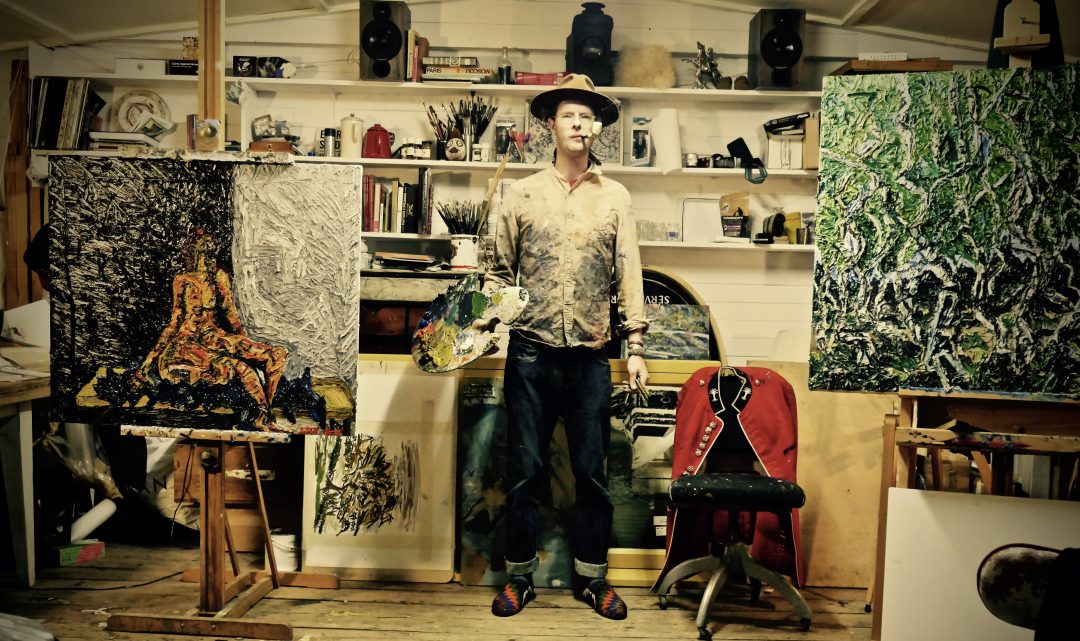
Talking Art: Interview with Dale Lewis

White Lightnening by Dale Lewis

Dale Lewis is undeniably one of the most talented as well as creative up and coming abstract British artists of today; his work is awe inspiring and thought provoking, reaching deep into the mind of the viewer and bringing out emotions they may not have known they possessed. One of Mr. Lewis’ latest shows, titled “Fat, Sugar and Salt”, brings together a collection of mural sized paintings which breathe life into the depiction of comical grotesque scenes of contemporary, lower…

Continue Reading

Meet Silje Norendal

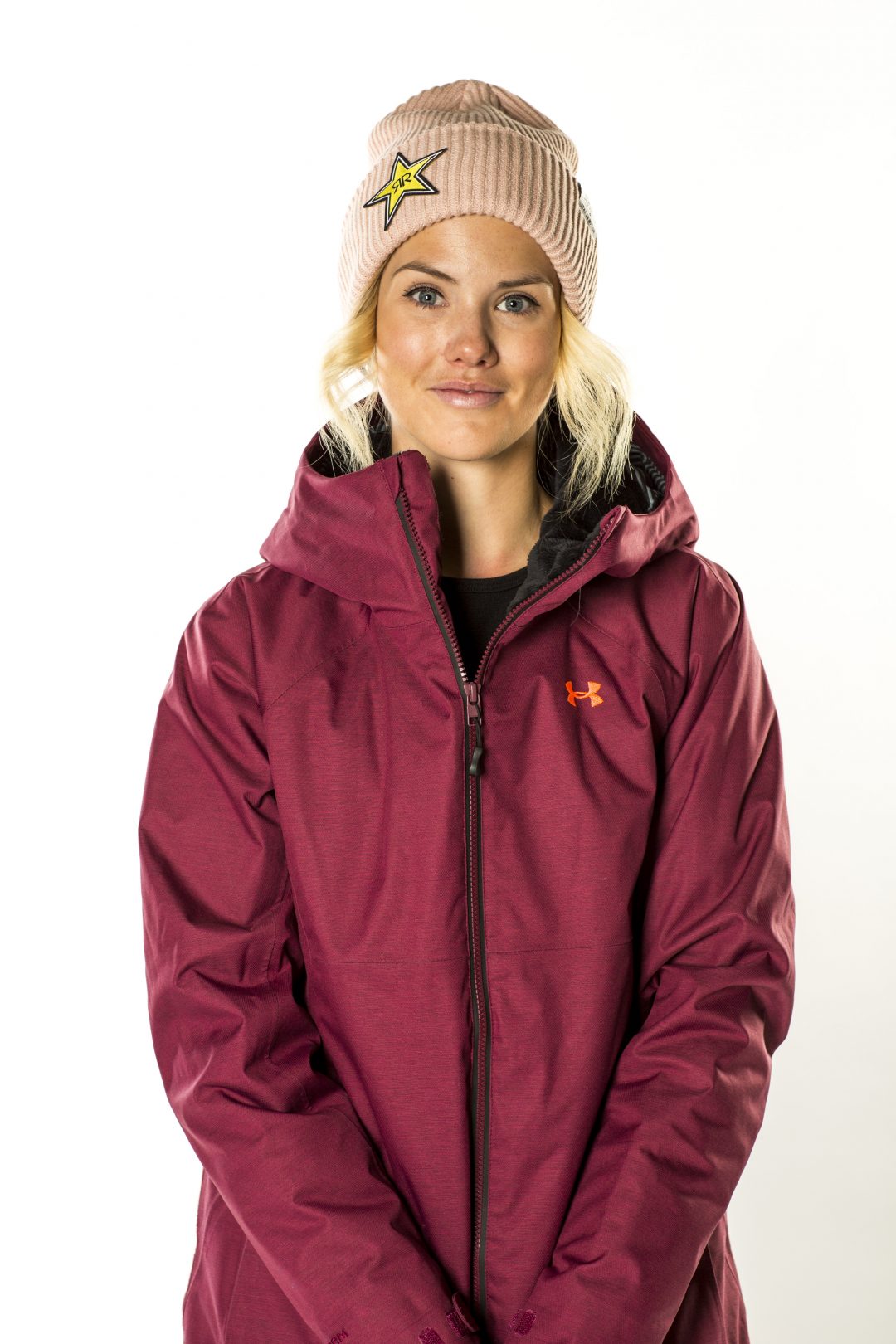
Meet professional snowboarder Silje Norendal, who shreds her board everywhere from the snowy slopes at the X Games during the Women’s Slopes Style competition (which she won consecutively in 2014 and 2015 in Aspen, Colorado) to the 2014 Winter Olympics in Sochi (where she made it into the semifinals and snatched the 11th position).  The natural born athlete first fell in love with the beautiful winter sport at a young age, which was the moment when she knew then and there that snowboarding was everything she wanted to do.  Read the interview below as the incredibly talented and passionate Silje Norendal talks travel and of life on the slope.

What are you currently inspired by?

“The progression in women’s snowboarding, and the young riders coming up.”

You’ve competed in the Women’s Slopes Style during the Winter X Games, as well as the 2014 Winter Olympics at Sochi. So, what have been some of the greatest challenges in your professional career?

“I think one of the big challenges, but also why I love snowboarding is the need to constantly push myself and my body, to keep up with the top females in the game. The constant traveling and living out of my suitcase away from family and friends is also for me a challenge. I’m so thankful for all the fun places snowboarding has taken me, but I wish I was able to spend some more time with friends and family at home.”

You have trained in Boardercross, Half-pipe, and Slopestyle. That said, which freestyle discipline is your favorite and why?

“I only compete in Slopestyle and Big Air. I used to do a bit of everything when I was younger, but now my focus is on jumping. Slopestyle is my favorite discipline. Every course is different and I run into new challenges everyday.”

What first influenced you to take up snowboarding professionally? Was it an encounter with the sport during your childhood, or through family or school?

“It was actually through my mom. She both herself and I a snowboard when I was 4 years old, and we started learning together.”

Your local club Kongsberg IF has been famous for training all kinds of professional athletes since it was founded in 1899. How would you say your involvement there has given shape to your current snowboarding style?

“My local club is amazing and has giving me a lot. My local resort was also open everyday from 9am to 9pm, and I spend as much time there riding as my mom would let me haha.”

What was your first time on the slope like. Did you feel scared, exhilarated or a little bit of both?

“I actually don’t remember that first year. I was so young, but I do remember falling in love with snowboarding and all I wanted to do was to snowboard from a very young age.”

Do you have any advice for someone looking to get started in the sport?

“I would take some classes the first couple of times you go riding, or find a friend that can help you a little, and maybe give you some pointers. And remember to HAVE FUN, don’t get too frustrated straight away. Keep trying and you’ll fall in love with it.”

Being a frequent traveler, what have been some of your favorite destinations thus far?

“Hawaii by far! Hawaii is beautiful!”

Do you have any particular favorites when it comes to Luxury Ski/Snowboarding Resorts?

“Colorado is my favorite place and I try to spend as much time there during the season as possible. You have many great resorts all close to each other, so you can explore different resorts if you want to. (Breckenridge, Keystone, Copper, Vail and Aspen) All great resorts!”

Where can we follow you?

Instagram: SiljeNorendal

Facebook: Silje Norendal (athlete)

Where to next?

“After X Games I’m off to Portugal for a little surf vacation. Excited for some sun and warm temperatures.”

The Culinistas

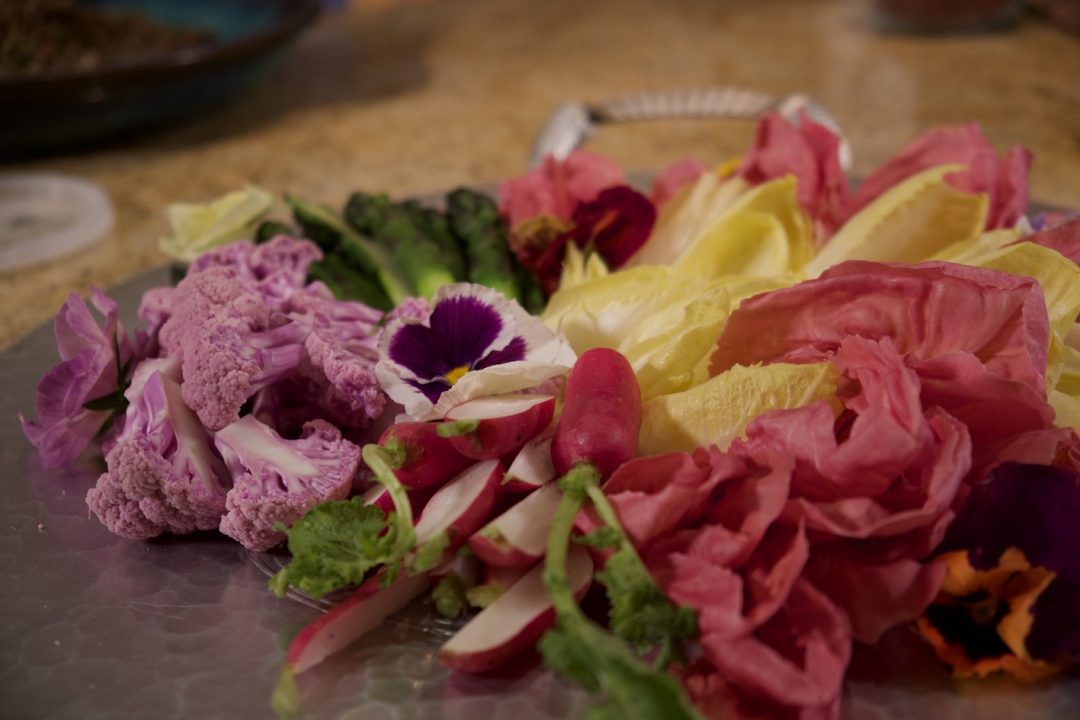
Let’s face it; a job with demanding hours makes it hard to prepare healthy meals. So, Jill and Tiana of The Culinistas make it easy for residents of New York and The Hamptons: every week, a personal chef shops for you and stocks your fridge with delicious meals you select together from a handcrafted menu. They also help with dinner parties and events, from sit-down dinners to backyard BBQs.

The two founders hosted The Extravagant for some fun conversation, delicious and healthy treats and, of course, wine. Check out the video and some photos of the food below:

Photos and video by Emilie Genuard, words and editing by Erica Commisso.

Talking Aviation: Interview with Thomas Flohr of VistaJet

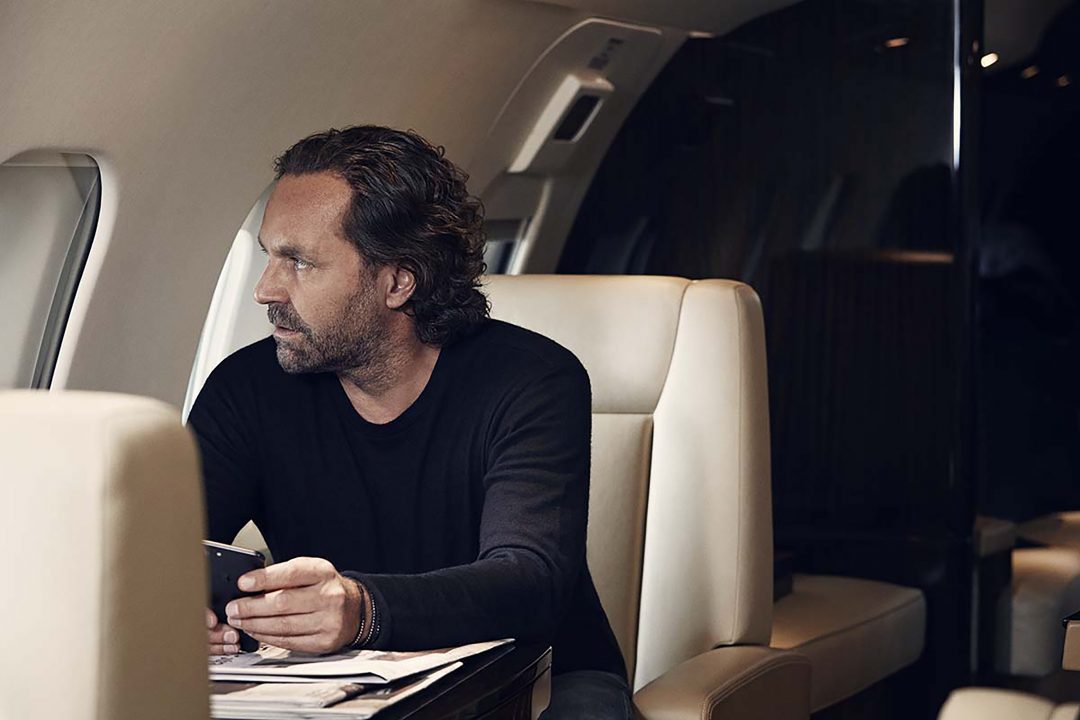
Meet Thomas Flohr, Founder and Chairman of VistaJet, who’s Bombardier business aircraft fleet offer clients an unforgettable flight comprising of complete comfort and exemplary class.  The VistaJet experience is simply incredible, taking travelers all across the world, which even include the most secluded and difficult to reach destinations.  Passengers aboard VistaJet have the privilege of choosing specialized preferences for their journey to best suit their reason of travel.  Read the interview below to find out more about the VistaJet fleet, as Mr. Flohr talks all things aviation and travel.

What in particular do you believe sets VistaJet apart from other Charter operators?

“VistaJet is the only global business aviation company. And not only are we the only global operator – in 2017 we arranged over 20,000 flights, and everyone of them is tailored to the occasion [as well as] the passengers’ preferences: we provide seamless travel solutions to businessmen who need to be in multiple-locations within the shortest period of time, and create the most memorable leisure trips to remote destinations anywhere in the world.  What really makes VistaJet even better than owning your own plane is that we make our entire fleet of over 70 business jets available to all our Program customers – with guaranteed availability, no asset risk or positioning costs. Since I founded VistaJet in 2004, we’ve flown our silver and red jets to over 187 countries worldwide.”

What is the inspiration behind the interior design of VistaJet’s current fleet?

“The cabin is designed as a home away from home. The spacious stand up cabins feature understated elegant furnishings, dark wood, fine Italian leather and even a curated library. For corporate leaders, it is business as usual as all cabins are equipped with the most advanced office-equipment to maximize productivity.  But, most important, VistaJet is renowned for the only consistent fleet in the industry: the interior of our aircraft is identical throughout the entire fleet.”

Interview with Thomas Flohr of VistaJet

Interview with Thomas Flohr of VistaJet

VistaJet is at the forefront of travel to some of the world’s most difficult to reach locations, with that said, is there any particular location that comes to mind when you think of the most challenging flights your company has completed?

“Our pilots are certified for snow and difficult landing, and the training we provide is way above the strictest national regulations. Our customers ask us to reach incredible private islands, or the top of mountains, at any time of the year. Unfortunately, I cannot provide you much more details, to protect our client’s privacy.”

Tell us more about your current partnership with Christie’s for the global tour of the David and Peggy Rockefeller collection.

“When we heard about the project, we saw it immediately as a perfect match. The Collection of Peggy and David Rockefeller is an unbelievable collection of some of the finest works of art. The fact that 100% of the proceeds from the auction of the collection will be donated to charity is a remarkable philanthropic effort. We fully support the Rockefellers’ commitment to giving back, and our sponsorship is our way to facilitate and contribute to the Rockefeller family’s charitable mission.  Finally, the global nature of this art auction and exhibitions also gives us the unique opportunity to serve all our clients in the world with one unified experience.”

Any tips for beating jet lag?

“To help our clients avoid jet lag, we set the pressure in our cabin to the same as you would find at 1000m altitude – with this setup, the cabin air is more dense and has a greater level of oxygen saturation. As a result, the body does not have to work as hard to oxygenate blood and sustain itself, decreasing the chance of developing jet lag.  In addition, we have humidifiers on board to help our passengers feel more refreshed upon landing. Should you not be traveling on a business jet, you should try to keep hydrated with water and creams, and include resting time to start adapting to the arrival time zone.”

Interview with Thomas Flohr of VistaJet

Interview with Thomas Flohr of VistaJet

Interview with Thomas Flohr of VistaJet

Where to next?

“If current trends continue, 2018 is expected to be another momentous year for the company. The upper-end of the sector historically tracks the global economy, and with Europe, the US and the Middle East seeing growth, demand is only set to build in 2018. While the entry end of the sector is still struggling with oversupply, trading for premium brands such as VistaJet is strong, as business leaders, corporations and UHNWIs are becoming ever more selective in their booking choices.

While all private aviation customers are always interested in the efficiency offered by the service, in 2018 the key will be attention to detail, additional services, and a personalized experience. Generations that have grown up with the world at their fingertips are increasingly searching for travel solutions that deliver both speed and high quality. Customers are also choosing to fly ever more globally, and average flight times are rising. On top of that, exciting new long-range aircraft models such as the Global 7000 will only add to the positive momentum in the sector. As a result, demand for larger aircraft is building; and in the private aviation market, only VistaJet is able to meet this need all over the world.

With the growth of the tech sector on the West Coast of the US and a growing body of entrepreneurs in key global financial hubs such as Dubai, the audience for private aviation will get even younger in 2018. After many years of stability, the private aviation industry is finally beginning to innovate to meet this burgeoning demand. VistaJet is at the forefront of innovation; its On Demand solutions and Direct app give entrepreneurs transparency over pricing, and its business model is based on access over ownership, an approach users of Uber and Airbnb are familiar with.”


You can keep up to date with VistaJet by following them on Instagram: @VistaJet

Images Courtesy of:  VistaJet

Getting to Know Catharine Daddario

Meeting Catharine Daddario is like meeting an old friend – her energy is instantly kind, vibrant, and comforting. Her big, blue eyes are immediately friendly, making you immediately believe in this young woman. She’s just finished filming a pilot she wrote with her boyfriend, completed a horror movie, and had a role in a virtual reality movie. Ms. Daddario’s an actress and a model, following in her siblings’ footsteps. Her brother, Matthew, and her sister, Alexandra, are both actors – and successful ones at that. If they’re anything like their youngest sister, they’re good-spirited, poised, hard-working and intelligent.

I sat down with Catharine, and we chatted about her inspirations, her upcoming projects and her acting process.

What’s your process of going for an audition?

“First and foremost, I look at notes specifically for the character, and try and wrap my head around that. Is this a time period thing? What should the vibe be? And, of course, you have to memorize it, so most of the time is spent doing that – reading it aloud over and over again with somebody. There are a million actors, and somebody could just be that person and get the part most of the time. But, if I’m really inspired by something, I might go and spend too many hours working on it.”

Is there any role you’re particularly inspired by?

“I really like fully fleshed out female characters. I think a lot of the time, unless you’re the lead, you’re not really fleshed out. So, getting even a supporting character who has a backstory is really great. But, I’m a little spunky, so I really like getting a character like that. I can relate to that, so I like that. That would probably be my favorite character right now – someone who can turn aggression into laughs.”

Are there any characters in TV now that you would’ve loved to play?

“It’s hard because one of the things that makes them become a favorite for me is that the person is doing it so well. I’ve been watching a lot of Crazy Ex-Girlfriend, and Rachel Bloom is so great in that. Of course, I would love to play that, but she’s killing it. And I’m obsessed with BoJack Horseman and Evan Rachel Wood in Westworld – every interview with her is amazing, and she’s so good at the part.”

Did you have a favorite movie or TV show growing up? 

“Oh man! A million! I really liked animation, so like Spirited Away, Mulan I could watch a million times because she’s female inspiration. I was actually obsessed with older movies as a kid, so like Marilyn Monroe in Gentlemen Prefer Blondes or How to Marry a Millionaire – she has such charm and surprise wit. And Carey Grant and Katherine Hepburn, for example – their physical nature, I could only dream about. Their level of control in every one of their parts is impressive. I mean, Carey Grant came to this country as an acrobat, and you can really see that. The old stuff is really where I think a lot of inspiration for actors has to come from. Because now it’s not so easy for actors to see theater unless you live in New York or one of the bigger cities, so watching those old movies is as close as  you can get.”

What about actors today?

“Reese Witherspoon. She’s so amazing and, growing up – I think Legally Blonde was the first movie I saw multiple times in the theater, because I was like female power! Elle Woods is so in control, and Reese Witherspoon did the best job of it. And [in] The Election, she did a great job of playing her character. I should mention my siblings – they’re my favorite actors of all time!”

Did you ever consider moving to LA?

“Yeah, I think it’s in the back of every actor’s mind. I like LA. I would definitely go there, but right now I have too many friends and a momentum going here, but if something takes me there, I’m willing.”

And you do some modelling work as well, right?

“Yeah! I’m doing it to get good at it. Ultimately, it will be necessary. Also, just learning where the cameras are and stuff is helpful. Any way to promote yourself is important.”

How did you find that this was what you wanted to do? 

“I had speech apraxia when I was a kid, which basically meant that I couldn’t speak well when I was a kid. It was just pure gibberish. So a lot of what I was doing was motions and listening to their tone to figure out what they were saying. So a lot of it was really theatrical, so I could tell people what I wanted and what I was trying to say, because no one could understand me. So that’s what led me to having a lot of different problems in school. So I joined this theatre group because I was like I have to learn how to speak, and do it very well. So I joined this repertory company, and after doing show after show after show, I was like this is where I’m supposed to be.”


To keep up with Catharine, follow her on Instagram via: @catdaddario

Meet Reed Kessler

Image Credit: Manfredi Equestrian

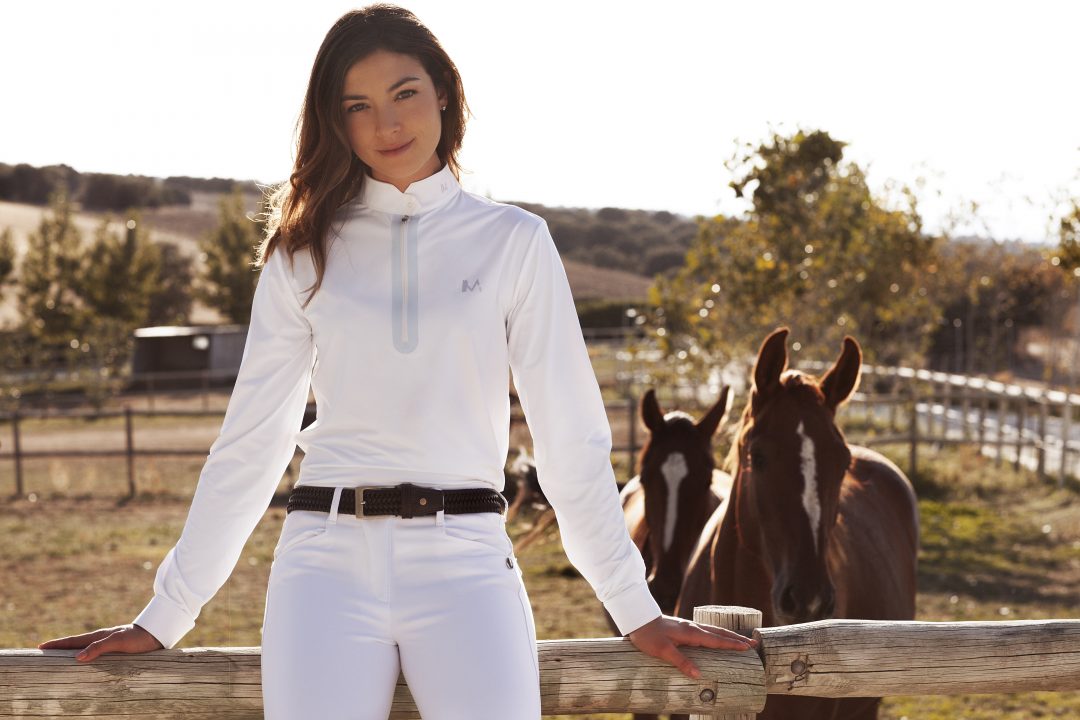
Meet the Holland based, American Show Jumper, Reed Kessler. Born into a passionate equestrian family, the innately talented athlete began ridding at just 6 months old, long before the now 23 year old could even walk. First having established herself as a shinning star in the world of Showjumping when she became the youngest ever Show Jumper to qualify for the Olympic Games. Wherein the vast majority of her teammates were well into their 30’s or 40’s.  Reed now focuses the majority of her career on the European circuit, where regular Grand Prix’s occur just a relatively short distance from her 25-acre farm in the Netherlands.

Just this April, we were given the exclusive privilege of interviewing Ms. Kessler during her off time; read on to learn more about the incredible Equestrian, Philanthropist, and Fashionista.

What are you currently inspired by?

“I’m constantly inspired by Serena Williams. She is more than an icon, more like a force of nature. I really admire the balance she has between her immense success and her happiness as a human being who makes time for family and life.”

How did you first become interested in the equestrian world?

“My parents both rode as amateurs, so I grew up with horses. I started riding before I could even walk.”

Take us through a typical day in the life of Reed Kessler.

“There’s no such thing as a typical day! It completely depends on where I am, what horses I have with me, where we are competing etc. When I’m home, I wake up between 7-7:30, I’m on my first horse by 8:30. I ride an average of 5 horses a day when I’m home, sometimes more or sometimes less. Again, it depends if all the horses are home, or if some are traveling to/from a show. I’m normally only home Monday-Wednesday, so I try to fit as much into those days as I can! After riding, I’m always in the gym. Then probably cooking at home with friends, taking it easy when I’m not competing. At shows, we can have anywhere between 2-7 horses depending where we are. The schedule could be all day, or late at night. It’s always changing!”

Image Credit: Digishots

From becoming the youngest member of the US OlympicEquestrian Team to your very independent move to Europe, you’ve already faced many challenges throughout your career, as such, what do you believe are some of the greatest lessons that you’ve learned thus far?

“Probably the greatest lesson is to appreciate the highs and be gentle with yourself during the lows. We have a lot of longevity in our sport unlike gymnastics for example. So it’s normal that some years will be incredible and others less so. Very rarely do you have the best horse of your career every year of that career. Sometimes we have an incredible team at their peak, other times we are building the next star. It’s a marathon, not a sprint!”

You’ve now been based in Holland for the past few years, that said, what do you believe sets the European Show Jumping circuit apart from its American counterpart?

“The sport is much more accessible in Europe. There are more shows every week and most of the breeding takes place in Europe. It’s also far less expensive. Basing in Europe, I get to be home at least 3 days a week, sometimes even the whole week when I’m doing shows close by. It’s a lot more traveling being based in the States.”

In addition to your talent as a brilliant Show Jumper, you are also quite the fashionista.  At the moment what are some of your favorite brands?

“I appreciate that! Mostly I’m not glammed up, but when I’m in a big city it’s nice to take off the breeches and boots and slip into something more fun! I love Dior, Vince, Zadig Voltaire, Helmut Lang, and Michi.”

Being a seasoned traveler, what have been some of your favorite destinations? 

“My favorite places are the exotic ones I haven’t taken the horses! Bali, Capetown, Cambodia, Tokyo are a few”

What are your must have travel essentials?

“Moisturizer, lip balm, my iPad, [and] a good book!”

Tell us about some of the work you’re currently doing as an Ambassador for JustWorld International.

“I’ve been an ambassador for Just World since I was a kid. I’ve volunteered at the sites in Honduras and Cambodia. It’s difficult with my schedule to do as much as I’d like to, it’s an amazing organization. There’s nothing like going to see the projects for yourself.”

Where can we follow you?

“My Instagram and Twitter are both @ReedCat5000 and I have an official page on Facebook. Also [at] ReedKessler.com

Where to next?
“We have a few quiet weeks near home now after a long tour in Spain. My next show is close to home in Lanaken.”

Talking Art: Interview with Prince Rostislav Romanov

Meet His Highness Prince Rostislav Rostislavovich Romanov, a member of Russia’s former ruling Imperial dynasty and an incredibly talented artist “who strives to capture the beauty and strangeness of the world.” Prince Rostislav’s highly imaginative work sits at an avenue where modern figurative meets abstract. 

The Prince, who is best known by his nickname Rosti, pushes his viewers to see the underlying work beneath his art by rationalizing a time-tested approach of trial and error. Prince Rostislav’s compositions force us to feel in an era that has nearly lost itself to meaningless pieces of art.

His Highness’s artwork leads viewers down a path of the utmost originality, showcasing provocative scenes reminiscent of a bygone era of Russian History mixed with modern cultural elements that engulf the strange world around us. If a typical picture says a thousand words than a painting by Prince Rostislav screams a million. 

What is the inspiration for your current series?

“Inspiration is a funny thing for me! I have travelled and asked that question to many people across the Art World. The best quote about inspiration, is when I asked that question to the late Oscar De La Renta, he bent down to me (I was 17 at the time, he was a tower of a figure!) put his fingers to his eyes, widened them, and said, “Everywhere!”

That took me a long time to understand, from the ages of 17 to 28, I thought how arrogant! Only after turning 28, when I got sober and started to look what was around me, I realised he was right! So that is the foundation for me to build on.

At the moment, I am really into shapes and lines with a limited palette. Which reminds me, I had a conversation with the Queen of Denmark once, found out she is a keen artist! So, we were talking about art, and I foolishly told the Majesty that I deal with just colour no shapes or lines. The Queen of Denmark turned around to me with her cigarette in one hand and said to me this, “No matter what type of artist there is, from the back of their minds to the paper they all use lines.””

You’ve lived across the globe, from the USA to Russia and the UK, that said, how do you feel that your travels have influenced your work?

“The one thing I learnt from my family history, is that they always acclimatise to where one is.  This little bit has helped me to adapt to the local culture; also, to have lived in so many different places helped me understand a different side of the world. The fact is I always want to be influenced by different cultures, people and art! We live in an age where travel is more accessible now than say 20 years ago! Where ever I go, I look into local folk art and textiles to figure out how they use colour and shapes.

For example, I was in Lisbon for a holiday. Strangely, it was the first holiday where I did not take any art equipment with me – never again! Portuguese ceramics – their tiles are amazing! It gave me an idea to put tiles on the lower half of my house one day!

But for me, I want to go to Mexico on the Day of the Dead! Ever since I worked at the De Young Museum, and was there to help out in the Chicano art exhibition, South America has genuinely interested me, the stories, the shapes, and colours will be forever burned inside my skull.” 

How did you first get involved in the Art world? Was it an encounter with art in your childhood, or through family or school?

“Simple, I was terrible at art when I was a kid from ages 0 through 14. I was not setting the school alight with my art! The only reason I choose Art and Design for my GCSE, (Which is the English National Exam every kid has to take when they are 16. Kind of like one’s SAT’s I think?) if an artist can put a shark in a tank like Damien Hirst, or drip paint like Jackson Pollock. I said to myself I can do that, so I thought it would be easy! But at that time, I was speaking to my art teacher (God, I feel sorry for her, me spilling my guts about the death of my father to her! I do not know if she had training in that? Oh well.) She told me to paint my feelings, which I did, then she told me to look at Kandinsky, which I did.

That is when everything changed, I had an outlet where for a brief moment I could escape and use my pain, my emotions inside of me. She left, then came in my mentor John Hinchcliffe, he put me onto landscapes. When John Hinchcliffe arrived, I was in my last year of school, and John turned around to me and said, “You could do it. You can become a professional artist.” I had nothing better to do with my life, so I thought why not! Off I went.” 

If there is just one thing that a viewer takes away with them from your work what would you like that to be?

“To get to that finished piece of art, I had to fail so many times. So, failure is only really a failure if you do nothing about it, failure can be the best type of inspiration! So, try to learn, feel, be open! I always say that art is my life, and my life is art! It makes it that much more precious and fun. Oh, a couple of things my mentor taught me, first keep it simple. (The best thing is your simple, will be different from my understanding of simple, which is spectacular in itself!) The other thing, is everything leads back to itself like printmaking has helped me understand more about shapes and patience, which has allowed me to see and explore different ideas and develop my paintings.”

Tell us about some of the work you’re doing with Raketa, Russia’s oldest Watch Factory, which was founded by your ancestor, Peter the Great. Have you always been passionate about Horology?

“Ever since I was a child, I’ve loved watches, how they are designed, how they all work beautiful and efficient, with no waste what so ever! That alone has taught me the importance of what I am working on, and not to waste that space. Also, to learn a different and highly crafted art form is rare! I don’t think the big watch companies in Switzerland would allow me into their workshop, and learn for free. Working in Horology has put a different set of limits on me, which is wonderful. How to get all of the information that I use into such a small area, and to still have the same effect of one of my art pieces! Last thing horology has taught me, is working inside the limits. (If one looks at the limits, there is a lot of space to play with.)”

What does it mean to you personally to be a member of the Romanov family?

“This question has always troubled me. Am I an Artist, or am I a Romanov? For so long, I thought both could not coexist with each other! So, it was easy to rebel against both of them for a long time. It is only now, I have come to realise that both can work together. (I learnt this from my collaboration with London jewellery company Ortaea.) I found that being part of the Romanov family and history has given me an absolute lack of expectation, and fear of people, ideas, and places. But, the most important thing I learnt from my family is that A.) Family matters, and B.) That I have a platform to do some good in the world. I have a friend, Max McLaughlin working on a design for me of the Russian double-headed eagle, but instead of holding a staff and orb, the eagle would be holding a paintbrush and palette with a quote by Tom Waits going around it, I hope. He is still working on it, so I have not seen it yet.”

Tell us about your passion for cigars. What are some of your preferred brands at the moment? 

“My passion for cigars is something I love! It is strange for me because I am very much an introvert, I love my solitude! But when it comes to cigars, I love going to the cigar room in London on St. James Street, sitting there with people I have never met, from different walks of life, and we are all talking with one another like we are friends. It is amazing comradery.

For the type of cigars, what I like changes with the mood I am in. I do not stick to the big brands, I enjoy trying things further afield. I remember, I was on holiday with my family off of the coast of Venezuela in this beautiful, strange place, and some locals found out that I like cigars. They told me to go to this woman on the Island. So, a driver, a family member and I set off on this journey. We pulled over, and the driver and my family member told me to wait in the car, but the things I saw there were too strange! So, there was a group of locals next to the car with half a carcass of something big!  I was freaking out a little bit, thinking the worst. I got out of the vehicle and took a speedy walk to the house, where this old woman was. What I saw was terrific! This old woman was from Cuba, learnt how to make cigars by hand in her home country, but fled to Venezuela where she kept on doing it. I must have got about 200 handmade cigarillos for $4. Kind of wish I took a photo back then.”

Any thoughts on the art scene in Britain today? How do you feel it compares to its counterparts around the globe?

“I can only use my viewpoint. In the UK the whole art scene is flourishing, there are more opportunities here for artists from music, performance, to exhibitions. It is exhilarating to me, I can feel the energy in the air kind of like the early 1900’s but with more health and safety.

In Russia, the art scene is more politically driven, but art in Russia has been like that for more than 100 years, pull and push situation, which gives art a deeper meaning for me. For example, when there was a massive change in two governments that I am close to, I decided that I am going to be more creative use more colour be more vibrant, be more positive with my works to rebel against all the negative judgemental right wrong viewpoints of individual people. So, in a way, I want my art to be there for the people if they want it?  Lastly, I have artist friends in the UK and Russia that inspire, drive and push me and my art.”

How has your style changed since you first began painting? And are there any other mediums you’re looking to explore further in the future?

“Yes, I always look at where I started. At random years, I go back to one spot in the world where I did my first plain air painting just to see how I have changed, as I can remember the first one. For a long time when I was drinking, my art was stuck in one place! Mind you, I thought back then, to be an artist one must be an addict, and/or a drunk, playing into the stereotype. Strangely, when I gave up drinking, my mind was playing a trick on me saying, that is the end of being an artist! How wrong was that part of my brain! Literally, my art was an explosion of feelings and colours, when I gave up drinking, only then, I finally gained the perfect practice of my art to control, and manipulate those raw emotions into my art. Not to shy away from my feelings and body, but to let all that speak out!

Also, I am always exploring new things, mediums, and techniques in the art, as it is another way for me to speak. Art has given me a voice, and I am going to shout out with it. I was told from a young age that I am dyslexic. I found it very hard to learn, and the support from schools was not significant until I fell into the art world which led me to a new way to communicate. I have just started to learn about different forms of etching which are amazing, I love it. I am trying different ways to paint by using more body motions. Next year I am going to get into textiles and weaving. I also want to try ceramics!  Maison d’Art gallery in Monaco always tells me I should do that! Hell, why not? I live in the UK where it has some of the best ceramics factories. It is beautiful, the more I explore different mediums, the more it helps me in my life and art.”

Like Kandinsky, you often listen to music while painting, with that said, who are some of your favourite artists to listen to while painting?

“When I learnt History of Art at school, I was taught that some artist in Paris in the early 1900’s use to take drugs and drink the Green Fairy to get to that strange place to create. When I was looking at Kandinsky, I started to use music as one of my tools in art. I found that drink could not get me to that strange place to work, the only thing drink took me to was more drink. But, music has brought me to the most bizarre parts of my mind.

Remember that scene from Almost Famous, with The Who album Tommy. For me, the mind-bending staple music is Tom Waits post drink, where he is not afraid to do what he wants in his records, just thinking about it wants me to work even now. One other thing I love is Iggy Pop confidential on BBC Radio 6; it is the same teaching to be open to new beautiful, strange ideas, and music. (I swear every time I listen to him, I end up buying new music that I heard on that show!) But, if I am genuinely stuck, bring out Chuck E. Weiss. I owe these musicians a painting for driving me. I am really into Punk, I just cannot get enough of it, it might be because they stand on the edge of music and push it to where it is just recognisable, and to rebel against the norm and anyone can join. But, to counterbalance it I found this British rapper called Kojey Radical; again, it is how he uses his words and music to communicate what he sees around with his eyes.”

How would you describe your creative process?

“I met an artist back in my younger years in San Francisco, and asked her that question. (Sorry, I sadly cannot remember her name for the life of me.) She said she goes into her studio every day and works. For me, I love being creative, but also what is an essential for me is the craft side of art. That side has made me appreciate and value what I am doing more. I would never let anyone else do that for me, where is the fun in that? When I look back at a painting, I know that I stretched the canvas and sized it with rabbit skin glue and primed it to just how I like it, that gives my pictures a complete feeling for me. I try new things, mostly fail, learn, and work again then slightly change where I failed. I keep my eyes open to new shapes and my mind open to different ideas. For me, even the simplest concept can give me so much creative drive, even if the concept does not come to bear fruit. Lastly, I never stop thinking about art, continually considering, painting, and creating in my mind to see where it fails or not and/or where I need help on my obsession, like that character from Stefan Zweig novella called Chess.” 

Any upcoming shows that we should keep our eyes peeled for?

“Sadly, I like collections of museums more, they are regularly there, which means that I can return at any time; so here are the top three museums. One of the places is a part of the Pushkin Museum in Moscow, called the European Gallery, it is the most amazing of museums. Their collection is the envy of any other significant museums’ collections in the world, here they have everything from the only painting Van Gogh sold Matisse “The Dancer” to a whole floor of Cezanne! But, what makes it remarkable is that it is always empty! So, one has plenty of time to look at these paintings and sculptures. Oh, did I mention when you start, the first thing one sees is a whole room of Rodin; how genuinely spectacular that is? But, the other two museums for me are the Chicago Art Institute, (This place holds a special place in my heart. A world of wonder.)  and lastly, The V&A in London, for the fact that they have a piece of textile from my mentor John Hinchcliffe.

For me, I follow artists then exhibitions. So, the artists that push me to be a better artist are Dickon Dury, Poppy Jones, Dan Feit, Daira Fursey, Jethro Buck and Louise Thomas. They all are jaw-droppingly fantastic, but what links them all is their work ethic. I feel guilty, but hey, while here, I do have an exhibition coming up in London at C. John gallery from May 14th-18th, just a mention.”

Image credit: Richard Williams

Where can we follow you?

“Here is my website: rostislavromanov.com, also Instagram: @rostislavromanov and lastly Ello is again: @rostislavromanov that is for the World Wide Web, but I am always lurking about somewhere on Winchelsea Beach with my Chocolate Labrador, Bister.”


Images courtesy of: His Highness Prince Rostislav Romanov

Spinning a Yarn with Angela Bell

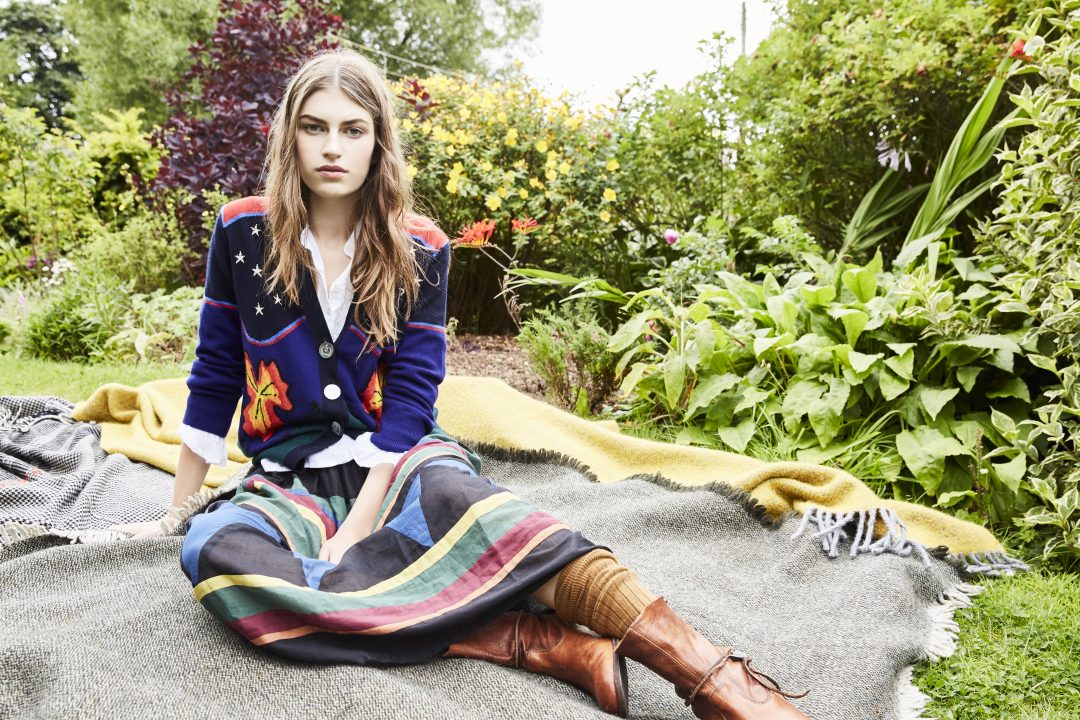
Angela Bell, the Scottish Cashmere Queen behind cultish sweater label Queene and Belle talks to the Extravagant about all things cashmere, her F/W2018 collection and collecting Edwardian vintage.

Angela Bell at her Scottish Borders Studio

Queene and Belle was founded in 2000 on the premise that snooze-inducing Argyles and Twin-sets needed a major rebrand. It is hard to find a more knowledgeable and passionate creative. Taking full advantage of generations of family knowledge, Scottish production resources, and time spent at Pringle, Bell creates her pieces in the scenic Scottish Borders, which she calls home. The vivacious designs are painstakingly executed through hand-knitting and intarsia techniques that take hours to realize, using decadent 6-ply yarns from Todd & Duncan. Each jumper is lovingly finished with a hand-stitched stylized St. Edward’s Crown.

Bell cites both her grandmothers as the Original Fashionistas in her life, although she draws a lot from contemporary iconography, she is always ready with a timely and on trend collection like this season’s Wild West themed confection. The label has recently added non-cashmere offerings to compliment its main design area because, let’s face it, nothing goes better with a boyfriend sweater than a poplin sundress. The perpetually cold amongst us rejoice.

What drew you to jumpers? Do you have a favourite one?

“My family have all been involved in the local cashmere industry for 4 generations, so I was always surrounded by sweaters. My dad must have had around 20 navy classics so I used to ‘borrow’ them! I guess, I’m always drawn to an oversize navy cashmere sweater because of this!”

Walk us through your design process at Queene and Belle. What is your favourite part? From where do you draw inspiration?

“I continually collect images, visit art exhibitions and people watch for inspiration and I especially love the textiles and patterns from Native American Indians. When I start designing I review all of what I have collected and, through a certain gut feeling, start to assemble my ideas for the new collection.”

Croquis Galore, Queene and Belle A/W2018

“When my designs are formulated, I draw up each design specification and issue them to the factory. I discuss the various knit samples I require and after they have produced these, the factory will go ahead with the actual samples. If new body shapes are needed or if new developments for knit trims are required, this is all done at this stage. It usually takes around 5-7 weeks for the factory to produce the sample collection and I continually visit the various technicians to discuss the work in progress. When the collection is finished, we arrange the photo shoot which is always done on the farm where I live. I use my home as well as the farm buildings (which date from the 1700’s) as an interior and the surrounding hills for the outside shots. Everything is done locally and my customers love that the ethos behind Queene and Belle is very much a personal story. I personally style the collection during the photoshoot, it’s my favourite part of the process as I love putting together new looks and seeing my vision come to life.”

What makes a Queene and Belle Jumper distinct from other luxury knitwear labels? 

“Queene and Belle sweaters always have lots of detailing whether it be our hand stitched crown, signature etched buttons, detailed intarsia or quirky take on a classic. All of our sweaters are very easy to wear and feel so light and soft. We also do very small runs and bespoke colours so customers will always have something very unique in this world of mass production (even at the top end of the market).”

Farm Camp Heritage Blanket, Queene and Belle A/W 2018.

Who makes a Queene and Belle Jumper? What is the brand’s value chain from fiber to end product? What about for the brand’s non-knitwear components?

“All of our knitwear is made in the local town of Hawick, which is famous for producing the finest cashmere for over 200 years. The yarn comes from Todd and Duncan who are based north of Edinburgh in Fife, a company who spin wonderful cashmere, yarn that is spun tighter than in other countries and therefore is less likely to pill and makes the final product last much longer. Having our knitwear produced locally means we can check everything at every stage and also do a lot of hand finishing in our studio.

Our cotton summer dresses and tops are all made by a family business in India who only make clothing for us. They are extremely talented and are able to construct the most intricate lace paneling, embroideries and shapes as most of our designs are inspired by vintage Victorian and Edwardian pieces. They only make what we sell, which is very important to us as we don’t want to overproduce. The same goes for our knitwear each piece is made to order.”

How does Scotland inform the brand? What are the challenges of working in Scotland?

“I think Scotland is very quiet and reserved…. a place to be discovered but truly loved when you take the time to visit. I see Queene and Belle in the same way. I love working in Scotland especially as my studio is on the family farm, it’s quiet and peaceful, I can have a clear head without any distractions and it’s always cold here so perfect for sweaters!”

Feeling Sheepish? Wool is a natural fibre with versatile properties.

Scotland has a proud artisanal heritage; do you think ‘Made-in-Scotland’ can have the same worldwide cache as ‘Made-in-Italy’? What do you think can be done to preserve its artisanal patrimony? 

“Scotland is not good at collectively singing its praises the same way as Italy does. The psyche here needs to change, especially at the government level and truly embrace all the great things that are made here, looking at all the positives instead of always trying to fix the negative things. They need the right person/group with an extensive knowledge and taste level, with the ability to correctly market Scotland the brand in a modern way which is inclusive of all of the diverse products produced from cashmere to agriculture.”

What does Quality mean to you? What does Luxury mean to you?  

“Quality means longevity, and timeless design and luxury means saving for something you really fall in love with and finally get.”

How does the perspective of generations inform your work? Is there a tension between Tradition and Modernity?

“Technology has primarily changed the productivity of the Scottish knitwear industry. Traditionally, knitwear was either hand knitted on hand frames or produced using a hand intarsia technique (for pictorial designs) on 8 -12 division frames which could knit 8 -12 garment panels at one time. This type of knitting was traditional, but at the same time labour intensive- it did however make a lovely tight quality knit – the type of knitwear that Scottish production was renowned for (although very often it was usually under-milled and the hand feel of the cashmere got better the more it was washed).”

Hokkaido Cardigan, Queene and Belle A/W2018

“Today, production is done on computerised machines which can do pretty much anything that the old machines could do but more efficiently. The stitch of the garments produced is a bit looser, which means the cashmere comes up softer in the initial milling. This is preferred practise now as consumers want to feel the softness instantly. The finishing side of the process is still very much the same as it always was with mainly women doing all of the body linking, collar linking and hand sewing functions.

These are just the general changes in the industry but there are a few mills and specialists still producing garments in the old way, so things have moved on with technological advances but the old ways have not been lost completely!”

How has Digital technologies affected your brand?

“It has had a positive affect for the brand, especially via Instagram. Digital technologies have helped introduce Queene and Belle to individuals who would never have known about us perhaps as there were no stockists near them.”

Who is the Queene and Belle client? What markets respond strongest to your vision? Has this client changed over time or remained the same?

“The Queene and Belle woman is emotionally drawn to our designs; she is an individual who loves unique things, high quality, sustainability, and the story.

Japan and UK are our strongest markets, they love our look.

Our clients have stayed loyal and evolved with us and introduced new ones through word of mouth.”

Regal Sweater, Queene and Belle

If you could fix one thing in the fashion industry, what would it be?

“I would like companies to return to producing one collection per season, as there is just too much product now. We really need to stop overproducing at every level of the market.”

What do you wish people would stop doing to their knitwear?

“Abusing it by not treating it with the care it deserves! It’s not leather, it’s a very delicate fabric which needs lots of love and respect! We actually offer a re-dressing service to help to give past Queene and Belle purchases a new lease of life. The service sees the garment returned to its artisan makers where it is washed, de-pilled and professionally pressed.”

Tell us about your collection of Edwardian vintage. What draws you to that era of costume history?

“Primarily white cotton, I adore white cotton as it just lifts everything and in that era it was so fine with lots of lace and embroidery. So feminine and timeless, the look compliments our cashmere perfectly.”

Carrie Shirt, Queene and Belle A/W2018

Where do you see your brand in the future?

“I would love it to continue as it is selling to lovely stores who appreciate the love, thought and care we put in to each of our designs.”

If you were not a fashion designer what would you be?

“In the costume department for films/TV”

Where can we follow you? Where can we get our Queene and Belle fix?

You can follow us on Instagram: @queeneandbelle

The collection is also available to buy at www.matchesfashion.com

To treat your cashmere right and for useful sweater care tips visit Queene and Belle’s site at:
https://queeneandbelle.com/cashmere-care/

An Interview With Alex Assouline

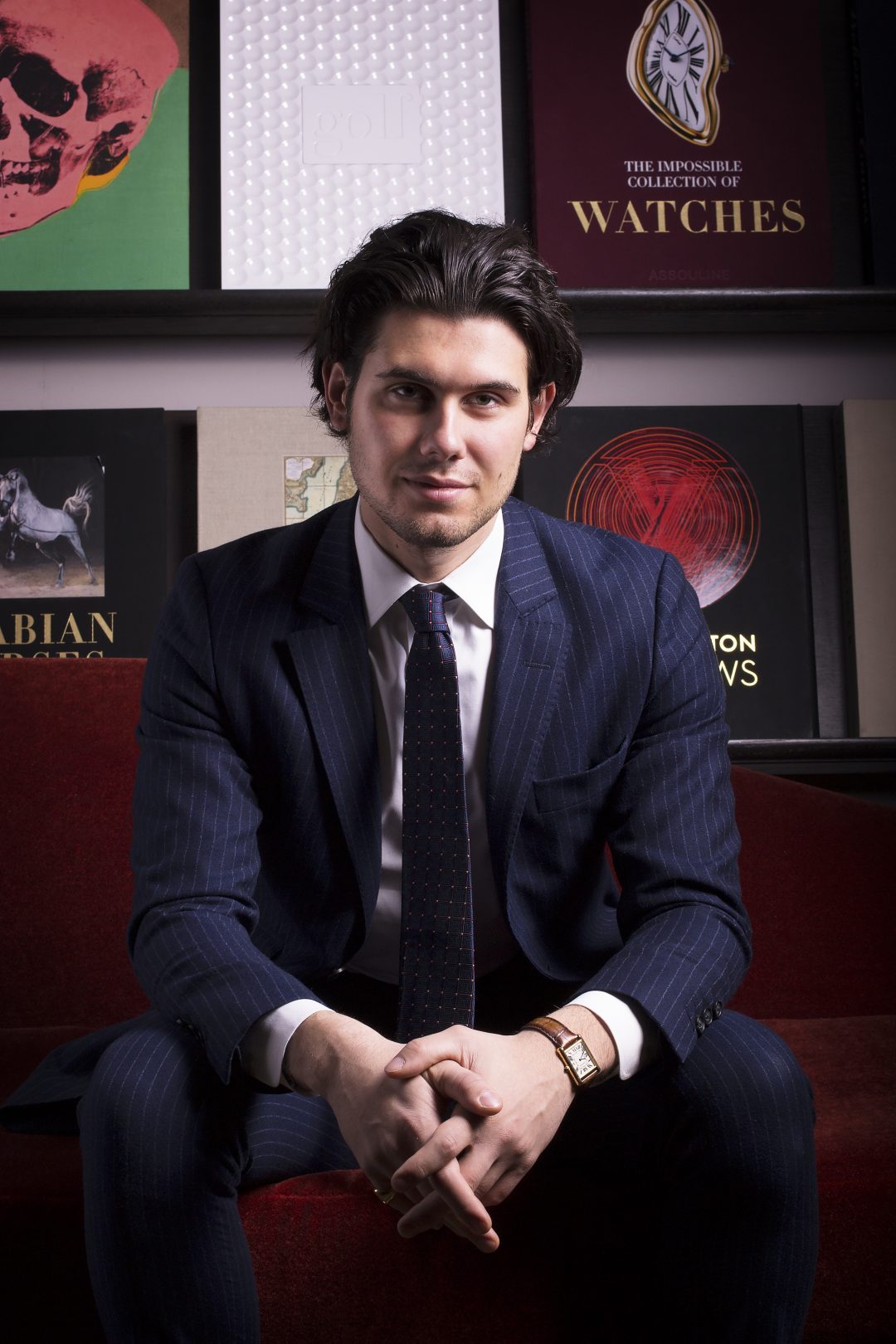
Alex Assouline carries himself differently than most people his age. At first impression, it takes a second to remember that he’s only in his mid-twenties. When I met him in his office one afternoon, he greets me in a three piece suit, immediately apologizing for making me wait an extra three minutes. He’s had a busy day, he explains. I, however, hadn’t even noticed those three minutes as, sitting in the lobby, I’m intrigued by the gorgeous coffee table books that surround me. Highlighted in a striking red, all-encompassing book case, the titles catch my attention. Dior. Chanel. Bentley. Vintage Cars. Up next, he tells me, is a book with design family Missoni. But, it’s not the book you’d expect: it’s a cookbook. It’s unique, and it’s on brand with Assouline, the publishing company Alex’s parents started that records culture in an elegant, timeless way.

Our conversation took us through some of that culture, with more upcoming additions to the Assouline catalogue, his passion project, and his fashion inspirations.

For those of us who are not already familiar with your family’s publishing house, give us an introduction to Assouline and your role within the company.

“So Assouline is a nearly 25 year old coffee table book publisher. We specialize in books about art, lifestyle and culture. I joined a few years ago after working in consulting. I’m now the director of marketing, and I work a lot on interior design, where I curate libraries, especially in New York.”

Other than the Missoni book, can you tell us what’s coming up for you? 

“I’m working on a fantastic book on [Azzedine] Alaia, who passed away a few months ago. It’s a very dear project to me because he was my godfather. We’re working on a special edition as well, leather bound with three different covers. It’s going to be a good homage.”

Tell me about the process of curating a library.

“So I started that a few months ago as an organic extension of what I was doing, but just on the side. So I met with a friend of mine for lunch and she was working on a building with her family as well, and she was just saying that she needed a space where–she needed a library, you know? She needed a space where people could just sit down and unplug from everything and feel safe and troubles with their minds are gone. And it just was a perfect fit, so I started one there, at The Shephard with the Naftali Group. Then I started having some requests, from word of mouth, and then started to structure it as a part of the business. So I go to a very specific place, whether it’s a hotel, restaurant, office, apartment or amenities for a library building, I just study the place, the neighborhood, the tenants, who goes there and their interests, and after a few days or weeks I just come up with something. A little drawing, a proposition. It’s a passion at this point.”

I can tell. 

“It’s my own thing. Something I developed that I’m happy about and proud of. It’s kind of the extension, when you have a family business, that you need to find your area to develop, while still being in the family business. And I found it, so I can have my own thing on the side.”

So let’s talk about style. Do you have a style philosophy? Do you have some icons you look up to? 

“I just saw a documentary on Gianni Agnelli. It absolutely changed my philosophy of fashion. It was so interesting because this guy was super well dressed, and he wasn’t scared of going his own way and his own style. Like putting the watch over the cuff, for example. And he did it in such a stylish way, that’s very inspiring. There’s no real boundary that you have to set for your style.

I like to wear suits. I feel good in a suit, I feel comfortable in a suit, which may sound a bit not genuine, but to me I really feel comfortable. You need to present yourself in a way that people can receive well. It’s an action of respect as well. I keep t-shirts for Sundays.”

Where are some of your favorite places to buy suits? 

“I have the two extremes. I have a tailor in Hong Kong that comes once a year or once every two years. So I just see everything, all the patterns that I can do. I’m very into plaid, so I’m very experimental in that way. So that’s fun. And then, I have a store in Paris where I buy most of my suits called Wicket. I trust them, I know every time I go I’m going to leave with a couple. It’s exactly my taste. In New York, I just buy my shirts at Brooks Brothers. Cufflinks, only vintage and on eBay. And suspenders as well, only on eBay. I have a big collection of suspenders. I’m very proud of it. I used to go on eBay and start betting on crazy suspenders and I would try to get a pair once a week. I cannot stop, but I don’t have space anymore.”

Do you have any brands of suspenders that we would recognize? 

“There’s vintage Ralph Lauren and there’s Trafalgar. These are the only two I find, but when I go to a vintage store or something, I might stumble upon something unusual, but it’s very rare. It’s not really in today’s culture, even to carry in vintage stores.”

Where did your love of suspenders come from? 

“That’s the thing. I didn’t see them anywhere, and I wanted to have something different. I wanted them with different colors, like an accessory that wasn’t something you couldn’t see on everyone. I wanted to build my own identity from that.”

What about timepieces?

“I don’t like extravagant or showy timepieces. I love my Cartier Tank because it’s meaningful to me. I got it when I was 18, and there was a big story behind it. My father, when he was an assistant and he was 18, saw it on his boss at the time in an elevator. And he said, “wow, this is what I want for my son one day.” And he got it for me when I was 18. So I just keep it at all times.”

Take me through a day in your life. 

“I wake up at 6:30 or 7, depending on what I did the night before. Then I jump on my rowing machine for about 20 or 30 minutes. I have to do that every day because it keeps my body moving at all times. It gives me the right energy. Then I have a big glass of water, shower, go to the office, meet with my team around 9 or 9:30. I try to separate my day around the tasks in the aspects of marketing or the library or communications. Mostly, I start with working on the new products we’re going to release–for example, we’re working on bookstands, candles. Then I answer e-mails for partnerships that we’re doing, and work on marketing products for books–how to make the book come to life. And then quick lunch with my parents to debrief about what’s happening in the company. And after that go back to the office, until I finish the day and I take out my pencil and I just draw a library. For a client or just to practice. I leave the office around 7 or 7:30, depending on whether I have a drink with a client, or dinner, which usually happens.”

What’s your favorite drink? 

“I’m in my spicy margarita with salt phase. I don’t know how long that’s going to last. But, usually, I love a pisco sour. It’s a Peruvian drink made of pisco, lime juice, sugar and egg whites and a bit of tabasco.”

What do you feel like is different about New York? 

“What I see the most is the energy and the willingness for people to achieve. That’s a pretty cool trait.”


You can follow Alex on Instagram at @alexassouline and Assouline at @assouline. Assouline is on Twitter at @AssoulinePub.

Featured photo courtesy of: Assouline, by Josh Deveaux.

Talking Art: Interview with Dale Lewis

Dale Lewis is undeniably one of the most talented as well as creative up and coming abstract British artists of today; his work is awe inspiring and thought provoking, reaching deep into the mind of the viewer and bringing out emotions they may not have known they possessed.

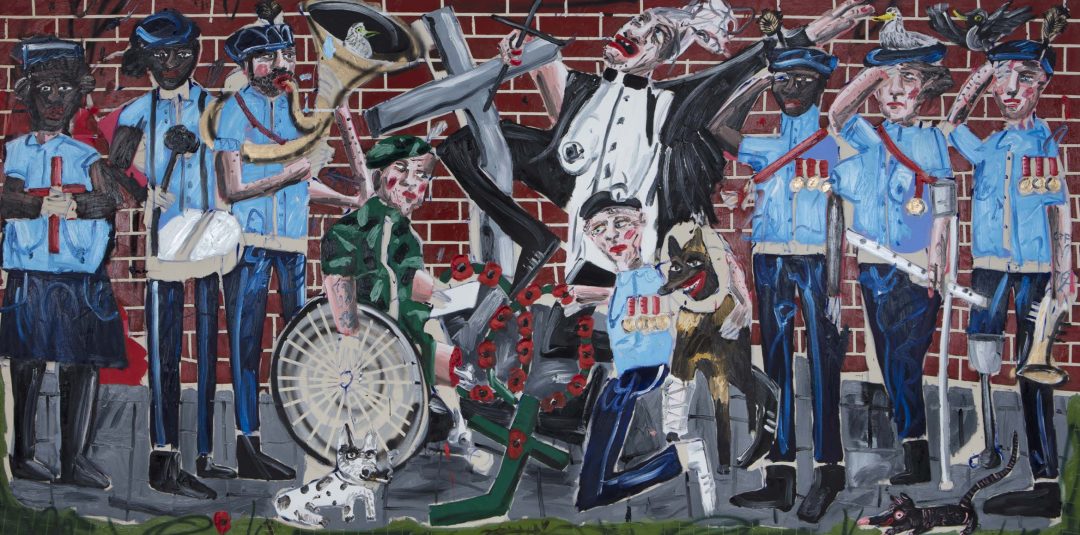
One of Mr. Lewis’ latest shows, titled “Fat, Sugar and Salt”, brings together a collection of mural sized paintings which breathe life into the depiction of comical grotesque scenes of contemporary, lower class, urban existence packaged inside a quintessentially British set of modern dark humor.  The end result of viewing Lewis’ work can best be described as unforgettable.

Far flung from his days as a studio assistant to Damien Hirst and Raqib Shaw, where he worked on kaleidoscope and photorealist paintings; Lewis, now fueled by his absorption of past memories, paints in a frantic style of work that is often compared to that of the likes of David Hockney and Jean-Michel Basquiat. 

What has been the inspiration for some of your most recent works?

“The latest body of work shown at Edel Assanti was based on my home in East London, after spending quite a lot of time away last year I thought I’d focus more on what I see in my immediate surroundings.”

What does it mean to you to be a quintessentially British artist? What is your viewpoint in regards to the Art Scene in London today?

“There is lots of British humour in my work and looking at very ordinary day to day life of people that I’m surrounded by. I don’t think much of the art scene, it’s more important to look at life in general rather than look at what everybody else is doing.”

Take us through a day in the life of Dale Lewis.

“It’s quite ordinary. I wake up naturally and slowly make my way to the studio along the canal and think about what I’ll do when I get there. Arriving in the studio, I have some breakfast and start painting. I usually paint til quite late in the evening and drink wine and look at what I’ve made today. I’m usually filthy at the end of the day and head home to spend an hour or so in the bath before going to bed.”

Your work consistently explores both dark humor and religious references, which ultimately provokes and develops deep thought and emotion within the mind of the viewer, if there is just one thing that a viewer takes away with them from your work what would you like that to be?

“I would just like them to remember it. Or see something they see in their own life reflected back at them.”

How has your own London neighborhood helped inspire your paintings that depict scenes of the reality of urban life?

“I live in a very poor, miserable part of East London where I see people drinking in the morning. There is rubbish everywhere and people not doing very much, and I like that. No ambition and no future.”

Are there any artists in particular that have influenced you most?

“Yeah, probably Rose Wylie, she’s a real hero. I’ve had the pleasure of getting to know her over the last few years. I find her work very freeing and enjoyable.”

Are there any other mediums outside of spray paint/acrylic on canvas that you are looking to explore further in the future?

“Not really. I’m a traditional painter. I like the smell of the paint. I like how oil moves and how instant spray paint is. It suits my often frantic way of working.”

What has the transition been like going from photorealist paintings into your current style, which seems to bridge the gap between abstract and the latter?

“The transition was very quick. I was always attracted to large grubby paintings and wonder why I took so long to start making them. Photorealist paintings I find painful to look at. They are laborious and lack energy. I was working for [Raqib Shaw] at the time making very intricate detailed work and that wasn’t good for my practice. When I left there, the paintings arrived.”

How would you describe your creative process?

“It’s very fast and intense after very long periods of contemplation, planning and imagining.”

What are you currently working on? Any upcoming shows that we should keep our eyes peeled for?

“Just returned from Australia, so I’m going to make a body of work based on scenarios I saw there. Maybe some of these works will feature in a show I have in December with Mier Gallery in LA. I’ll also be doing a residency at The Arsenal in Montreal, in the summer. Which I’m really looking forward to.”

Where can we follow you?

“Instagram @dalelewis80


Images courtesy of: Dale Lewis/via the “Fat, Sugar, Salt exhibition at Edel Assanti

An Interview with Flynn McGarry: The Culinary Wunderkind

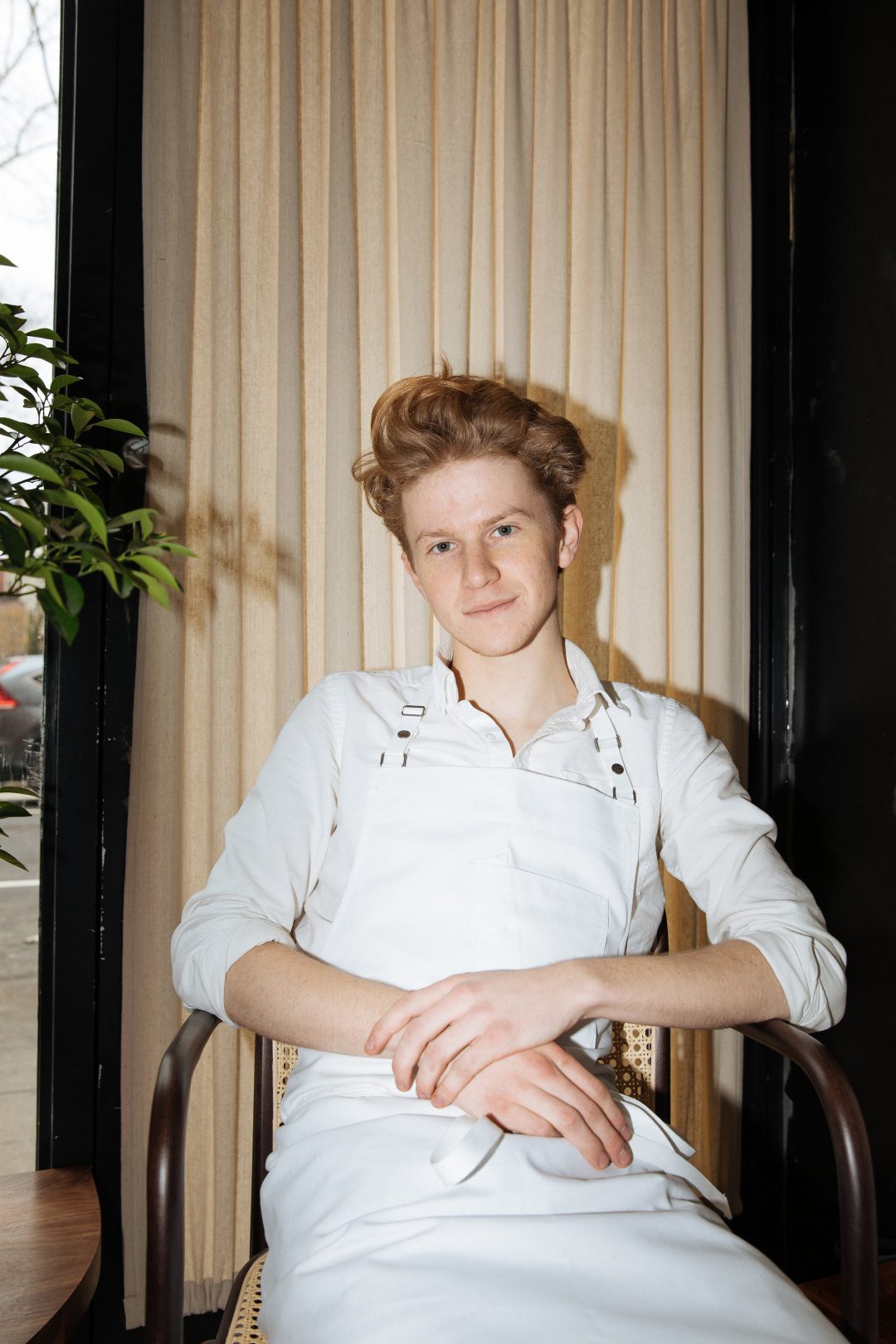
Flynn McGarry is exceptional. At the ripe age of nineteen, he opened his own restaurant GEM in New York City’s Lower East Side. It offers two components. The Living Room, a casual daytime space, is McGarry’s idea of a local coffee shop hang out, and serves house-made pastry creations as well as coffees and teas from small roasters. The Dining Room offers a $155, gratuity included set menu consisting of 12 to 15 courses. Also available is a $100 wine pairing. “The format follows a dinner party, like the ones I started throwing at 13,” McGarry, writes in an announcement detailing the opening. He was throwing elite dinner parties while his counterparts were in grade school, and he tells us about his life in cuisine.

Tell me about how you came to realize your love for food. 

“I think I came to realize my love for food around the age of 10, once I started researching and cooking. It was then that I learned how creative cooking can be.”

You’ve been called the Justin Bieber of food. How do you feel about that? 

“I think it’s very funny that that’s the thing that stuck with everyone… but, hey, Justin Bieber turned out okay, so I’m not mad at it. It’s just funny that that’s how everyone chooses to describe me.”

Where are your favorite places to eat in LA and in NYC?

“In Los Angeles – I love Sqirl, Badmaash, Felix, and Gjusta. In New York City – The Four Horsemen, Wildair, Le Coucou, and Wu’s Wonton King.”

Assorted Snacks at Gem

Assorted Snacks

Tell me about GEM. What inspired you? What do you hope the guest will experience?

“It was inspired by dinner parties – the idea of coming to my house for dinner. Our guests start their night in the Living Room (like you would in someone’s home) with a glass of champagne and snacks. Then we move everyone into the Dining Room for the remainder of the meal. They can also choose to enjoy an after-dinner drink or coffee back in the Living Room after the meal. My hope is that people come in and relax – just as they would at a friend’s house.”

What’s your favorite food to eat?

“Pretzels!”

How would you like to see your career advance? 

“My goal has always been to be at the helm of my own restaurant – and now that it’s finally open, I’m sort of taking every day as it comes and evolving with the restaurant and the space.  I don’t think it can really be planned – we’re open, the public will have their opinion, and I can set new goals from there.”

Potatoes Cooked In Yogurt at Gem

Potatoes Cooked In Yogurt

Where do you get the inspiration for your menus at your pop ups and your restaurant? 

“I find inspiration from everywhere. Cooking is my creative outlet…. so anything that I see, encounter, think of…. it gets processed through my cooking and my food.”

Have you travelled anywhere that has inspired you?

“Everywhere! But the one place that has really stuck with me the most is Italy. I am inspired by the way people treat food there.”

Who would be your ideal collaborator? 

“Chef collaborator? I would have to say Rene Redzepi, just because no one else thinks about food the way he does. Another type of collaboration? Probably Glenn O’Brien.”

Lamb Loin at Gem

Lamb Loin

What’s your favorite dish from GEM’s menu? 

“I really love the Lamb Feast – it really breaks up the traditional experience of a tasting menu and drives home our idea of feeling like you’re at someone’s house for dinner. Right now, the Lamb Feast consists of four courses – lamb loin with vadouvan bagna cauda, lamb shank braised with warm spices and apple cider, grilled sunchokes with sunflower seed and chili salsa, and a simple bitter green salad.”

How do you hope to see the food/restaurant industry change in 10 years?

“I hope it becomes more inclusive – whether that’s inclusive of age, gender, orientation… The industry should be more accepting of different kinds of people, different ways of learning. I hope it will begin to adopt change the way other industries have started to. While I think food has adapted and evolved, I hope that the culture and the way restaurants are run will catch up.”


To keep up with Flynn and GEM, you can follow them on Instagram at: @diningwithflynn and @gem.nyc

Featured image credit: Chloe Horseman courtesy of Bolster Media.

Additional images courtesy of Gem.